RAWALPINDI: Pakistan and Saudi Arabia have expressed satisfaction with progress under the Makkah Joint Defence Agreement, reaffirming their commitment to strengthening defence cooperation, institutional ties and strategic coordination.
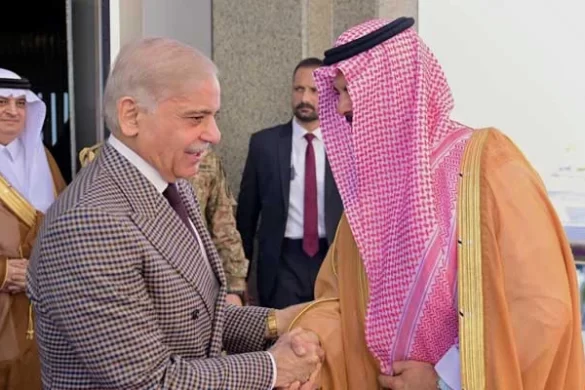
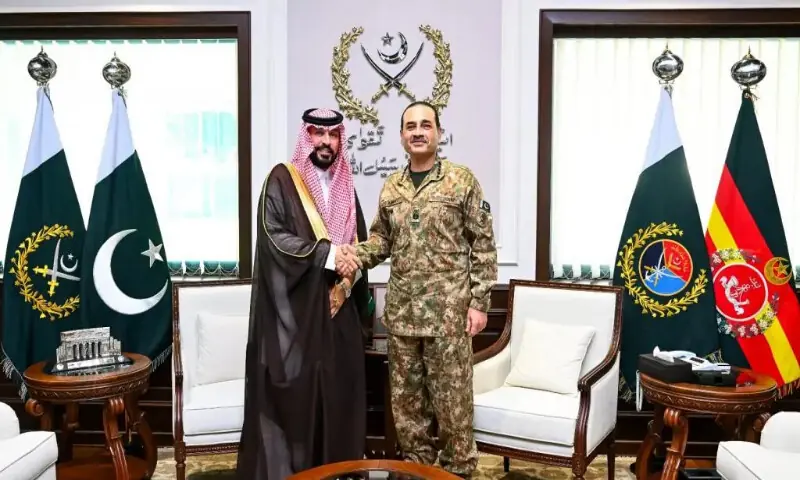
The understanding emerged during a meeting between Chief of Defence Forces and Chief of Army Staff Field Marshal Syed Asim Munir and newly appointed Saudi Ambassador to Pakistan Dr Rajeh Tami Albugamy at General Headquarters (GHQ) in Rawalpindi on Monday, according to the Inter-Services Public Relations (ISPR).
The two sides discussed matters of mutual interest and regional security developments, with particular emphasis on expanding defence collaboration.
Field Marshal Asim congratulated the Saudi ambassador on his appointment and expressed confidence that his tenure would further strengthen the longstanding relationship between Pakistan and Saudi Arabia, which is rooted in shared faith, mutual trust and strategic partnership.
According to the ISPR, both dignitaries welcomed the progress made under the Makkah Joint Defence Agreement and stressed the importance of closer institutional linkages and strategic coordination.
Makkah Alliance Aims to Strengthen Collective Defence
The Makkah Joint Defence Agreement was signed by Pakistan, Saudi Arabia and Turkiye on August 7. It followed the Strategic Mutual Defence Agreement concluded between Pakistan and Saudi Arabia in September 2025.
The arrangement has drawn attention amid heightened regional tensions and growing concerns about security threats affecting the Middle East.
In an interview with Independent Arabia, ISPR Director General Lieutenant General Ahmed Sharif Chaudhry described the alliance as a defensive arrangement intended to deter aggression and promote regional stability.
He said the agreement was not designed for offensive purposes but aimed to send a clear message to any elements seeking to destabilise the region.
Chaudhry also warned that a direct or indirect attack on Pakistan, Saudi Arabia or Turkiye would trigger a collective response under the agreement.
“The response will be collective,” he said, stressing that the arrangement was intended to protect the member countries’ security and territorial integrity.
Pakistan Reaffirms Support for Saudi Arabia
The military spokesperson’s remarks came amid heightened regional tensions following reported missile and drone attacks by Yemen’s Houthi group on Saudi Arabia.
Chaudhry said collective deterrence could become relevant if diplomatic efforts failed to prevent further escalation.
He reiterated that Pakistan considered Saudi Arabia’s sovereignty, territorial integrity and the security of Islam’s holiest sites fundamental priorities.
“The Saudis’ sovereignty and territorial integrity, security, and foremost, the security of the Haramain Sharifain is paramount. It’s non-negotiable. It’s absolute as far as Pakistan is concerned,” he said.
He also emphasised the importance of unity among Muslim countries, urging them to avoid actions that could intensify regional hostilities.
MBS backs Makkah defence pact, vows decisive response to threats
According to the spokesperson, further escalation would serve neither the interests of the region nor those of the wider Muslim world. He called for restraint, dialogue and a negotiated settlement to ongoing disputes.
Chaudhry said Pakistan’s political and military leadership had been working to reduce tensions and encourage negotiations.
He warned that if diplomatic efforts failed, the Makkah alliance’s collective deterrence framework could come into play.
Longstanding Military Cooperation Between Islamabad and Riyadh
Chaudhry said defence cooperation between Pakistan and Saudi Arabia had existed for decades, well before the formation of the Makkah alliance.
The partnership covers several areas of military cooperation, although he declined to disclose operational details, citing the confidential nature of military arrangements and their tactical and strategic considerations.
He reiterated that the alliance was strictly defensive and intended to support peace, stability and prosperity.
According to the spokesperson, longstanding relations and mutual trust among Pakistan, Saudi Arabia and Turkiye had helped facilitate the development of the arrangement.
Egypt and Syria’s Possible Inclusion
The military spokesperson also indicated that the alliance was not necessarily limited to its three founding members and could remain open to other countries that shared its commitment to collective deterrence, regional security and stability.
However, he said any decision to expand the arrangement would rest with the leadership of Pakistan, Saudi Arabia and Turkiye.
Asked about reports that Egypt and Syria had expressed interest in joining, Chaudhry said the matter would be considered at the appropriate political, strategic and military levels. He did not provide a timeline for any possible expansion.
Pakistan’s Position on Yemen and Regional Diplomacy
On the possibility of Pakistan providing direct military support to Yemen’s internationally recognised government, Chaudhry said he was unaware whether Islamabad had received an official request.
He added that the government would assess any such request before deciding how to respond.
The spokesperson also highlighted Pakistan’s diplomatic engagement with countries involved in regional conflicts, including Iran.
He said Islamabad had been working to ease tensions and promote a peaceful, negotiated outcome, adding that diplomatic efforts would continue to prevent further escalation.
The latest meeting at GHQ underscored the importance both countries attach to their defence partnership and regional security cooperation as tensions continue to challenge stability across the Middle East.