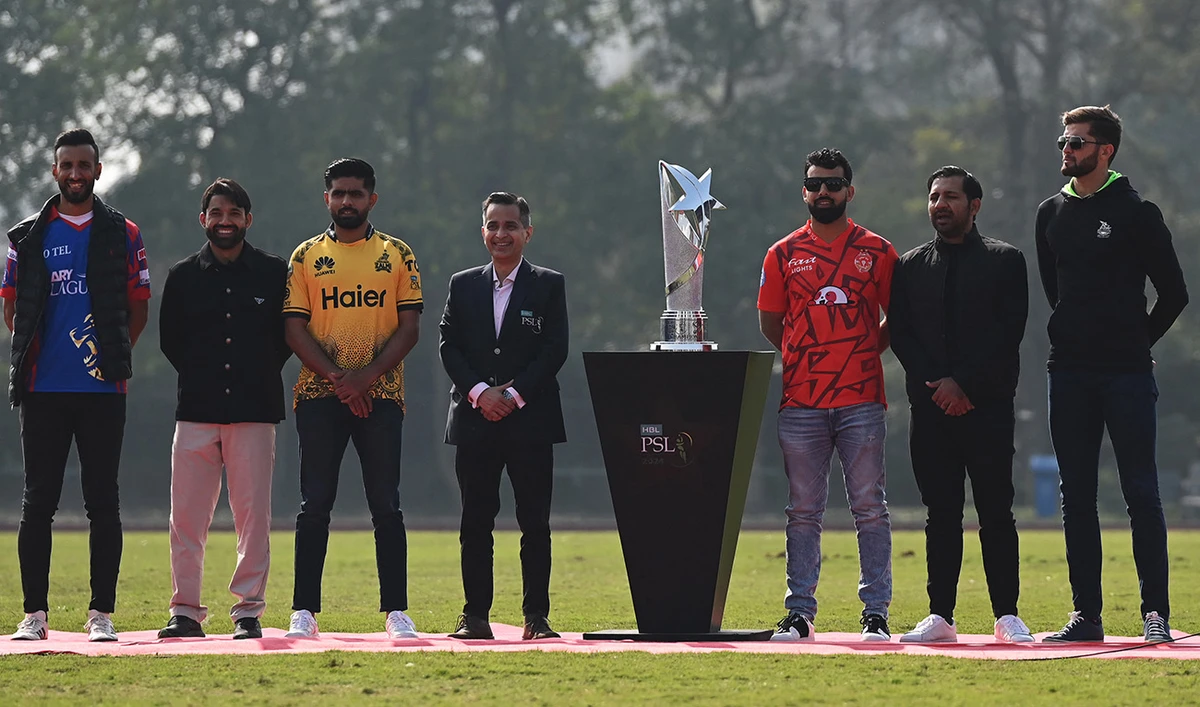
The Pakistan Super League (PSL) has emerged as a major commercial opportunity, with franchise valuations reaching billions of rupees, but financial management, delayed payments and weak sponsorship strategies continue to limit its growth. Rising franchise prices have highlighted the league’s enormous earning potential while exposing weaknesses in its existing financial model.
According to a report by The Express Tribune, the Pakistan Cricket Board (PCB) could potentially sell some existing franchises for as much as Rs2.5 billion as international investors show increasing interest in the country’s premier T20 competition.
PSL Franchise Values Rise to Billions of Rupees
The commercial transformation of the PSL has been particularly evident following the introduction of new franchises and the reassessment of existing team valuations.
American businessman Fawad Sarwar attracted considerable attention by purchasing the Hyderabad Kingsmen franchise for Rs1.75 billion.
The franchise previously known as Multan Sultans was renamed Sialkot for the new bidding process and subsequently sold for an even higher amount.
The Rawalpindiz franchise also set a new record after being sold for Rs2.45 billion, demonstrating the growing commercial value of the competition.
These transactions have encouraged the PCB to reassess the financial potential of other franchises, including Quetta Gladiators, which could potentially attract a valuation of up to Rs2.5 billion.
Quetta Gladiators Face Financial Challenges
The report highlights the financial journey of Quetta Gladiators, one of the original PSL franchises.
In 2015, former PCB executive committee chairman Najam Sethi approached businessman Nadeem Omar to purchase a team after the board struggled to find a buyer for one of the franchises.
Omar eventually agreed to acquire the Quetta Gladiators franchise for an annual fee of $1.1 million, equivalent to more than Rs190 million at the exchange rate prevailing at the time.
The team was initially among the least expensive franchises in the competition because of Quetta’s comparatively limited commercial opportunities.
Although the franchise initially experienced financial losses, the growing popularity of the PSL eventually allowed it to generate modest profits.
However, its annual franchise fee increased to approximately Rs360 million following the reassessment of team valuations after the league’s tenth edition.
The rising financial commitments have raised questions about whether existing owners can continue operating their teams profitably.
PSL’s Financial Model Raises Questions
One of the major concerns identified in the report is the league’s revenue-sharing arrangement.
Under the existing financial structure, franchises receive an equal share of central pool revenue regardless of how much they pay in annual franchise fees.
This means a team paying Rs360 million annually receives the same central revenue share as another franchise paying billions of rupees.
The report states that each franchise was expected to receive approximately Rs980 million from the central pool last year.
However, around Rs700 million of that amount was consumed by players’ salaries, travel, accommodation and other operational expenses.
After deducting franchise fees and additional costs, some teams could potentially face financial losses.
Consequently, franchises need to develop their own commercial revenue streams through sponsorships, merchandise and other business opportunities.
Weak Sponsorship Strategies Limit Commercial Growth
Despite the PSL’s growing popularity, franchise owners have struggled to attract major international sponsors.
The report points to competition among franchises for sponsorship agreements, with teams sometimes offering significantly different prices for similar commercial packages.
For example, one franchise could seek Rs500 million for a sponsorship agreement while another might offer a comparable arrangement for Rs250 million.
Such undercutting can weaken the overall sponsorship market and encourage companies to approach the PCB directly rather than negotiate with individual franchises.
The report also highlights the limited involvement of major international brands in sponsoring the PSL compared with other global cricket competitions, particularly the Indian Premier League (IPL).
The absence of a strong and coordinated commercial strategy has restricted the league’s ability to attract larger investments.
HBL PSL 12 to Return With Eight Teams in 2027
Merchandise and Year-Round Engagement Remain Challenges
Another weakness is the lack of an effective official merchandise distribution system.
According to the report, an official team shirt priced at Rs2,000 can have almost identical unofficial versions available in the market for approximately Rs200.
This creates difficulties for franchises attempting to generate revenue through licensed merchandise.
The report also notes that most franchises remain relatively inactive for nearly ten months of the year, while the competition itself generates significant activity for only around two months.
Maintaining fan engagement throughout the year could help teams develop stronger commercial identities and attract additional sponsors.
Delayed Payments Create Financial Uncertainty
The PSL’s financial challenges are not limited to sponsorship and merchandise.
According to the report, franchises have been waiting for their revenue shares for the past two years because of payment-related problems involving commercial stakeholders.
One stakeholder reportedly failed to fulfil its payment obligations last year, while another company brought in subsequently has also declined to make payments, citing financial losses.
The situation was further complicated by an alleged administrative failure involving a PSL official who did not obtain a mandatory bank guarantee.
Senior PCB officials have reportedly issued final warnings to the companies involved, with a decision expected following the expiry of the payment deadline.
Until these outstanding matters are resolved, financial arrangements involving the franchises could remain uncertain.
PSL Needs Stronger Marketing and Financial Management
The report argues that the PSL requires a dedicated marketing structure capable of attracting international companies and developing new commercial opportunities.
Franchises also need experienced marketing executives who can build sponsorship partnerships, strengthen their brands and increase revenue beyond the tournament period.
Stronger financial due diligence and enforcement of contractual obligations are equally important to protect the league and its investors.
The rising franchise valuations demonstrate that the PSL has significant commercial potential. However, converting that potential into sustainable profits will require better financial management, reliable payment systems and a coordinated business strategy.
The league has established itself as an important cricketing brand in Pakistan, but its next phase of growth will depend on how effectively the PCB and franchise owners address the financial and commercial weaknesses holding it back.
Source: The Express Tribune, analysis by Saleem Khaliq, published November 15, 2026.