ISLAMABAD: The initial inquiry report into the deadly fire at the Pakistan Institute of Medical Sciences (Pims) nursery has found that the hospital’s treatment standards and available facilities fell below global standards, according to sources.
The report was submitted to Prime Minister Shehbaz Sharif after the inquiry committee examined the circumstances surrounding the fire, identified its causes and determined responsibility for the tragedy.
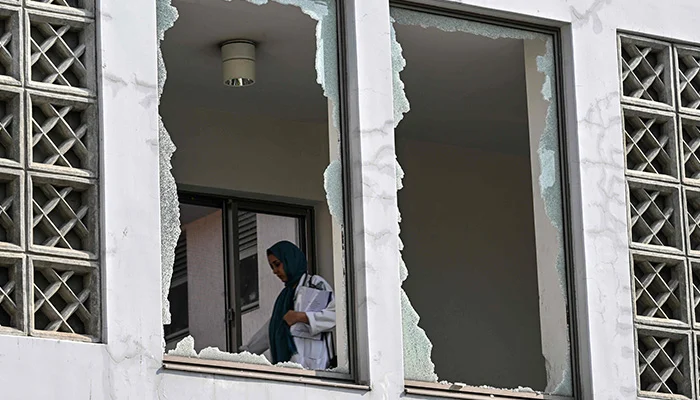
The findings come just days after 14 newborn babies died in a fire that broke out at around 6:45am in the Neonatal Intensive Care Unit (NICU) on the third floor of Pims’ Mother and Child Health ward.
Inquiry report submitted to prime minister
Sources said former interior secretary Shahid Khan, who headed the high-level inquiry committee formed on the prime minister’s instructions, submitted the report late Friday night to PM Adviser Tauqir Hussain Shah.
The adviser subsequently forwarded the report to Prime Minister Shehbaz Sharif and briefed him on its major findings and recommendations.
The decision on whether to make the report public rests with the prime minister.
The committee recommended immediate action against those found responsible for the incident. It also called for disciplinary proceedings against relevant Pims employees who were absent when the fire broke out.
The report was signed by all members of the inquiry committee, which included Shahid Khan as chairman, Major General (retd) Dr Khurshid Utra, Dr Barrister Nabeel Ahmed Awan and the Islamabad deputy commissioner.
Serious shortcomings highlighted at Pims
According to sources, the inquiry committee found significant deficiencies in the treatment provided at Pims and in the facilities available at the hospital.
The report reportedly observed that “nothing was according to international standards” at the hospital, while particularly highlighting shortcomings in medical treatment and available facilities.
The committee also examined the hospital’s emergency preparedness and response arrangements. Its findings are expected to increase scrutiny of whether adequate systems were in place to protect vulnerable newborns and respond quickly to emergencies inside critical-care areas.
The report has also proposed measures aimed at preventing similar incidents in the future and improving emergency preparedness and response mechanisms at Pims.
PIMS Tragedy: Health Secretary Removed Over Repeated Failure to Inspect Hospitals
Rescue teams faced difficulties
The inquiry committee documented the challenges encountered by firefighters and rescue personnel during the emergency.
Statements from fire brigade and rescue officials were included in the report, along with interviews with members of the Pims administration and doctors.
These accounts were used by the committee while examining how the emergency unfolded and assessing the response to the fire.
The committee’s recommendations for improving emergency systems are therefore expected to focus not only on hospital facilities but also on coordination and preparedness during such incidents.
Nursery housed 15 newborns
The fire broke out in the NICU on the third floor of the Mother and Child Health ward, where 15 newborns were present at the time.
Only one infant was rescued, while 14 babies lost their lives in the tragedy.
The incident has prompted questions about safety arrangements, staffing, emergency exits, firefighting capabilities and the overall condition of critical-care facilities at one of the country’s major public-sector hospitals.
The inquiry report’s findings could now determine the extent of administrative and disciplinary action against officials and staff members.
Pims to remain operational
Meanwhile, the Pims administration has decided to keep the hospital fully operational on Sunday.
The administration and accounts branches will also follow their normal working schedules. All relevant officers and staff have been directed to ensure their presence during designated working hours.
In a circular issued by the hospital administration, Deputy Executive Director Dr Aneza Jalil warned that unauthorised absence, negligence or disobedience of official orders could result in disciplinary action.
The move comes as the hospital faces increased scrutiny following the deaths of the 14 newborns.
The inquiry report is now expected to play a central role in determining accountability and deciding what further measures should be taken. Beyond individual responsibility, its findings have also highlighted broader concerns about the quality of facilities, treatment and emergency preparedness at Pims.
For the families affected by the tragedy, however, the key question remains whether the recommendations will lead to meaningful improvements and ensure that a similar incident does not occur again.