ISLAMABAD: Pakistan, Türkiye, Saudi Arabia and Egypt have jointly backed the Islamabad Memorandum of Understanding (MoU) between Iran and the United States, as regional and European powers intensify efforts to prevent a fresh outbreak of hostilities in the Gulf.
The endorsement came during a meeting of the four countries’ foreign ministers, known as the R4, in Istanbul on Friday. The talks took place amid growing concerns that renewed US and Israeli military action against Iran could undermine the fragile pause in hostilities and disrupt international shipping through the Strait of Hormuz.
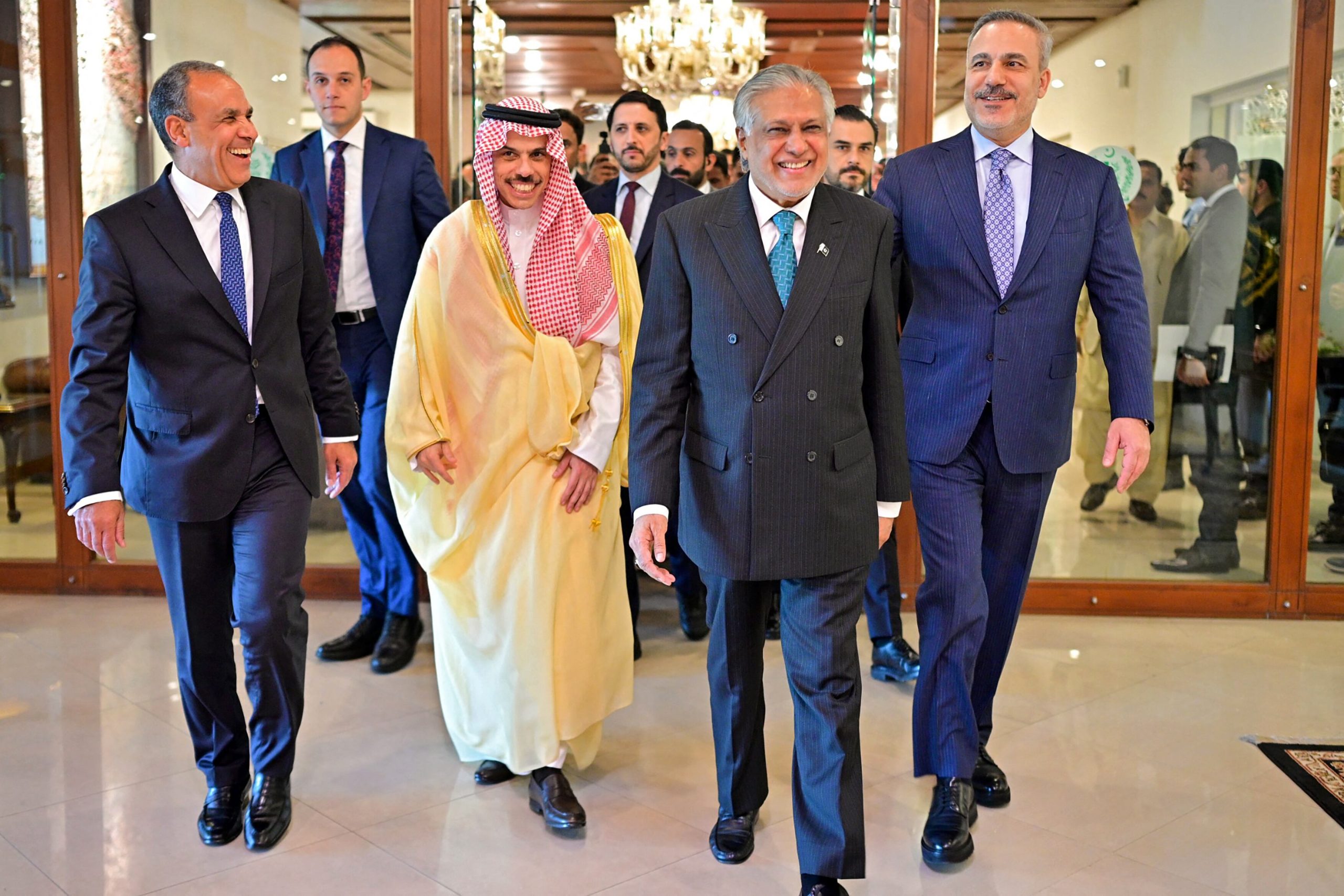
The meeting was attended by Pakistan’s Deputy Prime Minister and Foreign Minister Ishaq Dar, Turkish Foreign Minister Hakan Fidan, Saudi Foreign Minister Prince Faisal bin Farhan and Egyptian Foreign Minister Badr Abdelatty.
In their joint statement, the ministers stressed the urgent need to address the conflict involving the United States, Israel and Iran through dialogue and diplomacy. They also called for an end to attacks against civilians, civilian infrastructure and vessels.
Significantly, the ministers expressed support for the Islamabad MoU and welcomed continued diplomatic efforts to prevent further escalation, recognising Pakistan’s role in facilitating efforts to avert another round of conflict.
Pakistan Briefs European Powers on Mediation Efforts
The Istanbul meeting gained additional importance as the R4 foreign ministers held consultations with their European counterparts, bringing together eight countries for discussions on regional security.
France, Germany and the United Kingdom, collectively known as the E3, participated alongside Italy and the four R4 members.
During the expanded meeting, Dar briefed the participating ministers on Pakistan’s diplomatic efforts to reduce tensions between Washington and Tehran.
The discussions covered Iran, maritime security, the Strait of Hormuz, Yemen, Palestine and wider regional challenges.
Turkish Foreign Minister Hakan Fidan warned that another military intervention in Iran would deepen instability rather than resolve the crisis.
“Military intervention in Iran is by no means a solution. No one supports this at the moment,” Fidan told reporters after the talks.
Italian Foreign Minister Antonio Tajani also expressed concern that hostilities in the Gulf could resume after the US elections, stressing the importance of preventing another war.
Strait of Hormuz Shipping Becomes Major Concern
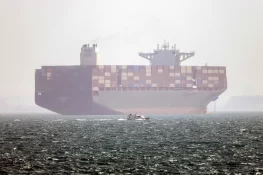
The ministers highlighted the importance of maintaining freedom of navigation through the Strait of Hormuz, one of the world’s most strategically important maritime routes.
They called for the swift and full restoration of safe, secure and uninterrupted passage through the waterway, warning that restrictions on lawful maritime traffic could have serious consequences for international trade.
Disruptions to shipping could affect global energy markets, food and fertiliser supplies, and wider supply chains.
The joint statement reflected broader concerns that renewed military confrontation could place additional pressure on an already fragile regional security environment.
For Pakistan, protecting maritime routes is particularly important because instability in the Gulf can affect energy supplies, trade and economic conditions across the region.
Four Countries Condemn Houthi Attacks
The R4 ministers also strongly condemned Houthi attacks against Saudi Arabia, including strikes targeting civilians and civilian infrastructure.
They criticised attacks on commercial vessels in the Red Sea and the Bab al-Mandeb Strait, expressing solidarity with Saudi Arabia and Yemen’s internationally recognised government.
The ministers called on the Houthis to halt military operations and return to the political process.
Their position underscored concerns that instability in Yemen and threats to commercial shipping could further complicate efforts to restore regional security.
Pakistan says Islamabad MoU ‘only way forward’ amid US-Iran tensions
Makkah Defence Agreement Gains Significance
The meeting also highlighted security cooperation among Pakistan, Türkiye and Saudi Arabia, which are partners under the Makkah Joint Defence Agreement signed in August.
During a bilateral meeting in Istanbul, Dar and Fidan condemned attacks on Saudi Arabia and agreed to maintain close coordination under the defence arrangement.
Pakistan’s Foreign Office spokesperson Sajjad Haider Khan had earlier confirmed that Pakistan and Saudi Arabia had completed their ratification procedures, while Türkiye was continuing its domestic legal process.
The spokesperson described the agreement as defensive in nature and consistent with the United Nations Charter.
He added that any decision to invoke its collective-defence provisions following an attack would have to be taken by the three partner countries in accordance with the agreement.
R4 Reaffirms Support for Palestinian Statehood
The ministers also addressed the situation in Palestine, describing the Israeli occupation as a fundamental source of instability in the region.
They called for an end to violence and settlement activity and reiterated their support for an independent Palestinian state based on the borders of June 4, 1967, with East Jerusalem as its capital.
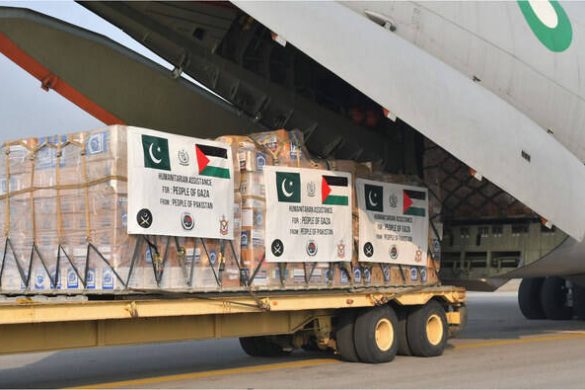
The statement also called for uninterrupted humanitarian assistance and reconstruction efforts in Gaza.
The issue remained an important part of the broader discussions, reflecting the participating countries’ position that a lasting regional settlement must address the Palestinian question.
Dar Conveys Pakistan’s Message to Erdogan
Following the ministerial consultations, the participating foreign ministers met Turkish President Recep Tayyip Erdogan.
Dar conveyed greetings from President Asif Ali Zardari, Prime Minister Shehbaz Sharif and Chief of Defence Forces Field Marshal Syed Asim Munir.
According to Pakistan’s Foreign Office, the meeting included candid exchanges on regional and international developments, with an emphasis on continued dialogue and diplomatic engagement.
Earlier, Foreign Office spokesperson Sajjad Haider Khan said the R4 mechanism had emerged as a platform for addressing regional instability and was now expanding its engagement with European powers.
He said the discussions were intended to explore ways to promote peace, improve maritime security and de-escalate tensions across the region.
Diplomatic Push Seeks to Prevent Wider Conflict
The endorsement of the Islamabad MoU marks an important diplomatic development as regional powers seek to prevent renewed confrontation between Iran and the United States.
By bringing together Middle Eastern countries and major European powers, the Istanbul consultations provided a broader platform for discussing maritime security, regional conflicts and diplomatic solutions.
However, the future of the Iran-US understanding remains uncertain amid warnings of possible renewed military action.
Pakistan’s continued engagement with regional and international partners could prove important in efforts to preserve the diplomatic process and prevent further disruption to security and trade across the Gulf.