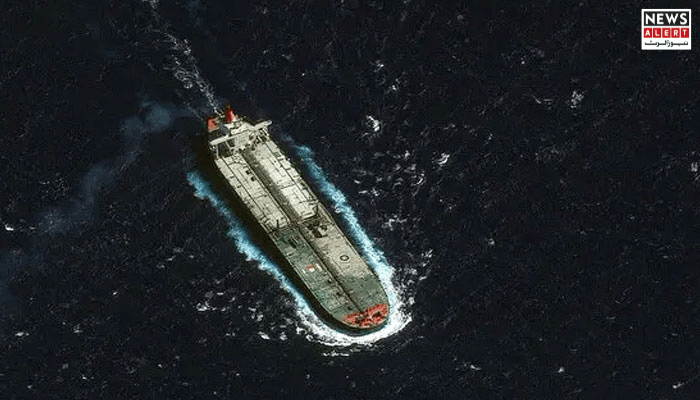
Seventh Ship Seized Amid Ongoing Pressure on Venezuela
According to American media reports, U.S. military forces seized the seventh vessel linked to Venezuelan oil on Tuesday. The ship, named Sagitta, was reportedly taken without resistance, the U.S. Southern Command said in a social media post.
This seizure is part of a broader strategy that began under the Trump administration, aimed at exerting pressure on Venezuela and controlling its oil revenues. The U.S. has long cited the Venezuelan government’s political and economic policies as reasons for sanctioning the country, particularly targeting its oil exports, which account for over 90% of Venezuela’s export earnings.
Details of the Operation
The Southern Command did not specify whether the U.S. Coast Guard, which handled some previous seizures, played a role in the latest operation. The announcement was brief, emphasizing only that the vessel was taken without any confrontation.
U.S. officials have increasingly relied on maritime operations to enforce sanctions on Venezuela, often intercepting oil shipments linked to state-owned Petróleos de Venezuela, S.A. (PDVSA). Analysts note that these actions are meant to limit the Maduro government’s access to international revenue, particularly in the wake of the country’s ongoing economic crisis.
Venezuela’s Oil and the U.S. Strategy
Venezuela holds the largest proven oil reserves in the world, estimated at around 304 billion barrels. Despite this, economic mismanagement, corruption, and sanctions have crippled its oil production, which has fallen from about 3.2 million barrels per day in 1998 to roughly 800,000 barrels per day in recent years.
The United States, while historically a major importer of Venezuelan oil, has targeted the country’s shipments as part of its sanctions regime. These seizures are part of broader efforts to pressure President Nicolás Maduro’s government, which the U.S. and several other nations do not recognize as legitimate.
Implications for International Shipping
Seizing vessels linked to Venezuela’s oil has implications for international shipping and trade. Shipping companies may face increased scrutiny, insurance costs, and operational challenges when dealing with Venezuelan cargo. Experts warn that continued U.S. interventions could disrupt oil markets in the Caribbean and beyond, particularly affecting smaller nations that rely on Venezuelan oil.
Meanwhile, Venezuela has condemned previous U.S. seizures, calling them illegal and an infringement on the country’s sovereignty. The Maduro government has accused Washington of pursuing oil piracy under the guise of sanctions enforcement.
Looking Ahead
The latest seizure underscores the ongoing tension between the United States and Venezuela over energy resources. While the U.S. frames these actions as enforcement of international sanctions, Venezuela and its allies view them as economic aggression.
As the situation develops, analysts suggest that the Maduro government may seek alternative shipping routes or alliances with countries like China, Russia, and Iran to bypass U.S. control of the Caribbean maritime routes.
For now, the seizure of the Sagitta highlights the continuing geopolitical struggle over one of the world’s richest oil reserves and the complex intersection of military, economic, and political interests in the region.