Pakistan has reaffirmed its commitment to support Saudi Arabia during the ongoing tensions in the Middle East, as the conflict involving the United States, Israel, and Iran continues to escalate.
Speaking to Bloomberg TV, Prime Minister’s spokesperson for foreign media Mosharraf Zaidi said it was “unquestionable” that Pakistan would come to Saudi Arabia’s aid if required.
“No matter what and no matter when, Islamabad will be there for Riyadh,” Zaidi said, highlighting the longstanding strategic partnership between the two countries.
Rising Regional Tensions
Zaidi’s remarks come as tensions in the Middle East intensify following attacks launched by the United States and Israel on Iran on February 28. Tehran responded by targeting US bases across the Gulf region, including locations in Saudi Arabia, using missiles and drones.
Although Iranian President Masoud Pezeshkian expressed regret over strikes in neighboring countries, Tehran has maintained that it will continue targeting facilities used to launch attacks against Iranian territory.
Pakistan–Saudi Strategic Defence Pact
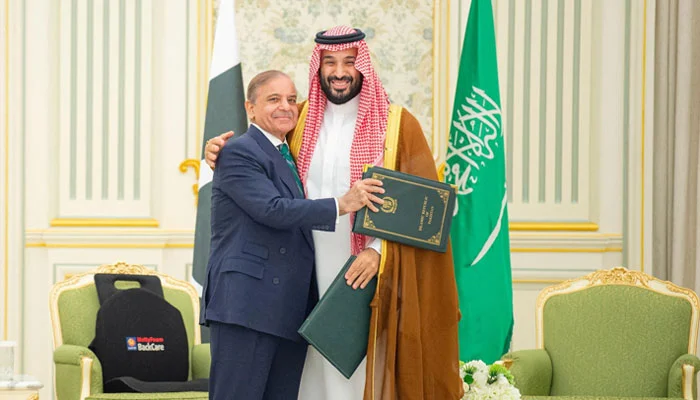
Pakistan and Saudi Arabia strengthened their security ties last year by signing the Strategic Mutual Defence Agreement (SMDA) in September. The landmark pact states that an attack on either country will be treated as aggression against both.
Earlier this week, Prime Minister Shehbaz Sharif congratulated Ayatollah Mojtaba Khamenei on assuming the responsibilities of Iran’s Supreme Leader following the reported killing of his father, Ayatollah Ali Khamenei, in a US-Israeli strike.
Meanwhile, Pakistan’s Chief of Defence Forces Field Marshal Asim Munir recently visited Saudi Arabia, where he met Defence Minister Prince Khalid bin Salman. The two leaders discussed regional security concerns and Iranian attacks within the framework of the bilateral defence agreement.
Pakistan Engaging Iran Diplomatically
Pakistan is also attempting to reduce tensions through diplomatic engagement. According to Prime Minister’s Adviser on Political Affairs Rana Sanaullah, Pakistan has been working to persuade Iran to halt attacks on Saudi Arabia.
He said Pakistan’s military leadership remains in constant contact with Tehran to address misunderstandings and prevent further escalation in the Gulf region.
Pakistan Requests $5 Billion Oil Facility and Long-Term Support from Saudi Arabia
Deputy Prime Minister and Foreign Minister Ishaq Dar has also been in continuous discussions with Iranian Foreign Minister Abbas Araghchi. Iranian officials reportedly indicated that Tehran would avoid targeting Saudi Arabia if Riyadh ensures that its territory is not used for attacks against Iran.
Oil Supply Concerns and Alternative Routes
Zaidi also revealed that Saudi Arabia has made arrangements to help maintain Pakistan’s oil and diesel supply during the crisis.
The conflict has disrupted global energy shipments after Iran effectively closed the Strait of Hormuz, one of the world’s most critical oil transit routes.
In response, Pakistan has begun importing crude oil through the Red Sea route. Sources say a vessel of the Pakistan National Shipping Corporation (PNSC) has reached Yanbu Port in Saudi Arabia and will depart for Karachi carrying 73,000 tonnes of crude oil.
Another PNSC ship, Shalamar, has also loaded oil from Fujairah Port and is currently heading toward Karachi.
However, shipping disruptions continue, with two PNSC vessels reportedly stranded near Karachi and at a charter port due to the ongoing regional situation.