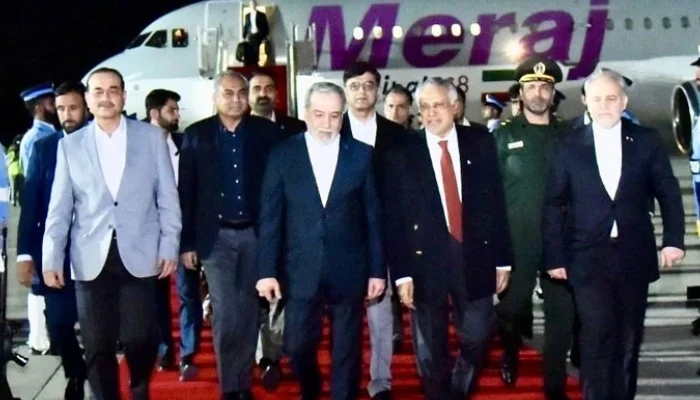
Islamabad: Iranian Foreign Minister Abbas Araghchi has returned to Pakistan for the second time in recent days, as diplomatic efforts intensify to keep dialogue between Iran and the United States on track, according to sources.
His visit comes at a sensitive moment, with uncertainty surrounding the next phase of negotiations after recent developments in Washington.
Second Visit in Two Days Signals Urgency
Araghchi arrived in Islamabad following a brief trip to Oman, where he met Sultan Haitham bin Tariq to discuss regional security, particularly the situation in the Strait of Hormuz, as well as ongoing diplomatic initiatives.
According to Iranian media, the foreign minister is expected to convey Tehran’s official stance and framework for a potential agreement aimed at ending the ongoing conflict.
Meetings with Pakistan’s Leadership Expected
During his brief stay, Araghchi is likely to meet Pakistan’s top civilian and military leadership, including Prime Minister Shehbaz Sharif, Deputy Prime Minister Ishaq Dar, and Chief of Defence Forces Asim Munir.
These engagements are part of Pakistan’s continued efforts to facilitate dialogue between Tehran and Washington and maintain momentum toward a negotiated settlement.
Diplomatic Uncertainty After US Decision
The visit follows a sudden shift in US plans, after Donald Trump cancelled a scheduled trip by his envoys to Pakistan for further talks with Iranian representatives.
Trump reportedly expressed dissatisfaction with Iran’s initial negotiating position but later indicated that Tehran had submitted a revised proposal shortly after the cancellation.
Despite the setback, he suggested that the situation had not yet escalated back into open conflict.
Iran’s Foreign Minister Meets PM Shehbaz and Top Pakistani Leadership Amid Push for US–Iran Dialogue
“Fruitful” Talks but Lingering Doubts
Araghchi described his earlier meetings in Islamabad as “very fruitful,” highlighting progress in discussions. However, he also voiced caution, stating that it remains unclear whether the United States is fully committed to a diplomatic resolution.
Iranian officials have maintained that any agreement must address core issues, including sanctions and regional security concerns.
Broader Diplomatic Context
Pakistan has played a central mediating role in recent weeks, hosting initial talks and helping secure a temporary ceasefire. However, key disagreements—particularly over nuclear and maritime issues—have prevented a comprehensive deal so far.
Meanwhile, tensions remain high in the Strait of Hormuz, where Iran has signaled it does not intend to lift its blockade under current conditions.
Next Steps and Regional Engagement
After concluding his meetings in Islamabad, Araghchi is expected to travel to Russia as part of a broader diplomatic tour aimed at building international support and coordination.
Araghchi’s return to Pakistan underscores the fragile but ongoing nature of diplomatic efforts to resolve the conflict. While both sides appear to be reassessing their positions, the path to a lasting agreement remains uncertain, with progress dependent on sustained engagement and mutual concessions.