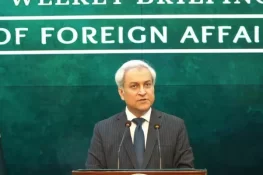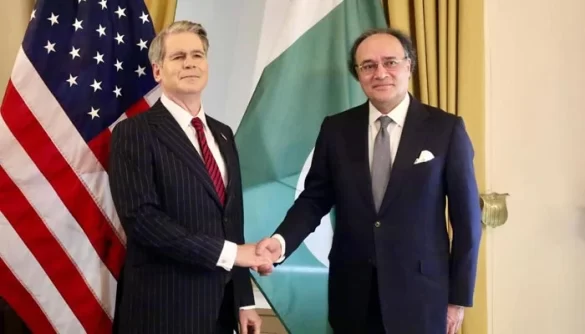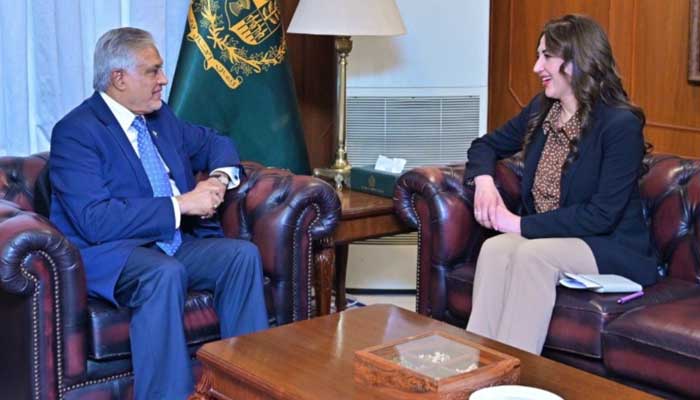
Pakistan has called on the United States and Iran to extend their ongoing two-week ceasefire, as the truce approaches its deadline amid fragile regional conditions. The appeal came during a meeting between Deputy Prime Minister and Foreign Minister Ishaq Dar and US Chargé d’Affaires Natalie A. Baker in Islamabad.
Emphasis on Dialogue and Engagement
During the meeting, Ishaq Dar stressed that dialogue and diplomacy remain the only viable path to resolving tensions between Washington and Tehran. He urged both sides to continue engagement and consider extending the ceasefire to avoid a return to conflict.
Pakistan has consistently positioned itself as a supporter of diplomatic solutions, particularly in the context of escalating tensions in the Middle East.
US Acknowledges Pakistan’s Role
According to the Foreign Office, the US envoy appreciated Pakistan’s constructive role in promoting regional peace and facilitating dialogue between the two sides.
Islamabad has been actively involved in mediation efforts, with Prime Minister Shehbaz Sharif previously helping broker the current two-week truce on April 8, following weeks of military escalation.
Talks Face Uncertainty
Despite these efforts, progress remains uncertain. The first round of negotiations between the US and Iran, held in Islamabad, lasted around 21 hours but ended without agreement. Key sticking points included Iran’s nuclear and missile programmes, sanctions relief, and security concerns in the Strait of Hormuz.
Kremlin Urges Continuation of Iran Talks, Warns Against Regional Escalation
Preparations are underway for a second round of talks, but there is no clear confirmation from Tehran regarding its participation. While Washington has indicated that its delegation will arrive soon, Iranian officials have denied reports of any delegation departing for Pakistan.
Conflicting Signals from Washington
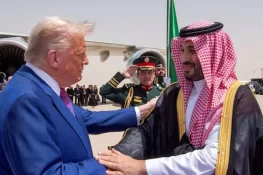
Adding to the uncertainty, Donald Trump has sent mixed signals about the future of the ceasefire. He recently indicated that the truce could end soon and suggested that the United States is in a strong negotiating position.
Such statements have raised concerns about whether both sides are aligned on extending the ceasefire or continuing diplomatic engagement.
A Fragile Window for Peace
The ceasefire, set to expire soon, represents a narrow window for diplomacy after weeks of conflict that began in late February. The situation escalated rapidly, affecting regional stability and global energy routes.
Pakistan’s latest appeal highlights the urgency of maintaining that window. Officials in Islamabad believe that extending the truce could create space for more meaningful negotiations and reduce the risk of renewed hostilities.
What Lies Ahead
With time running out, the focus now shifts to whether both the US and Iran are willing to continue diplomatic efforts. Pakistan’s role as a facilitator remains central, but the outcome will ultimately depend on decisions made in Washington and Tehran.
For now, the ceasefire stands as a fragile pause — one that could either lead to further dialogue or give way to another phase of confrontation.