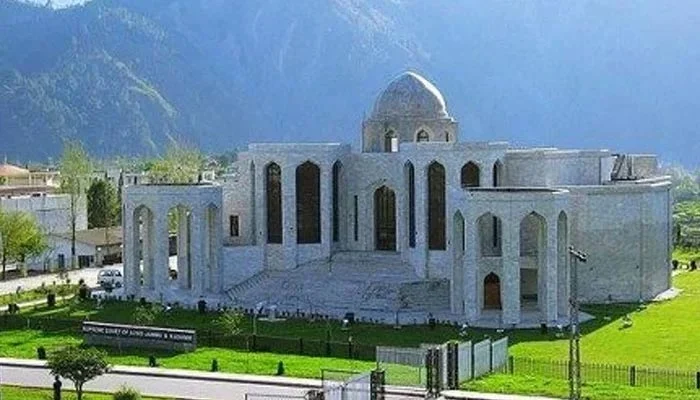
The Azad Jammu and Kashmir (AJK) Supreme Court has endorsed the government’s position regarding the 12 reserved refugee seats in the AJK Legislative Assembly, ruling that these seats are constitutionally protected and cannot be changed through administrative or executive decisions.
The opinion was issued in response to a presidential reference filed under Article 46-A of the Interim Constitution 1974. The reference sought clarification on constitutional questions related to refugee representation and other connected matters.
Constitutional Protection of Reserved Seats
In its detailed ruling, the court stated that the 12 refugee seats are protected under Article 22 of the AJK Constitution and are rooted in long-standing legal arrangements dating back to earlier constitutional frameworks, including laws from 1960, 1964, and 1970.
The court further observed that any change—whether alteration, reduction, or abolition—of these seats can only be made through a formal constitutional amendment under Article 33. It stressed that such changes must follow the proper legislative procedure and cannot be achieved through pressure or informal demands.
The judgment also clearly stated that attempts to modify constitutional provisions through coercion, protests, or extra-legal methods are not supported by law and are inconsistent with the principle of constitutional supremacy.
Elections and Democratic Process
The court emphasized that elections must be held within the constitutionally defined timeframe and cannot be delayed due to political disputes or protests. It underlined that the responsibility of conducting elections and maintaining law and order rests with the state.
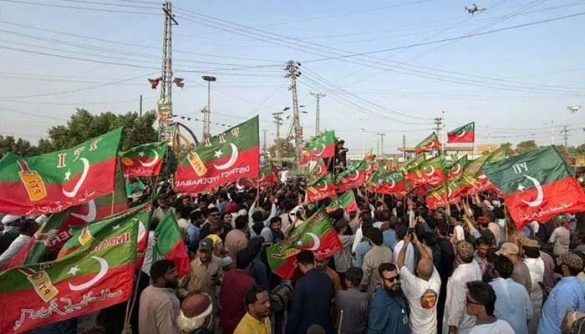
According to the court, democratic processes must continue without interruption, and constitutional governance must take priority over street agitation. While the right to peaceful protest was acknowledged, the court clarified that protests disrupting public order or normal life are not protected under constitutional guarantees.
Govt Accuses Banned JAAC of Fueling Instability Despite Agreement Implementation in AJK
Rule of Law and State Responsibility
The Supreme Court also highlighted that the authority of the Constitution is supreme in Azad Jammu and Kashmir. It noted that no individual or group can override constitutional provisions through pressure or unrest.
The court further stated that the state is responsible for ensuring public peace, protecting citizens’ rights, and maintaining the continuity of democratic institutions. It added that the exercise of one group’s rights must not come at the expense of others.
Political Context and Ongoing Debate
The ruling comes amid ongoing political debate and protest campaigns regarding the abolition of the 12 refugee seats reserved for Kashmiri migrants who settled in Pakistan after 1947.
Recently, an All Parties Conference (APC) held in Muzaffarabad rejected demands for abolishing these seats, emphasizing that any constitutional reforms fall under the authority of elected representatives.
In addition, the AJK Legislative Assembly has already passed a resolution reaffirming the continuation of refugee representation, describing it as a historical and constitutional reality. It also noted that any reforms should be carried out through proper legislative procedures.
The Supreme Court’s opinion reinforces the principle that constitutional matters in AJK must be resolved through lawful and democratic channels. By upholding the status of refugee seats and stressing the importance of elections and constitutional order, the court has underscored the primacy of legal processes over political pressure.