Pakistan has officially taken its permanent seat at the United Nations-backed International Olive Council (IOC) for the first time, marking a significant milestone for the country’s rapidly expanding olive sector.
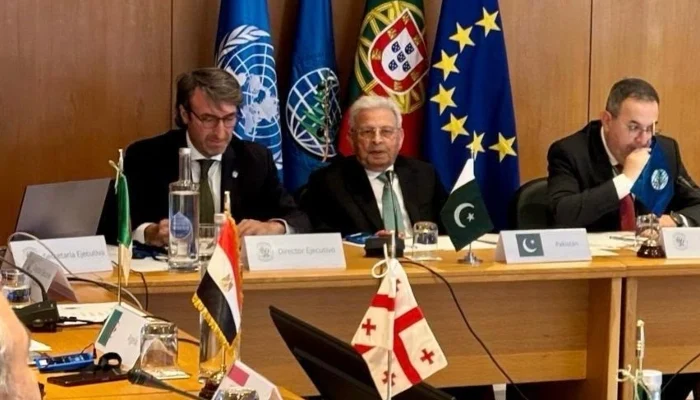
Federal Minister for National Food Security and Research Rana Tanveer Hussain led the Pakistani delegation at the 123rd meeting of the IOC, held in Lisbon, Portugal. He was accompanied by Pakistan’s Ambassador to Portugal, Aisha Farooqui.
Pakistan’s participation follows its formal admission as a member of the International Olive Council in May 2026, enabling the country to join 27 other olive oil-producing nations in the organization’s policymaking and technical discussions.
Warm Welcome from IOC Members
According to an official statement, Pakistan received a warm welcome from the IOC Executive Director, the Council Chairman, and representatives of member countries during the meeting.
Addressing the council, Minister Rana Tanveer Hussain expressed gratitude for Pakistan’s inclusion and reaffirmed the country’s commitment to advancing the objectives and long-term goals of the International Olive Council.
He emphasized Pakistan’s willingness to play a constructive role in promoting international cooperation within the olive sector.
Pakistan’s Olive Industry Continues to Expand
During his address, the minister highlighted the remarkable progress made by Pakistan’s olive industry over the past several years.
He informed the council that more than 7 million olive trees have now been cultivated across approximately 55,669 acres, with olive-growing clusters continuing to expand in different regions of the country.
The minister said these developments reflect Pakistan’s growing focus on diversifying agriculture, improving rural livelihoods, and promoting high-value crops suited to changing climatic conditions.
Heart-Healthy Foods: Protect Your Heart Naturally
Farm-to-Fork Value Chain Established
Rana Tanveer Hussain also briefed the council on the country’s efforts to develop a comprehensive farm-to-fork olive production system.
According to the minister, Pakistan has established 51 olive oil extraction units, along with modern processing facilities, certified nurseries, weather monitoring stations, and four quality laboratories operating in accordance with IOC standards.
He added that Pakistan has also achieved self-sufficiency in producing certified olive saplings domestically, reducing reliance on imported planting material and strengthening the country’s olive cultivation programme.
International Recognition for Pakistani Olive Oil
The minister noted that Pakistan’s growing olive industry has already begun receiving international recognition.
He highlighted that Pakistani olive oil won a Silver Award at the New York International Olive Oil Competition (NYIOOC) last year, reflecting improvements in production quality and international competitiveness.
Such achievements, he said, demonstrate the country’s potential to become an emerging player in the global olive oil market.
Commitment to Sustainable Development
Concluding his remarks, the minister reaffirmed Pakistan’s commitment to working closely with fellow IOC member states to promote the sustainable and climate-resilient development of the global olive oil and table olive sectors.
Pakistan’s participation in the International Olive Council is expected to provide greater access to international expertise, research, quality standards, and export opportunities while strengthening cooperation with leading olive-producing countries around the world.