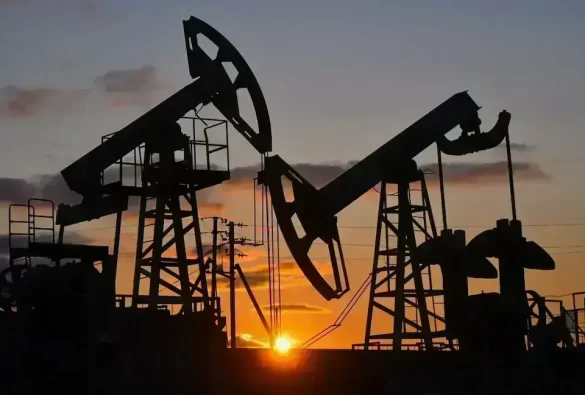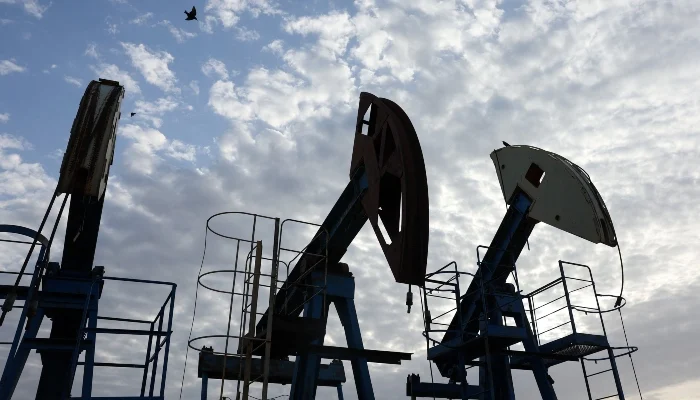
Oil prices declined on Thursday as investors reacted to reports that Iran-Oman negotiations are making progress, raising hopes that a broader US-Iran peace agreement could eventually bring an end to months of regional tensions and lead to the reopening of the Strait of Hormuz, one of the world’s most important energy shipping routes.
However, continuing security concerns in the Middle East and a surprise increase in US crude oil inventories limited the market’s optimism.
Oil Prices Fall in Early Trading
In early Asian trading:
- Brent crude futures fell 37 cents (0.5%) to $79.08 per barrel.
- US West Texas Intermediate (WTI) crude declined 53 cents (0.7%) to $74.69 per barrel.
Brent crude had closed slightly higher in the previous trading session, while WTI finished marginally lower.
Market analysts said investors are closely monitoring diplomatic developments, as any breakthrough could significantly affect global oil supplies.
Iran-Oman Talks Boost Market Sentiment
According to market analysts, reports of progress in talks involving Iran and Oman prompted some investors to sell oil futures on expectations that easing geopolitical tensions could improve supply prospects.
Nomura Securities economist Yuki Takashima said oil prices have largely returned to levels seen when the United States and Iran reached an interim peace agreement in June.
He noted that markets are now focused on whether both sides can negotiate a comprehensive and lasting agreement.
Strait of Hormuz Proposal Under Scrutiny
According to Reuters, a proposed arrangement aimed at ending the US-Iran conflict would grant Iran a role in overseeing ships entering the Gulf through the Strait of Hormuz.
The proposal, if agreed upon, would represent one of Tehran’s most significant diplomatic gains in the negotiations.
However, there has been no official response from the United States regarding the reported proposal.
While President Donald Trump has expressed optimism about a deal that could reopen the strategic waterway, US officials have repeatedly stated that Washington would not support any arrangement giving Iran control over access to the Strait of Hormuz.
The waterway carries a substantial share of the world’s seaborne oil exports, making its security critical to global energy markets.
OPEC+ approves September oil production increase of 188,000 barrels per day
Regional Security Risks Continue
Despite renewed diplomatic efforts, geopolitical risks remain elevated.
According to Reuters, Iran has warned Gulf states that any future US military action against its territory could trigger retaliatory attacks on critical regional energy infrastructure.
Meanwhile, Yemen’s Houthi movement claimed responsibility for missile attacks targeting two Saudi oil tankers—one near the Red Sea port of Yanbu and another in the Gulf of Aden.
Saudi authorities had not confirmed the reported attacks at the time of publication.
Analysts said continued threats to shipping routes in the Red Sea are limiting expectations of a full return to normal maritime trade in the region.
US Crude Inventories Rise Unexpectedly
Oil prices also came under pressure after the US Energy Information Administration (EIA) reported an unexpected increase in American crude stockpiles.
For the week ending July 31:
- US crude inventories rose by 2.5 million barrels to 407 million barrels.
- Analysts surveyed by Reuters had expected a drawdown of 1.5 million barrels.
The increase was attributed to slightly lower refinery processing and higher crude imports, suggesting softer short-term demand than markets had anticipated.
Markets Closely Watching Diplomatic Developments
Energy markets remain highly sensitive to developments in the Middle East, where diplomatic negotiations and security concerns continue to influence investor sentiment.
While hopes for a US-Iran peace agreement have eased some fears over potential supply disruptions, traders remain cautious as uncertainty persists over the future of the Strait of Hormuz, regional shipping security, and global oil supply.
The outcome of the ongoing negotiations is expected to play a key role in determining the direction of oil prices in the coming weeks.