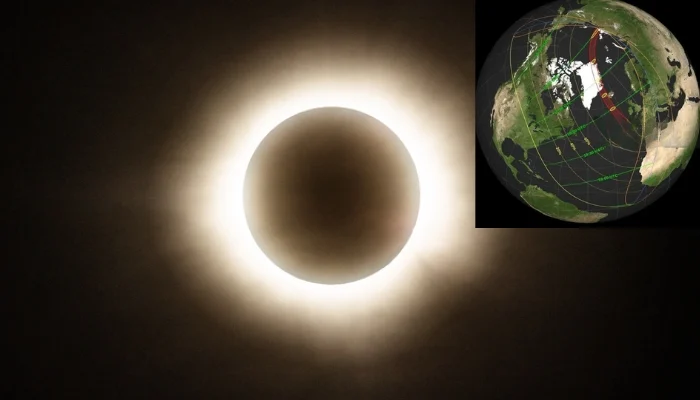
Skywatchers around the world are preparing for a spectacular total solar eclipse on Wednesday, August 12, 2026, as the Moon moves directly between the Earth and the Sun.
The highly anticipated celestial event will bring total or near-total darkness to parts of Greenland, Iceland, northern Spain and the Balearic Islands, offering millions of people an opportunity to witness one of nature’s most dramatic astronomical events.
The 2026 solar eclipse is particularly significant for Europe, as parts of the continent will experience a total solar eclipse for the first time since 1999.
However, not every location will experience complete darkness. Several areas, including parts of the northeastern United States and Canada, will see only a partial solar eclipse.
Where will the 2026 total solar eclipse be visible?
The Moon’s shadow will travel across a narrow path, with locations inside the path of totality experiencing the most dramatic phase of the eclipse.
Some of the best locations for viewing totality or near-total coverage include:
- Reykjavik, Iceland: 100% totality, around 1:48–1:49 p.m.
- Valencia, Spain: 100% totality, around 2:32–2:33 p.m.
- Barcelona, Spain: 99.9% coverage, around 2:29 p.m.
- Madrid, Spain: 99.9% coverage, around 2:32 p.m.
The exact experience will depend on the observer’s location and local weather conditions.
Italian Scientists Prepare New Solar Instrument for High-Stakes Eclipse Test
Best US locations to see the partial eclipse
Most of the United States will see little or no noticeable change in daylight during the eclipse.
However, parts of Alaska and Maine are among the better locations in the US to observe the partial eclipse.
Some viewing locations and approximate maximum coverage include:
- Fairbanks, Alaska: 37% at around 12:27 p.m.
- Anchorage, Alaska: 28% at around 12:21 p.m.
- Juneau, Alaska: 17% at around 12:24 p.m.
- Caribou, Maine: 29% at around 1:50 p.m.
- Bangor, Maine: 24% at around 1:53 p.m.
- Portland, Maine: 19% at around 1:53 p.m.
How to safely watch the solar eclipse
Skywatchers should take proper precautions while observing the eclipse.
Never look directly at the Sun without certified solar viewing protection. Ordinary sunglasses are not sufficient to protect the eyes from the intense solar radiation.
Special-purpose eclipse glasses or approved solar viewers should be used when viewing the Sun during the partial phases of the eclipse.
For those unable to see the eclipse from the path of totality, livestreams and online observatories can also provide an alternative way to experience the event.
The August 12, 2026 solar eclipse is expected to be a major astronomical highlight, particularly for observers in Iceland and Spain, where the Moon’s shadow will briefly transform daytime skies into near-complete darkness.