Italian scientists are preparing to put a new solar instrument through a crucial test that could significantly improve the way researchers study the Sun’s outer atmosphere, known as the solar corona.
A team of researchers in the northern Italian city of Padua has spent weeks working in a laboratory to finalise the Circular Slit Spectrometer (CISS), a prototype that could allow scientists to study the corona much more quickly than conventional instruments.
The instrument is scheduled to undergo a decisive test at Spain’s Javalambre Astrophysical Observatory during the total solar eclipse on August 12.
New Instrument Could Capture the Corona in One Image
The CISS uses a different optical design from traditional spectrometers.
According to Federico Landini, principal investigator at the Astrophysical Observatory of Turin, the prototype features a circular slit that can capture the spectrum of the entire corona at a particular distance from the centre of the Sun in a single photograph.
Conventional linear spectrometers generally examine the corona line by line. Because conditions in the solar atmosphere can change within minutes, scanning the region can take too long to provide a complete picture of rapidly changing phenomena.
The new approach is intended to overcome that limitation by collecting a much larger amount of information at once.
Why Studying the Solar Corona Matters
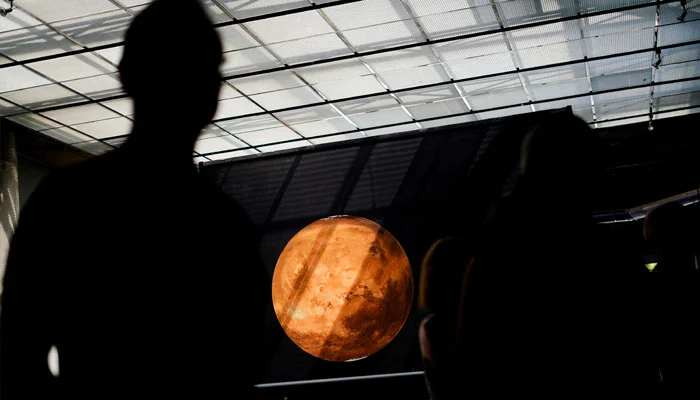
The solar corona is the extremely hot outer layer of the Sun’s atmosphere. Although it is normally difficult to observe because of the Sun’s intense brightness, a total solar eclipse creates ideal conditions for studying it.
During totality, the Moon moves between Earth and the Sun and blocks the bright solar disk. This makes the much fainter corona visible around the darkened Sun.
Scientists study the corona because activity in this region is closely connected with solar phenomena that can influence conditions in space around Earth.
Powerful solar activity can disrupt satellite operations, radio communications, navigation systems and power grids, making improved monitoring of the Sun important for both scientific research and space-weather forecasting.
A Different Approach to Solar Spectroscopy
Researchers hope the CISS test will demonstrate that its optical principle can provide detailed information about the corona more rapidly than older instruments.
If the technology proves successful, the next stage could involve adapting the concept for a future space mission designed to observe the Sun’s outer atmosphere.
One important comparison is the Ultraviolet Coronagraph Spectrometer (UVCS), which operated aboard the European Space Agency and NASA’s SOHO spacecraft from 1996 to 2013.
UVCS produced valuable observations of the solar corona, but mapping the entire region could require many hours. Researchers behind CISS hope their approach can dramatically reduce the time needed to obtain comparable observations.
Scientists Turn to Sharks to Improve Hurricane Forecasts
Eclipse Offers Only a Brief Opportunity
Despite months of preparation, the team will have only a short window during the eclipse to prove that the instrument works as intended.
The total eclipse provides a rare opportunity to observe the corona under conditions that are difficult to reproduce. That makes the test particularly important for researchers who have spent around two and a half years developing the prototype.
Paola Zuppella, a senior researcher at the Institute for Photonics and Nanotechnologies in Padua, said the team must be prepared for any eventuality because there will be little time to troubleshoot during totality.
“There is neither space nor time for the unexpected,” she said, stressing that careful coordination among team members would be just as important as favourable weather.
Scientists Take the Instrument to Spain by Road
The researchers also faced a logistical challenge in transporting the delicate equipment to Spain.
Rather than flying, the team left Italy by road on Friday, carrying the instrument in a van. This allowed them to avoid dismantling the equipment and then rebuilding it after arriving in Spain.
The team also wanted to reduce the risk of travel disruption ahead of the eclipse.
Landini said uncertainties surrounding flights made travelling by road the safer option, particularly because last-minute cancellations could have prevented the researchers from reaching the observatory in time.
Now, with the eclipse approaching, the scientists are preparing for a test in which years of development will be put to work within a matter of minutes.
If successful, the Circular Slit Spectrometer could offer researchers a faster way to observe the dynamic solar corona and potentially provide a foundation for future space-based instruments dedicated to monitoring our nearest star.