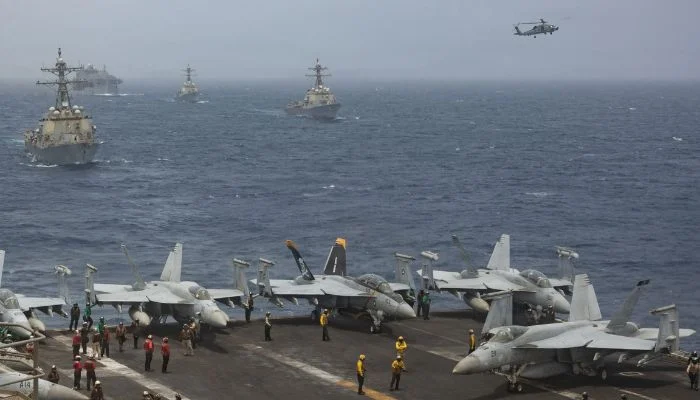
US Central Command (CENTCOM) has claimed that 660 million barrels of oil and more than 1,300 commercial vessels have passed through the Strait of Hormuz since May with its assistance.
According to CENTCOM, the figures demonstrate that commercial traffic continues to move through parts of the region despite major security challenges and Iran’s declaration that the strategic waterway is closed to commercial shipping.
Speaking to CNBC, CENTCOM spokesperson Captain Tim Hawkins said that multiple routes remained open for commercial transit.
The Strait of Hormuz is one of the world’s most important maritime routes for global energy supplies, making disruptions there a major concern for oil markets and international trade.
Oil flows increased in recent weeks
CENTCOM said on July 29 that more than 500 million barrels of oil had passed through the region since May.
The latest figure of 660 million barrels therefore suggests that more than 160 million additional barrels moved during the following three weeks.
Based on this increase, the average volume during that period was more than 7 million barrels per day.
The latest data indicates a significant recovery in oil shipments compared with earlier months, although traffic remains well below the volumes recorded before the military conflict.
Still below pre-war levels
Before the conflict involving the United States, Israel and Iran, approximately 20 million barrels of oil per day passed through the Strait of Hormuz.
CENTCOM’s latest figures indicate that commercial energy shipments have resumed to some extent, but they have not yet returned to previous levels.
US Energy Secretary Chris Wright previously said that crude oil flows through the route had reached around 9 million barrels per day.
That represented a sharp increase compared with the average daily volumes reported earlier in the year:
- May: around 1.6 million barrels per day
- June: around 4 million barrels per day
- July: around 5 million barrels per day
The reported recovery suggests that commercial vessels have gradually resumed using the route despite continuing security concerns.
Trump says US could claim Strait of Hormuz as territory amid Iran conflict
Naval blockade and Iranian response
The dispute over access to the Strait of Hormuz intensified after the US Navy imposed a full naval blockade on Iran.
Iran subsequently declared the Strait of Hormuz closed to commercial shipping.
However, CENTCOM has maintained that commercial vessels are still able to use multiple routes in the region and that oil shipments continue to move.
The differing positions reflect the complex security situation surrounding the strategic waterway, which connects the Persian Gulf with international shipping routes.
Any prolonged disruption to the Strait of Hormuz could have significant consequences for global energy markets because major oil-producing countries rely on the route to export crude oil and other energy products.
Tensions continue despite lack of recent attacks
No major attacks have been reported between the two sides in recent days, although tensions remain high.
The United States and Iran have continued to exchange strong statements and threats, keeping concerns alive about the possibility of further escalation.
For now, CENTCOM’s figures suggest that commercial traffic through the region has increased significantly since the early stages of the conflict. However, oil flows remain substantially below the estimated 20 million barrels per day that moved through the Strait of Hormuz before the fighting began.
The security of the waterway is therefore likely to remain a closely watched issue for energy markets and international shipping companies in the coming weeks.