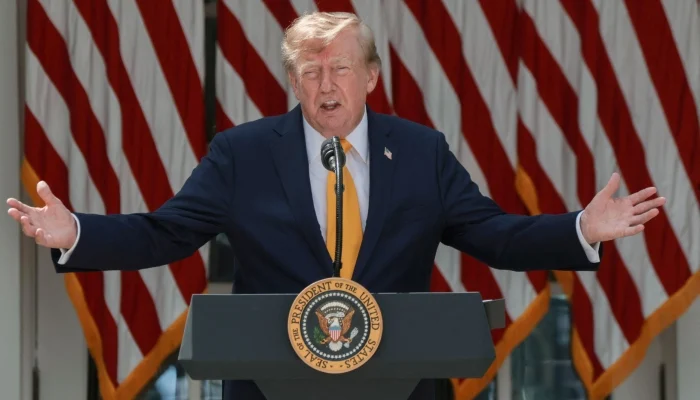
WASHINGTON: US President Donald Trump’s approval rating has remained at 33%, matching the lowest level recorded in Reuters/Ipsos polling during either his first or second term, as public support for the war with Iran continues to decline.
The latest four-day Reuters/Ipsos poll, which closed on Monday, found that only 31% of Americans support US military action against Iran. This marks a decline from 37% in March and 34% earlier this month, indicating growing public unease over the conflict.
The drop in support was driven largely by a decline among Republican voters. While Republicans remain the strongest supporters of the war, backing within the party fell to 69%, compared with 77% in March.
Trump Faces Growing Public Pressure
The conflict with Iran has increasingly weighed on Trump’s public standing this year. For the second consecutive Reuters/Ipsos survey, just 33% of respondents said they approved of his performance as president.
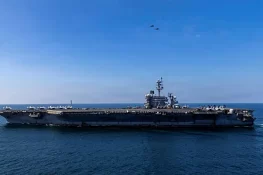
Trump has defended the military campaign, arguing that it is necessary to prevent Iran from developing a nuclear weapon. The war began after US-Israeli strikes on Iran on February 28 and has continued for around six months.
Although fighting has cooled in recent months, the wider conflict continues to have significant economic consequences. Iran has maintained what the report describes as a de facto blockade affecting oil exports from the region, contributing to sharp increases in US gasoline prices.
According to the poll, US gasoline prices are now more than $1 per gallon higher than they were before the war began.
Fears of a Prolonged Conflict
Public concern about the duration of the conflict is also increasing.
The Reuters/Ipsos poll found that 83% of Americans expect the war to continue for an extended period, up from 80% earlier this month.
The growing expectation of a long conflict presents a challenge for Trump, who campaigned during the 2024 presidential election on promises to control inflation and avoid prolonged military involvement abroad.
The combination of rising fuel prices and concerns about the war’s duration could create further political pressure on the White House, particularly as the United States moves closer to the November 3 midterm elections.
Trump’s Republican Party will be defending narrow majorities in Congress, making economic concerns and public attitudes toward the conflict potentially important factors in the election campaign.
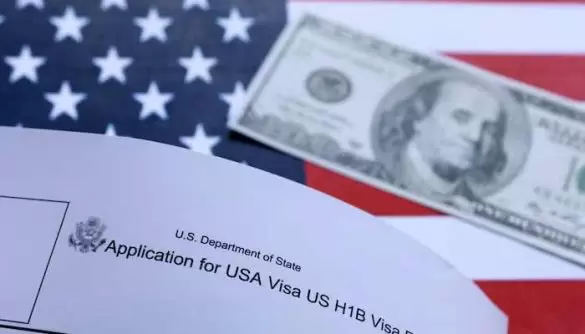
Trump Administration Proposes $103,265 Fee for New H-1B Visas
Sanctions and Economic Pressure on Iran
The Trump administration has continued to increase economic pressure on Tehran.
US Treasury Secretary Scott Bessent announced on Monday that the administration was considering expanding sanctions against countries that continue to do business with Iran. However, Washington stopped short of immediately imposing the proposed penalties.
The move reflected the complicated nature of the conflict, with the administration seeking to increase pressure on Iran while also facing concerns about the wider economic impact of the war.
Trump has repeatedly argued that sustained economic and military pressure is necessary to force Iran to change its policies. However, the declining public support reflected in the latest poll suggests that the conflict is becoming increasingly difficult for the administration to defend politically.
Democrats Hold Edge Among Independent Voters
The poll also showed a notable political advantage for Democrats among independent voters.
When asked which party they would support in congressional elections if voting took place today, 33% of independent voters chose Democrats, compared with 19% who preferred Republicans.
With midterm elections approaching, these figures could add to concerns among Republican lawmakers, particularly in closely contested congressional races.
The Reuters/Ipsos poll surveyed 1,215 US adults nationwide and had a margin of error of 3 percentage points in either direction.
The results underline the political challenge facing Trump: while the administration continues to defend its approach toward Iran, public support for the military campaign is declining, fears of a prolonged war are growing and the economic consequences of the conflict are becoming an increasingly important concern for American voters.