Pakistan’s Ambassador to the United States says the Indus Waters Treaty remains valid and binding, urging India to withdraw its unilateral measures.
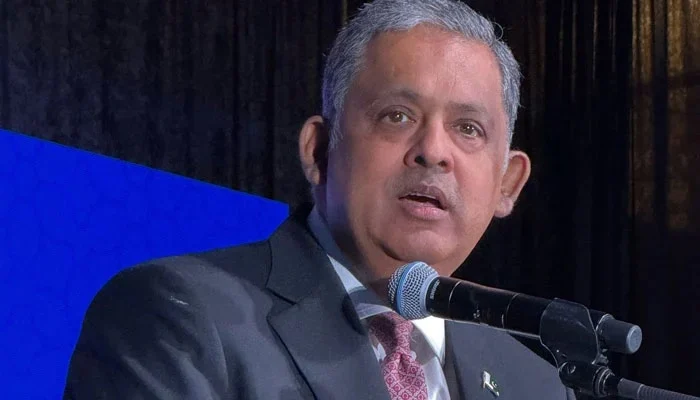
Pakistan’s Ambassador to the United States, Rizwan Saeed Sheikh, has strongly rejected India’s portrayal of the Indus Waters Treaty (IWT) as an unequal arrangement, accusing New Delhi of distorting the agreement’s history, structure and original purpose.
In an opinion piece published in Newsweek, Sheikh said India had increasingly promoted this narrative since announcing in April 2025 that it would place the treaty “in abeyance”. According to him, such a position appeared to be aimed at retrospectively justifying a unilateral decision that, Pakistan maintains, has no basis in the treaty or international law.
Treaty Was Not a Concession to Pakistan
The Pakistani envoy stressed that the Indus Waters Treaty is a binding international agreement signed on September 19, 1960, after more than a decade of negotiations facilitated by the World Bank.
He rejected the suggestion that the agreement was an act of generosity by India or a concession granted to Pakistan. Instead, he said the treaty represented a carefully negotiated balance that reflected the circumstances and interests of both countries.
Under the treaty, the waters of the eastern rivers — Ravi, Beas and Sutlej — were largely allocated to India, while Pakistan received rights over the western rivers — Indus, Jhelum and Chenab — subject to certain provisions allowing India limited use of the western rivers, including for hydropower projects.
Hydropower Disputes and Pakistan’s Treaty Rights
Sheikh also dismissed India’s claim that Pakistan had attempted to obstruct its hydropower development.
He said Pakistan’s use of the dispute-resolution mechanisms provided under Article IX of the treaty could not be described as obstruction. Instead, he argued, these mechanisms represent rights specifically guaranteed to both parties under the agreement.
According to Sheikh, India cannot seek to benefit from treaty provisions that permit hydropower development while rejecting the technical restrictions and dispute-resolution procedures that were negotiated as part of the same framework.
The Indus Waters Treaty provides mechanisms for resolving differences, including the appointment of neutral experts and the use of arbitration in certain disputes.
Pakistan Calls for Comprehensive Dialogue with India, Warns Against Violating Indus Waters Treaty
Pakistan Says Treaty Cannot Be Unilaterally Suspended
A key point raised by the ambassador was India’s decision in April 2025 to place the treaty “in abeyance”.
Sheikh maintained that the agreement contains no provision allowing either country to unilaterally suspend, terminate or place the treaty in abeyance. Therefore, he argued, India’s announcement cannot alter the legal status of the agreement or remove the rights and obligations created under it.
“The Treaty remains valid, operative and binding,” Sheikh wrote.
He also rejected attempts to link the implementation of the water-sharing agreement with unrelated political or security disputes between the two countries.
Warning Against Using Water as a Political Tool
The Pakistani ambassador warned that weakening a long-standing water-sharing arrangement could have consequences beyond the two countries.
According to him, using transboundary rivers as a political instrument would reduce certainty and predictability in an already sensitive region and could create serious risks for regional peace and stability.
Pakistan, Sheikh said, remains committed to implementing the treaty in both letter and spirit. He urged India to withdraw its unilateral measures, return to full compliance with its obligations and resolve disputes through the institutional and legal mechanisms established under the Indus Waters Treaty.