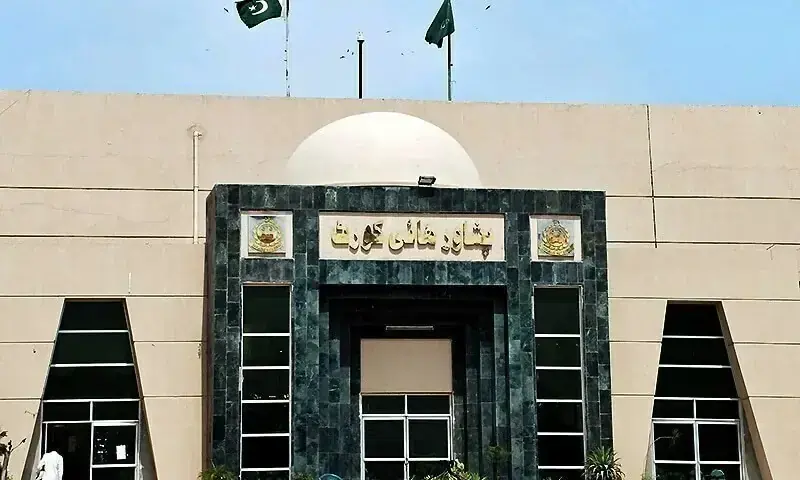
The Peshawar High Court (PHC) will hear petitions challenging the federal government’s decision to impose emergency and governor’s rule in Khyber-Pakhtunkhwa (K-P) on October 20.
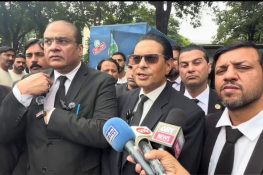
Pakistan Tehreek-e-Insaf (PTI) Chairman Barrister Gohar Ali Khan approached the court on October 14, seeking the annulment of the presidential proclamation issued on October 11. National Democratic Movement (NDM) leaders Mohsin Dawar and Bushra Gohar have also filed separate petitions challenging the decision.
The petitioners have questioned the constitutional basis for the measures and asked the court to review the legality of the proclamation.
PTI Challenges Constitutional Basis of Governor’s Rule
In his petition, filed through Advocate Ali Zaman, Gohar described the imposition of emergency and governor’s rule as unconstitutional and discriminatory.
He argued that terrorism could not be used as a justification for curtailing the authority of an elected provincial government.
The PTI chairman pointed out that other parts of the country, including Balochistan, had also faced terrorist attacks and casualties without governor’s rule being imposed. He maintained that security challenges alone should not automatically justify removing an elected government from power.
Gohar also referred to the period between 2007 and 2015, when K-P and the former tribal areas experienced a severe wave of militancy that resulted in significant casualties among civilians and security personnel.
According to the petition, the elected provincial government was not removed through governor’s rule during that period. The petitioner urged the court to examine the constitutional justification for the current measures and the motives behind their imposition.
PTI Rejects Allegations Over Counterterrorism Efforts
Gohar maintained that PTI opposed terrorism and supported action against militant groups to restore peace.
He rejected allegations that the party’s provincial government had failed to take effective action against terrorism or had shown leniency towards militants.
The petition argued that such accusations were being used to exert political pressure on PTI and undermine the mandate it secured in the 2024 general elections.
Gohar also contended that the party had won a two-thirds majority in the province and that the federal government could not curtail the powers of an elected administration because of political differences.
The petition further challenged the use of failed negotiations as a justification for action against PTI. It maintained that the party had not planned unlawful activity during its long march and that peaceful political protest could not, by itself, justify suspending an elected government.
These arguments form part of the petitioners’ case and have yet to be adjudicated by the court.
PTI Challenges Emergency and Governor’s Rule in K-P High Court
Petition Invokes Articles 232 and 234
The PTI chairman’s petition invokes Articles 232 and 234 of the Constitution, asking the court to determine whether the legal requirements for imposing an emergency and invoking governor’s rule were fulfilled.
Article 232 deals with the proclamation of an emergency under specified circumstances, while Article 234 provides for a presidential proclamation when a provincial government cannot be carried on in accordance with the Constitution.
The petition seeks judicial scrutiny of the government’s decision and asks the court to annul the October 11 proclamation.
NDM Leaders Also Challenge Presidential Proclamation
Separately, NDM President Mohsin Dawar and Bushra Gohar have filed a constitutional petition through Advocate Yousaf Orakzai.
The petition describes the October 11 presidential proclamation as unlawful, unconstitutional and beyond the president’s authority.
The NDM leaders have asked the PHC to declare the proclamation unlawful and set it aside. They have also sought interim relief to suspend its implementation until the court reaches a final decision.
Court Hearing Scheduled for October 20
The PHC is scheduled to take up the petitions on October 20, when the legal challenges to the emergency and governor’s rule in K-P will come before the court.
The proceedings will address the petitioners’ objections to the constitutional basis of the proclamation and their requests for judicial intervention.
The court’s decision could determine the legal status of the challenged measures. Until the petitions are decided, the arguments presented by the petitioners remain claims awaiting judicial determination.