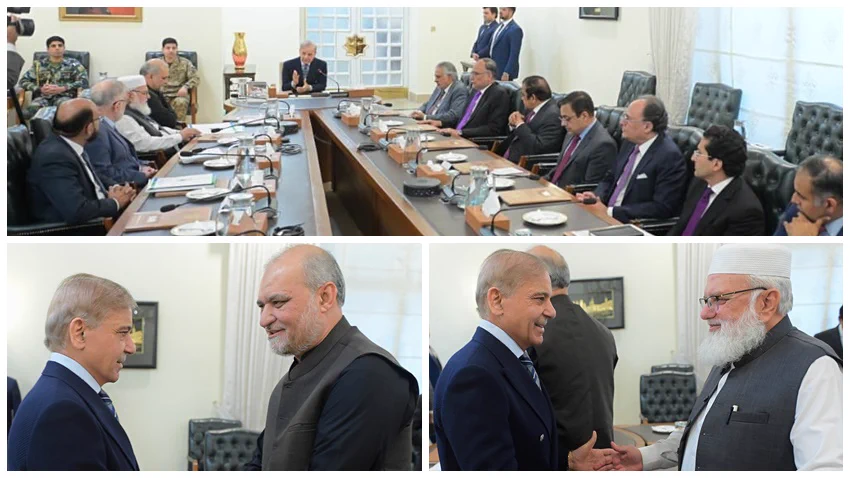
ISLAMABAD: Prime Minister Shehbaz Sharif on Tuesday initiated consultations on possible fuel price relief, meeting a delegation led by Jamaat-e-Islami Amir Hafiz Naeemur Rehman and agreeing to establish a six-member committee to develop proposals for reducing the financial burden on consumers.
The discussions focused on rising petroleum prices, inflation and the wider economic challenges facing the country. While JI demanded the complete abolition of the petroleum levy, the government sought time to assess financially sustainable options.
Shehbaz acknowledged the pressure that higher fuel prices had placed on the public, particularly low-income households, and reiterated his commitment to providing relief within the government’s financial capacity.
Government and JI to Form Six-Member Committee
According to the Prime Minister’s Office, both sides agreed to establish a committee comprising three government representatives and three JI representatives.
The committee will examine two main proposals: expanding the existing petroleum relief scheme to include more deserving households and developing practical recommendations for a phased reduction in the petroleum levy for consideration in the next federal budget.
The prime minister nominated Deputy Prime Minister and Foreign Minister Ishaq Dar, Planning Minister Ahsan Iqbal and Adviser to the Prime Minister Rana Sanaullah to represent the government.
The JI delegation included Liaquat Baloch, Syed Farasat Shah, Nasrullah Randhawa and Inayatullah.
The meeting was also attended by Finance Minister Muhammad Aurangzeb, Petroleum Minister Ali Pervaiz Malik, Economic Affairs Minister Ahad Cheema and Minister of State for Finance Bilal Azhar Kiani.
The Prime Minister’s Office said 12.7 million people had registered under the government’s existing petroleum relief programme.
Hafiz Naeem Demands Complete Abolition of Petroleum Levy
Speaking after the meeting, Hafiz Naeem said the government had requested additional time to develop a solution but maintained that JI would not abandon its demand for the complete abolition of the petroleum levy.
“The government has promised that relief will be provided. The question is not whether relief will be given, but how and when,” he said.
Hafiz added that the prime minister had assured the party that the technical committees would be given eight to 10 days to prepare their proposals.
He said the talks had not failed because both sides had acknowledged the need to reduce the financial burden on ordinary citizens. However, he made it clear that negotiations would continue alongside the party’s protest campaign.
The JI chief warned that the government should take concrete action by mid-November, threatening to resume the party’s long march towards Islamabad if its demands remained unaddressed.
He also claimed that JI’s campaign had already contributed to a reduction of Rs32 per litre in diesel prices.
Government Cites Global Oil Market Pressures
Addressing a news conference alongside Rana Sanaullah, Planning Minister Ahsan Iqbal said the government was committed to protecting vulnerable households from the economic consequences of regional instability and rising international energy prices.
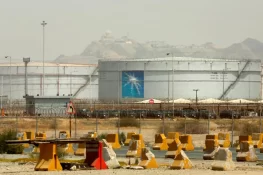
Iqbal said disruptions affecting the Strait of Hormuz had placed pressure on oil supplies, while higher transportation, insurance and logistics costs had further increased the burden on international energy markets.
Hafiz Naeem Warns of Islamabad March in Mid-November Over Petroleum Levy
He added that rising petrol and diesel prices were affecting countries around the world, making it difficult for governments to provide relief without placing additional pressure on public finances.
The minister stressed that any subsidy or reduction in petroleum taxes would have to be carefully assessed to ensure that it remained affordable and sustainable.
“The relief must be sustainable, and its cost must be something we can afford,” he said.
Shehbaz Says Diplomacy Remains a Priority
During the meeting, Shehbaz told the JI delegation that the current fuel price crisis was linked to regional and international developments rather than domestic government policies.
“The government is making extensive diplomatic efforts to resolve the crisis and restore normality,” he said, according to the Prime Minister’s Office.
The prime minister also briefed the delegation on the assistance already being provided to lower-income groups through the government’s petroleum relief scheme.
Iqbal, meanwhile, criticised the previous Pakistan Tehreek-e-Insaf government over its decision to reduce fuel prices despite rising international oil costs, arguing that the move placed severe pressure on public finances and pushed the country towards default.
Government and JI Agree on Need for Public Relief
Rana Sanaullah said the government and JI shared the objective of providing relief to ordinary citizens, despite differences over how the assistance should be delivered and financed.
He urged political parties to support Pakistan’s diplomatic efforts to promote regional peace, saying the country’s initiatives were receiving international recognition.
The immediate outcome of Tuesday’s meeting is an agreement to examine options rather than a final decision on reducing the petroleum levy.
The committee’s recommendations and the government’s response will determine whether the proposed measures lead to lower fuel costs or expanded assistance for eligible households. Meanwhile, JI has signalled that it will continue pressing its demands through negotiations and public protests.