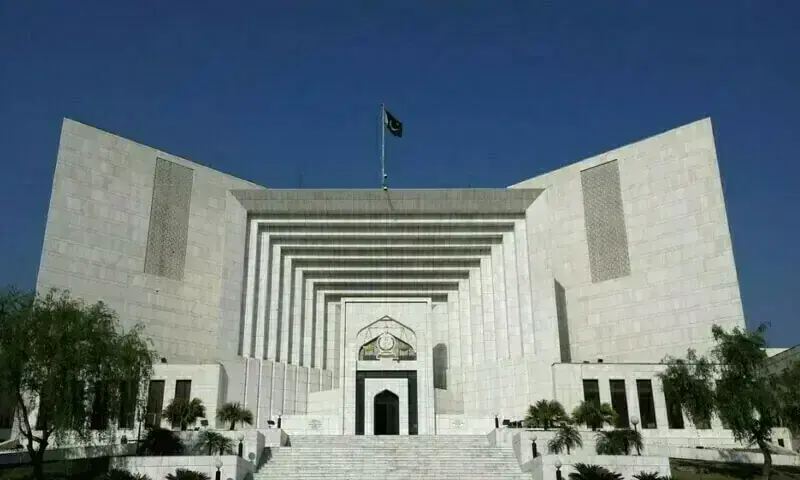
The Supreme Court dismissed a petition filed by an Intelligence Bureau (IB) employee and upheld his compulsory retirement, observing that acquittal in a criminal case does not automatically invalidate separate departmental proceedings.
The case involved Jawad Abbasi, who worked as a cook in the IB and was accused of setting his wife on fire. He had challenged a Federal Service Tribunal decision that upheld the departmental penalty imposed against him.
In a judgment authored by Justice Shahid Waheed, with Justice Ayesha A. Malik also on the bench, the court observed that violence against women could not be treated as a purely private matter simply because it occurred inside the home.
Private Conduct Matters
The court noted that the dignity of women was a fundamental constitutional value. It said a civil servant’s conduct in private life could also affect his suitability for public office and damage the reputation of the institution he served.
Under the Civil Servants (Efficiency and Discipline) Rules, 2020, conduct unbecoming of a government employee and prejudicial to service discipline could amount to misconduct, even when the behaviour occurred outside the workplace.
Departmental Inquiry
The Supreme Court clarified that the registration of a First Information Report (FIR), by itself, was not sufficient grounds for imposing departmental punishment.
However, the court found that the departmental inquiry in this case had independently examined the allegations. The inquiry officer recorded statements from 13 witnesses in the employee’s presence and gave him an opportunity to cross-examine them.
According to the judgment, the inquiry established the charges, including the allegation of violence against his wife and an attempt to portray the incident as her suicide.
Supreme Court Launches Legal Aid Cell for Deserving Litigants
Acquittal Does Not End Inquiry
The court explained that criminal and departmental proceedings served different purposes and operated under different standards of proof.
It observed that an acquittal meant criminal guilt had not been established beyond reasonable doubt. However, it did not automatically establish innocence for departmental purposes or confirm that the employee was fit to continue in government service.
The judges also noted that Abbasi had been given an opportunity to defend himself and that compulsory retirement was proportionate to the seriousness of the misconduct.
Finding no legal error, violation of due process or substantial question of law of public importance, the Supreme Court refused leave to appeal and dismissed the petition, thereby maintaining the compulsory retirement decision.