
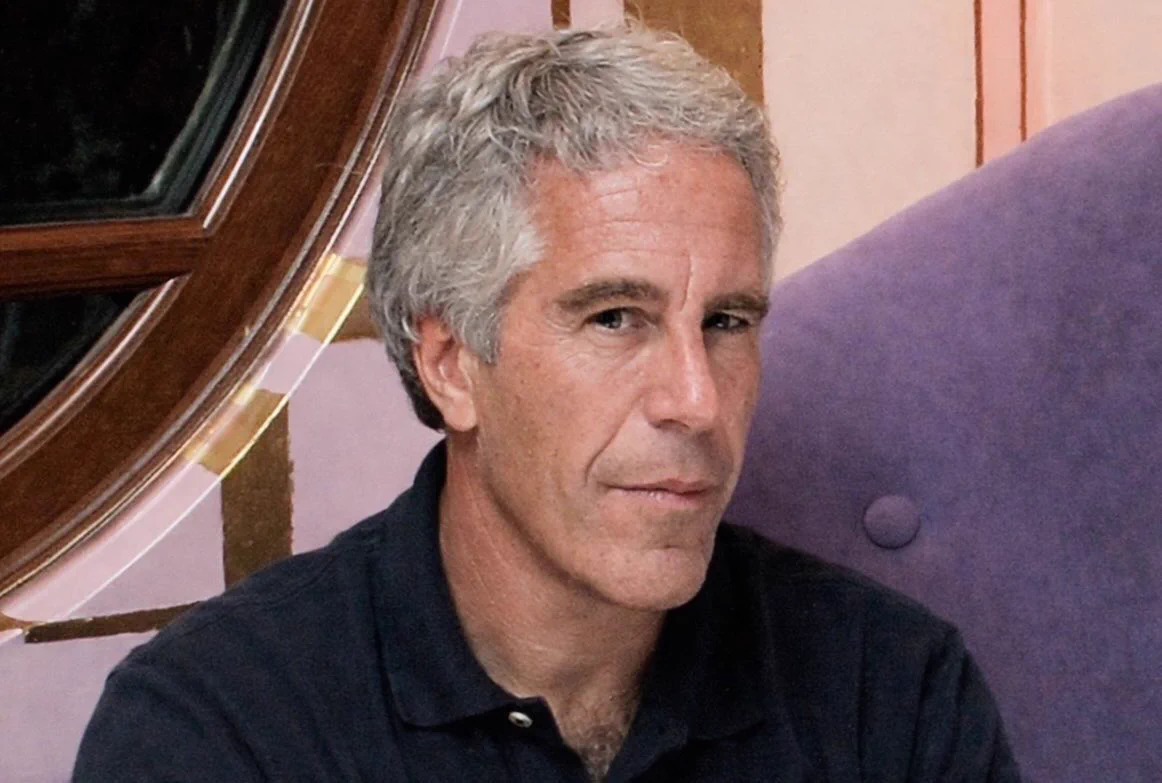
A forensic expert has challenged the official finding that convicted sex offender Jeffrey Epstein died by suicide in a New York prison in 2019, arguing that injuries documented in his autopsy are more consistent with homicide. Professor Michael Freeman, who reviewed medical records and photographs from Epstein’s post-mortem examination, believes he was strangled, possibly from behind, before his body was suspended from a bunk bed. However, US authorities continue to stand by the original suicide ruling.
Forensic Expert Questions Official Cause of Epstein’s Death
Professor Michael Freeman presented his findings in London on Monday, November 16, after examining Epstein’s medical examiner records and photographs.
Speaking to BBC Newsnight, Freeman said the injuries documented in the files did not match the expected pattern of a suicidal hanging.
He argued that Epstein had most likely been strangled with a ligature, which was subsequently used to suspend his body.
According to Freeman, the pattern of injuries suggested that another person may have been involved in his death.
“The injuries and the way the body was found don’t match up. There’s only one remaining explanation then, and that is that the death was as a result of a homicide,” he said.
Freeman’s assessment was based on an examination of records and photographs rather than a direct examination of Epstein’s body.
Neck Injuries and Shoulder Haemorrhage Raise Questions
Among the findings highlighted by Freeman were unusual marks on Epstein’s neck, which he said were inconsistent with the injuries typically associated with hanging.
He also pointed to marks above the main ligature impression, suggesting they could indicate an attempt to remove the material during a struggle.
Another significant finding was deep bleeding in the soft tissue of Epstein’s left shoulder, which Freeman argued was not adequately explained by the official suicide theory.
He also identified injuries to other parts of the body and used three-dimensional computer modelling to examine whether the documented injuries could have occurred during a hanging.
Freeman concluded that the overall pattern was more consistent with an assault followed by strangulation.
However, forensic interpretations of neck injuries can be complex, and different experts may reach different conclusions from the same medical evidence.
Bill Gates Faces Congressional Questions Over Epstein Links
US Medical Examiner Rejects Murder Theory
Epstein’s death was officially ruled a suicide by hanging in August 2019 following an autopsy conducted by New York City’s Office of Chief Medical Examiner.
Dr Barbara Sampson, who was the city’s chief medical examiner at the time, maintained that the injuries were consistent with suicide.
The medical examiner also reported no evidence of defensive wounds typically associated with a physical struggle involving strangulation.
The office has again defended its original conclusion following the latest claims, stating that it stands by its determination of the cause and manner of Epstein’s death.
The US Department of Justice’s Office of Inspector General also investigated the circumstances surrounding his death. Its 2023 report documented serious failures by prison staff, including inadequate monitoring, staffing problems and violations of security procedures.
However, the investigation found no evidence contradicting the FBI’s determination that there was no criminal involvement in Epstein’s death.
Epstein’s Death in 2019 Sparked Worldwide Controversy
Epstein was found dead in his cell at the Metropolitan Correctional Center in New York on August 10, 2019, while awaiting trial on federal sex trafficking charges involving underage girls.
His death attracted international attention because of his connections with wealthy businesspeople, politicians and other influential figures.
He had previously been convicted in 2008 of soliciting prostitution from a minor and had reached a controversial plea agreement that allowed him to avoid a lengthy prison sentence.
His 2019 arrest on federal sex trafficking charges renewed scrutiny of his activities and relationships before his death prevented the case from going to trial.
The circumstances of his death have remained the subject of public debate, particularly because of serious security failures at the prison.
New Findings Have Not Changed Official Ruling
Freeman’s latest assessment has renewed questions about whether Epstein’s death was properly investigated. His findings were based on records provided by Epstein’s brother, Mark Epstein, who has repeatedly questioned the official suicide ruling.
The expert said he had no conclusion about who might have been responsible if his homicide theory was correct.
His research has not yet undergone peer review, and his conclusions have not been accepted by the New York City medical examiner’s office.
The new analysis therefore represents an independent forensic challenge rather than a change in the officially established cause of death.
For now, Epstein’s death remains officially classified as suicide, despite renewed questions from Freeman and other individuals who have examined the case.
Sources: BBC News, CBS News, Reuters and the US Department of Justice.