ISLAMABAD: Federal ministers said on Sunday that the government had spent nearly a month attempting to bring the Khyber-Pakhtunkhwa (K-P) administration and opposition parties on board before imposing emergency measures in the province amid worsening security concerns.
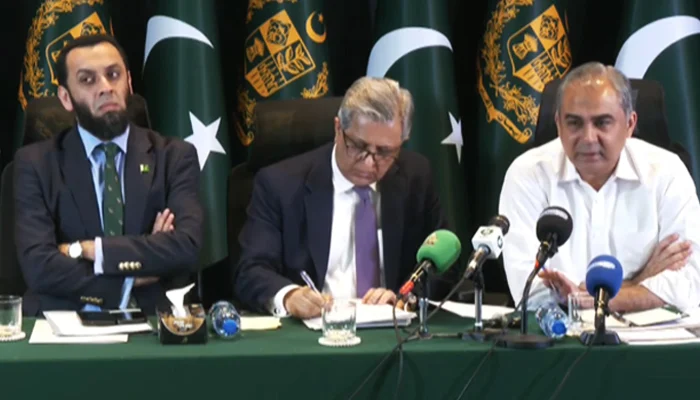
Speaking at a press conference, Law Minister Azam Nazeer Tarar, Interior Minister Mohsin Naqvi and Information Minister Attaullah Tarar explained the government’s position on the decision taken on Prime Minister Shehbaz Sharif’s advice.
President Asif Ali Zardari approved the imposition of emergency in K-P under Articles 232(1) and 234(1) of the Constitution.
Naqvi details month-long efforts
Interior Minister Mohsin Naqvi said the government had repeatedly attempted to establish an understanding with the K-P government over the previous month.
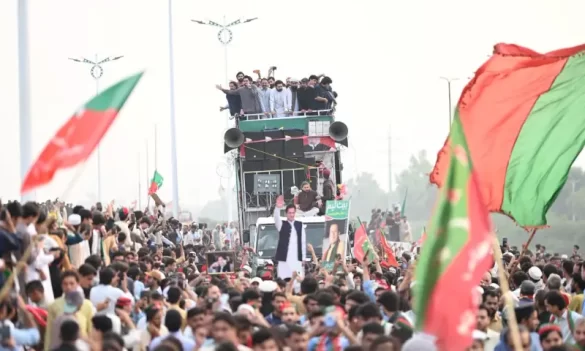
Naqvi said he had remained personally engaged with the provincial administration while discussions were also held on political issues, including a planned long march and sit-in.
He said Prime Minister Shehbaz Sharif was scheduled to travel to New York on September 17 and had planned to meet opposition representatives before leaving.
According to Naqvi, the government decided to establish a committee and arrange a meeting on September 15 or 16, but received no response.
Despite the lack of a response, he said, contacts between the government and opposition continued.
Naqvi said a meeting was subsequently held between President Zardari and the prime minister, during which he suggested bringing the K-P government into the process.
He said a draft proposal was revised four times the following day. However, after the government believed the matter had been settled, it received another draft.
Government says terrorism was main concern
Naqvi said the government had made repeated attempts to reach an understanding with Pakistan Tehreek-e-Insaf (PTI) leaders, with the final contact taking place at 11:45pm the night before the emergency decision.
“I told them that even at that point, something could still be done, but there was no response,” he said.
The interior minister said the government had also proposed a paragraph during negotiations but did not receive a response.
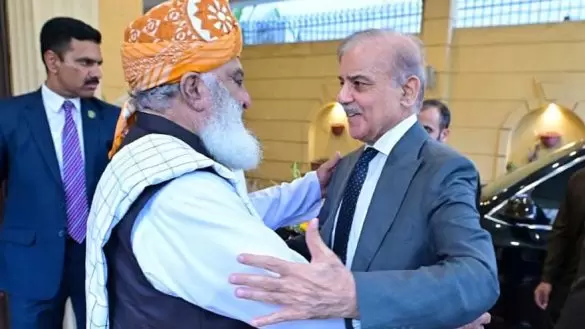
He added that Jamiat Ulema-e-Islam-Fazl (JUI-F) chief Maulana Fazlur Rehman had also met Prime Minister Shehbaz Sharif.
Naqvi rejected the impression that the government had made ending the planned sit-in a condition for negotiations, saying terrorism was the government’s primary concern.
“Our issue was only terrorism,” he said.
He claimed the condition regarding postponement of the sit-in had been proposed by the Pakistan Peoples Party (PPP), rather than his ministry.
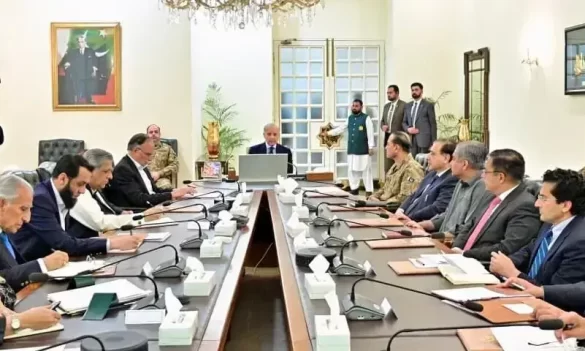
PM Shehbaz Chairs Cabinet Meeting as Government Weighs Emergency in K-P
Naqvi cites deteriorating security situation
The interior minister said the security situation in K-P had deteriorated significantly, with residents in some districts allegedly unable to leave their homes after sunset.
He also referred to the death of an Election Commission official a day earlier, describing it as another indication of the security challenges facing the province.
Naqvi said he had held several meetings with K-P Chief Minister Sohail Afridi, with terrorism remaining a key issue during the discussions.
According to Naqvi, he had asked the chief minister about plans to strengthen police forces in affected districts. He said Afridi had cited a shortage of funds, prompting the federal government to offer the required financial resources.
Naqvi further claimed that provincial representatives had agreed during negotiations that emergency measures should be introduced in certain districts.
Interior minister defends emergency decision
Naqvi said the federal government had struggled to secure public support for its position and claimed that provincial representatives had expressed reservations about publicly releasing photographs of their meetings.
He said he had never asked them to pose for photographs or make the images public.
The interior minister argued that the federal government could not continue losing security personnel to terrorism while the provincial government failed to take ownership of the fight against militants.
“Terrorism cannot be fought alone under any circumstances; it requires a collective effort,” he said.
Naqvi described the emergency as a difficult decision taken after repeated attempts to avoid such a step.
He claimed that 518 police personnel had been killed over the preceding 18 months.
According to Naqvi, the situation could have been different if the provincial government had accepted the federal government’s proposals the previous night.
Govt cites rise in terrorist incidents
Law Minister Azam Nazeer Tarar said Prime Minister Shehbaz Sharif had briefed President Zardari on the circumstances presented by the interior minister.
He said the K-P governor had submitted a report to the federal government as part of his constitutional responsibilities.
Azam claimed that terrorist incidents in K-P had increased by 196% over the previous two to two-and-a-half years. He said casualties and damage to vehicles had also increased, while attacks targeting security forces, police personnel and religious leaders had risen.
The law minister defended the constitutional basis of the emergency, arguing that the federal government could intervene in provincial affairs when the law and order situation warranted such action.
He said the president had imposed the emergency on the prime minister’s advice.
According to Azam, the provincial government had been rendered inactive under the emergency measures, while the governor had been directed to exercise his constitutional powers.
Advisory committee formed
Azam said an 11-member advisory committee had been established and a secretariat set up for 12 districts.
Reports from the districts would be sent directly to the federal government, he said.
He added that a council had also been established, with the additional chief secretary tasked with overseeing its functioning.
Officials holding relevant positions had been rendered inactive under the emergency arrangements, while the military had been deployed under Article 245 of the Constitution, Azam said.
Attaullah Tarar accuses K-P govt of links with terrorists
Information Minister Attaullah Tarar took a stronger political position, accusing the K-P government of having an alliance with terrorists.
He alleged that the provincial administration had empowered individuals responsible for attacks on civilians and Pakistan’s armed forces.
Attaullah said reports from intelligence agencies and law enforcement bodies had highlighted what he described as a grave security situation in the province.
He claimed political leaders from various parties had been targeted in attacks and alleged that terrorists were being provided safe passage because of their links with elements within the provincial government.
Recounting a visit to a hospital in Kohat, the information minister said he had met injured people who had appealed to authorities for protection from militants.
Attaullah accused those responsible for security in the province of treating terrorists as partners rather than confronting them.
The federal ministers maintained that the emergency decision followed repeated attempts to reach an agreement with the K-P government and opposition, while insisting that worsening terrorism and security concerns had ultimately forced the federal government to take action.