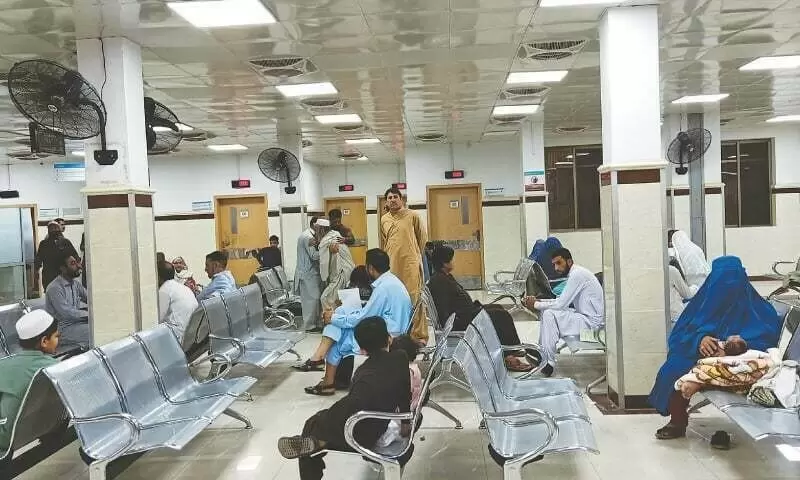
Public hospitals across Khyber-Pakhtunkhwa continue to face shortages of medicines, basic facilities and medical treatment despite years of PTI rule and several healthcare reforms, prompting residents to demand practical improvements from the province’s new administration.
PESHAWAR: The Pakistan Tehreek-e-Insaf (PTI) governed Khyber-Pakhtunkhwa for approximately 13 years, introducing several major healthcare initiatives aimed at improving public medical services. However, residents say many government hospitals still struggle to provide adequate treatment, raising questions about the implementation and effectiveness of these reforms.
Among the initiatives introduced during PTI’s tenure were the Sehat Card programme, the establishment of Boards of Governors (BoGs) in public-sector hospitals and the Institution-Based Practice (IBP) system. These measures were intended to improve healthcare delivery and strengthen the financial position of government hospitals.
Despite these efforts, residents have complained that ordinary patients continue to face difficulties accessing affordable and quality healthcare.
Residents Raise Concerns
Javed Khan, a resident of Gulberg in Peshawar Cantt, told The Express Tribune that economically disadvantaged people had received limited benefits from PTI’s 13-year rule.
He alleged that the privatisation of public hospitals had benefited individuals close to the former ruling party rather than improving healthcare services for the wider population.
Khan also alleged that billions of rupees had been misappropriated under the Sehat Card programme, raising questions about the financial management of the government’s flagship healthcare initiative.
He said the imposition of governor’s rule had created expectations that the new administration would focus on public welfare and service delivery rather than political interests.
Khan expressed hope that technocrats appointed to the administration would use their professional expertise to address longstanding problems in the health sector.
He said the government should ensure that people who cannot afford expensive private treatment have access to reliable medical facilities in public hospitals.
Shortages in District Hospitals
Abbas Khan, a resident of Mardan, said district-level hospitals continued to lack basic facilities despite repeated government claims about improvements in healthcare.
Speaking to The Express Tribune, he said patients suffering from cancer and other serious illnesses still faced difficulties obtaining treatment and medicines at government hospitals.
He added that the situation was particularly challenging for people living in remote districts and tribal areas, including Mohmand, Bajaur and Kurram.
According to him, inadequate healthcare facilities in these areas often force patients to travel long distances to receive medical attention, increasing the financial and physical burden on families.
KP receives nearly Rs800bn under war-on-terror share since 2010
Abbas also criticised the former provincial government, saying PTI had repeatedly promised change but had failed to address several infrastructure and public service problems.
He pointed to the condition of roads and infrastructure across K-P, particularly in Peshawar, arguing that shortcomings in healthcare and other essential services continued to affect ordinary residents.
He urged the new administration to prioritise longstanding public problems and deliver practical improvements instead of making further promises.
Governor Promises Healthcare Review
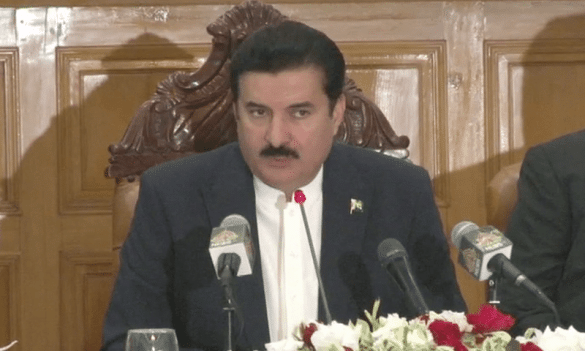
Khyber-Pakhtunkhwa Governor Faisal Karim Kundi said he had received numerous complaints about the province’s healthcare system.
He announced plans to meet the provincial health adviser to discuss hospital governance, the Sehat Card programme and measures to improve medical facilities.
The governor pledged to continue welfare initiatives that benefit the public. However, he criticised PTI’s 13-year tenure, claiming that the party had failed to establish new hospitals or basic health units (BHUs).
PTI Rejects Allegations
Responding to the criticism, PTI provincial information secretary Shaukat Yousafzai defended the party’s performance in the health sector.
He cited improvements to existing hospitals and the introduction of the Sehat Card programme as evidence of the party’s efforts to expand healthcare facilities and access to treatment.
Yousafzai rejected allegations of corruption, challenging the provincial government to present evidence to support its claims. He maintained that no concrete proof had been provided.
The contrasting positions highlight the continuing political debate over healthcare reforms in Khyber-Pakhtunkhwa, while residents are calling for improvements that can be felt in hospitals and medical facilities across the province.