The plan aims to address staffing shortages, improve surveillance, strengthen security infrastructure and expand the operational presence of police and counterterrorism units across the province.
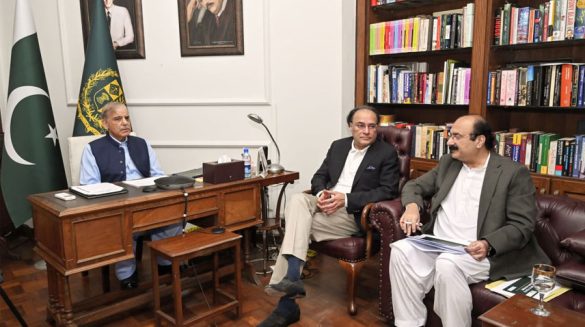
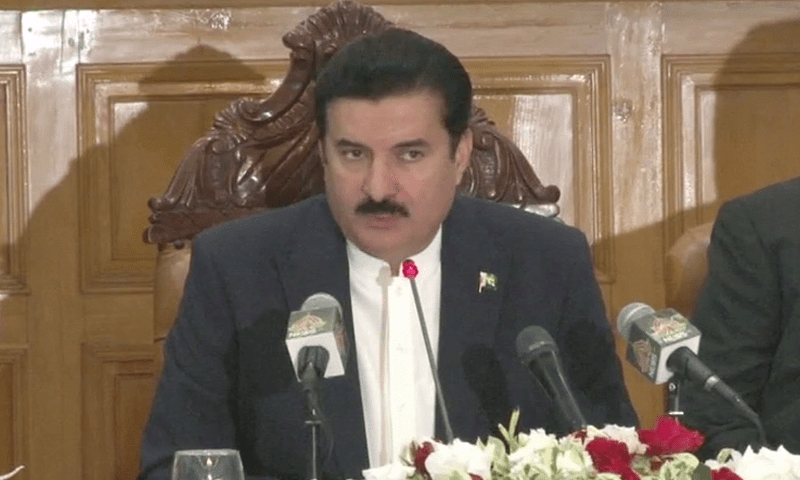
Speaking at a press briefing at the Governor House in Peshawar on Sunday, Kundi said security was the provincial government’s foremost priority, adding that the police needed adequate resources, modern equipment and stronger institutional support to tackle terrorism.
Security Is Top Priority
Kundi said the provincial government had made security its first, second and third priority, echoing remarks previously made by Prime Minister Shehbaz Sharif.
“Development is also necessary, but the best development is to strengthen our police,” he said.
The governor assured that the government would provide police personnel with the weapons, ammunition and other resources required to perform their duties. He added that compensation packages had been approved for police officers killed in the line of duty, while efforts were underway to improve their salaries and other benefits.
He said the government wanted police salaries and allowances to become competitive with those offered in other provinces.
Political Support Essential
Addressing the shortcomings of previous counterterrorism policies, Kundi said the lack of political ownership had been among the biggest weaknesses in the province’s fight against terrorism.
He recalled that there had been a time when some political voices described the conflict as “not our war”.
Questioning that position, he asked whether the families of security personnel who sacrificed their lives for the country would consider their loved ones’ sacrifices unrelated to Pakistan.
Kundi said the current provincial government would stand alongside security forces and ensure that police personnel were equipped to lead frontline operations.
He also rejected the idea that counterterrorism was someone else’s responsibility, declaring: “This is absolutely our war.”
Coordination With Federal Government
The governor recalled that the provincial government convened an Apex Committee meeting on its first working day in office. He said another major meeting was subsequently held in Peshawar, attended by the prime minister, federal ministers, the field marshal and senior security officials.
According to Kundi, the provincial government presented its security requirements, including a request for Rs160 billion, which Prime Minister Shehbaz Sharif agreed to support.
He said follow-up meetings had also taken place in Islamabad to explain the province’s requirements and proposed measures.
Kundi stressed that provincial demands should be presented through proper arguments and negotiations rather than confrontation, adding that coordination with the federal government had improved.
He also said the provincial government’s security policy would remain aligned with the federal government’s position.
“Our decisions and policies will come from Islamabad, not Jalalabad, Kandahar or Kabul,” he said.
Concerns Over Afghanistan
Kundi accused the Afghan Taliban government of allowing its territory to be used by India and Israel against Pakistan.
He questioned the previous provincial government’s response to statements by Afghan officials threatening to take control of Peshawar. He also referred to drones that had crossed the border, saying Pakistani forces had intercepted some of them.
The governor said Pakistan had raised security concerns at international forums through the Foreign Office, foreign minister and deputy prime minister.
He maintained that negotiations could not take place with groups that refused to recognise the state, Constitution and law.
“There can be no dialogue with those who do not recognise the state, the Constitution and the law,” he said, adding that those taking up arms against the state would face a response.
Police Facilities in Merged Districts
The governor called for improved facilities for police personnel in the merged districts, pointing out that not a single proper police line had been established there since the former tribal areas became part of K-P.
He said officials had been directed to prepare a comprehensive plan for upgrading police stations, posts, police lines and offices across the former tribal areas.
The plan would include providing suitable buildings, facilities and modern equipment to personnel working in those districts.
Kundi also announced plans to improve police welfare packages and the Security Challenge Allowance, saying officers serving in difficult areas deserved better facilities and financial support.
Public Confidence a Priority
The governor stressed that restoring public confidence was essential for the success of counterterrorism operations.
Referring to security operations conducted in the province between 2008 and 2013, he recalled that residents had supported operations in Swat and participated in the return and rehabilitation of displaced families.
However, he said some former militants who had returned from Afghanistan or been released from prison had subsequently taken up arms again.
Kundi said police had a direct relationship with residents in every area and needed to strengthen that connection through regular engagement.
He proposed meetings with tribal elders, jirgas, open courts and religious scholars to address public concerns. The government also intends to strengthen dispute resolution councils (DRCs), which are already established in all districts, and extend their operations to tehsil level.
Engaging young people would also be a priority, given K-P’s large youth population. The government plans to involve them through sports activities, employment initiatives and other constructive programmes.
“Once people’s confidence is restored, half the battle will have been won,” he said.
The governor added that development projects would have limited value without security, arguing that children must be able to attend school safely and adults should be able to travel for work and business without fear.
Police and CTD Face Shortages
Home Secretary Amjad Ali Khan told the briefing that the police and CTD were facing serious shortages of personnel, equipment and infrastructure.
According to the presentation, the police force had a shortfall of 10,537 personnel, while 638 field operator positions in the CTD remained vacant.
The police also faced a 36 per cent shortage of operational vehicles, while only 12 per cent of the force had access to anti-drone systems.
Khan said 15,186 former Khassadar personnel had been absorbed into the police following the merger of the former tribal areas. However, many had not received adequate training.
He added that the police department needed to strengthen its mid-level management and improve recruitment procedures for specialist positions.
The home secretary further said the previous provincial government had allocated only 3.2 per cent of its total security budget to the merged districts. Police personnel in those areas were still working from temporary arrangements and buildings nearly eight years after the merger.
Of the Rs6.4 billion approved for restoring counterterrorism infrastructure in 22 districts, only Rs1 billion had been released, he added.
Rising Security Casualties
The presentation also provided figures for casualties among security personnel and civilians between 2024 and September 2026.
According to the briefing, 1,003 members of the armed forces, 627 police personnel and 808 civilians were killed during this period.
For 2026 up to September, the figures stood at 255 soldiers, 302 police personnel and 304 civilians.
Despite the losses and operational challenges, security forces had killed 3,788 terrorists over the previous three years, Khan said.
Countering Terrorism Top Priority, Says K-P Governor Faisal Karim Kundi
Rs70.1 Billion Security Plan
Under the proposed spending plan, the government intends to allocate Rs59.8 billion to the police and Rs10.3 billion to the CTD.
The police allocation includes:
Rs33.4 billion for infrastructure development.
Rs26.4 billion for equipment and procurement.
The CTD’s proposed Rs10.3 billion allocation includes Rs5.4 billion for infrastructure and Rs4.9 billion for procurement.
The presentation outlined several targets for improving police capabilities over the coming months.
The government aims to increase police fortification from its existing level to 75 per cent and raise surveillance coverage from 15 per cent to 60 per cent.
It also plans to increase night-fighting capacity from 18 per cent to 50 per cent and anti-drone capability from 1 per cent to 50 per cent.
Other targets include:
Increasing armoured police vehicle availability from 19 per cent to 45 per cent.
Raising armoured personnel carrier availability from 61 per cent to 80 per cent.
Improving overall vehicle availability from 50 per cent to 70 per cent.
Increasing jamming equipment availability from 40 per cent to 50 per cent.
For the CTD, the government intends to increase counter-drone and fighting capabilities from 52 per cent to 60 per cent.
Vehicle availability is targeted to rise from 50 per cent to 80 per cent, while vehicle armouring is expected to improve from 16 per cent to 70 per cent.
The plan also aims to increase jammer availability from 3 per cent to 50 per cent and eliminate the existing 79 per cent shortfall in protective equipment.
Recruitment and Specialised Training
The government intends to reduce the police manpower shortage from 15 per cent to 5 per cent and fill vacant CTD field operator positions through accelerated recruitment.
Recruitment will be pursued through the Public Service Commission and other available channels.
The plan also includes specialised training in drone technology, anti-drone systems, sniping and explosive-device disposal, with training arrangements to be made in collaboration with the Pakistan Army.
Surveillance and Technology Expansion
The government plans to establish District Nerve Centres in around 10 districts to bring intelligence and operational information together.
Safe City projects will also be expanded, while anti-drone systems will be introduced in vulnerable areas, including Dera Ismail Khan, Lakki Marwat and Bannu.
Other proposed measures include satellite-based audio and video communication systems for areas with unreliable connectivity.
Police facilitation centres offering online services for overseas Pakistanis are also planned, alongside smart front desks at 406 police stations in major cities.
The presentation further proposed legislation to establish a Safe City Authority and amendments to introduce faceless anti-terrorism courts.
Khan said the proposed courts would help protect witnesses, prosecutors and judges while allowing terrorism cases to be concluded more quickly.
The government also intends to use artificial intelligence to monitor social media activity and counter what officials described as the narrative of “Fitna al-Khawarij”.
The presentation proposed connecting surveillance systems, drones and police databases to improve coordination and operational responses.
Targets Within 100 and 180 Days
Kundi said the government had divided its security targets into two phases.
Immediate measures are expected to be completed within 100 days, while the next set of targets is scheduled for completion within 180 days.
Longer-term projects would also be initiated during this period, although their completion could take additional time.
“The immediate plan is to empower the police and provide them with resources,” he said.
The governor added that successful security and administrative initiatives introduced by Punjab, Sindh and Balochistan should be studied and adapted where appropriate rather than dismissed.
Funding for Merged Districts
During the question-and-answer session, journalists raised concerns about federal funding, legal approvals and the implementation timeline for the proposed security measures.
Kundi clarified that the financial commitment made at the time of the 2018 merger of the former tribal areas was Rs100 billion annually for 10 years, rather than Rs1,000 billion every year.
He acknowledged that the federal government might not have released the full amount but argued that the previous provincial government had also failed to pursue the matter effectively.
The governor said the current administration would ensure that funds allocated for the merged districts were spent in those areas instead of being diverted to other budget heads or locations.
He said 70 per cent of the proposed funding would be directed towards the merged districts and 12 other districts facing security-related challenges.
The money would be spent on properly planned development projects aimed at restoring public confidence rather than being distributed equally among districts or used for smaller schemes such as streets and drainage.
Kundi said Rs45 billion had been allocated in the current provincial budget for development work in the relevant areas, with funds released to locations where projects were ready to proceed.
He added that another Rs30 billion was expected from the federal government under the security package.
Government Rules Out Retreat
Concluding his remarks, Kundi said the provincial government would not retreat from its counterterrorism efforts and remained committed to restoring peace across K-P.
He stressed that security, public trust, institutional capacity and development needed to move forward together.
“We have reached a point where there is no turning back. The word defeat should not be in our dictionary,” he said.