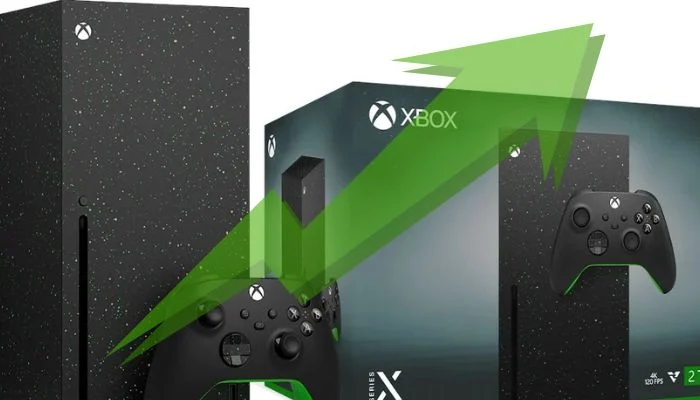
LONDON: Microsoft has significantly increased the prices of Xbox consoles across Europe and the United Kingdom, with some models seeing price hikes of up to 43% as the company faces rising hardware costs linked to the global artificial intelligence boom.
The new prices took effect on August 1, making several Xbox models substantially more expensive for consumers.
AI demand driving hardware costs
According to industry reports, soaring demand for high-performance memory chips and graphics components used in AI infrastructure has pushed up manufacturing costs for gaming consoles.
Technology companies—including Microsoft—are investing heavily in AI data centres, increasing demand for GDDR6 memory and other advanced semiconductor components.
As a result, memory prices have surged, placing additional pressure on hardware manufacturers.
Xbox prices rise sharply
Under the revised pricing:
- Xbox Series S 512GB increased from €349 to €499, a rise of approximately 43%.
- Xbox Series X (Disc Edition) now costs €799.99, up from €599.99.
- In the UK, the Xbox Series X price has increased from £499.99 to £669.99.
The new prices apply across several European markets and the UK.
CuspAI Valued at $2.6B After Backing From Bezos, Nvidia and Meta
Why Microsoft raised prices
Gaming consoles are often sold with relatively small profit margins—and in some cases below manufacturing cost—with companies relying on software and subscription revenue to generate profits.
With component prices rising significantly, Microsoft has chosen to pass part of the increased manufacturing costs on to consumers rather than absorb them.
Industry observers have described the trend as an “AI tax,” where growing investment in artificial intelligence indirectly raises costs for consumer electronics because both industries compete for the same semiconductor components.
Gamers express concern
The steep price increases have drawn criticism from gamers, particularly as anticipation builds for major upcoming releases such as Grand Theft Auto VI (GTA VI).
Analysts warn that if demand for AI hardware continues to grow and semiconductor supply remains constrained, gaming hardware prices could remain elevated or increase further in the coming months.