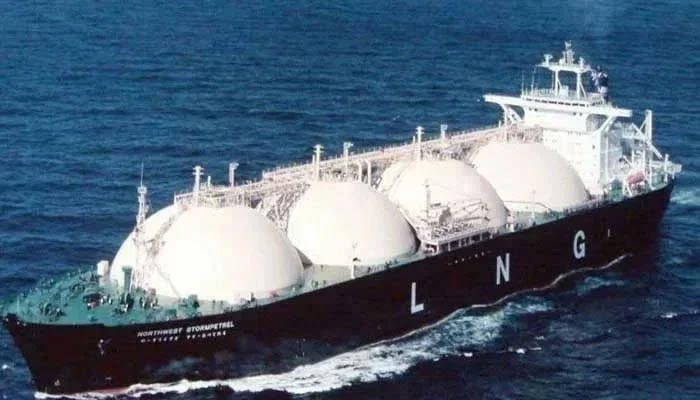
Pakistan has purchased its seventh spot liquefied natural gas (LNG) cargo since QatarEnergy declared force majeure in March 2026, paying $21.88 per million British thermal units (mmBtu)—the highest spot LNG price the country has paid since March this year.
The latest purchase highlights Pakistan’s growing dependence on the international spot market as prolonged disruptions under its long-term LNG supply agreement with Qatar continue.
Only One Bid Received
State-owned Pakistan LNG Limited (PLL) received only a single bid for its latest international tender, submitted by TotalEnergies Gas and Power Limited.
The company offered to supply one LNG cargo at $21.88/mmBtu, and the bid was found to be both technically and commercially compliant before being accepted.
On July 17, 2026, PLL had invited international suppliers to submit bids for one spot cargo of 140,000 cubic metres, scheduled for delivery during the July 27–28 window.
Qatar Supply Disruptions Continue
The latest procurement comes as Pakistan continues to face supply shortages following QatarEnergy’s force majeure declaration on March 4, 2026.
The company announced the force majeure after an attack on its flagship Ras Laffan LNG production complex. The disruption, linked to heightened regional tensions around the Strait of Hormuz, has since been extended until at least August 2026, affecting contracted LNG deliveries to Pakistan.
As a result, the country has increasingly turned to the spot market to meet domestic gas demand for electricity generation and industrial consumers.
Pakistan Seeks LNG Cargoes as Energy Demand Rises Amid Supply Pressures
Spot Market Dependence Grows
Earlier this month, Pakistan also awarded another spot LNG cargo to PetroChina International.
On July 15, PLL awarded the company a cargo for delivery on July 21–22 at $20.6999/mmBtu, which at the time was Pakistan’s highest-priced spot LNG purchase since returning to the spot market following the regional conflict triggered by the US and Israeli strikes on Iran in February 2026.
The latest award to TotalEnergies has now surpassed that price, reflecting continued volatility in global LNG markets.
Pakistan Has Imported 12 LNG Cargoes
With the arrival of the latest shipment, Pakistan will have imported 12 LNG cargoes during the current supply period.
These include:
- Seven spot LNG cargoes purchased through international competitive bidding.
- Five government-to-government cargoes supplied by QatarEnergy under the long-term LNG agreement.
The growing reliance on spot purchases has significantly increased Pakistan’s LNG import bill, as spot market prices remain considerably higher than those agreed under long-term contracts.
Higher Energy Costs Could Impact Electricity Tariffs
Energy officials say the government has continued procuring costly spot LNG cargoes to ensure uninterrupted gas supplies for power plants and industrial consumers despite the financial burden.
However, the expensive imports are expected to raise electricity generation costs.
According to officials, LNG-based electricity generation currently costs around Rs35.5 per unit. During June 2026, LNG-fired power plants generated 1,480 gigawatt-hours (GWh) of electricity, accounting for 11.02% of Pakistan’s total power generation.
If reliance on high-priced spot LNG continues in the coming months, experts believe it could place further upward pressure on Pakistan’s base electricity tariff and increase the country’s overall energy import costs.