Pakistan and the United States have reaffirmed their commitment to deepening counterterrorism cooperation, pledging to work together against militant groups including the Tehreek-e-Taliban Pakistan (TTP), Daesh (ISIS-K), Al-Qaeda, and the Balochistan Liberation Army (BLA) and its affiliated organizations.
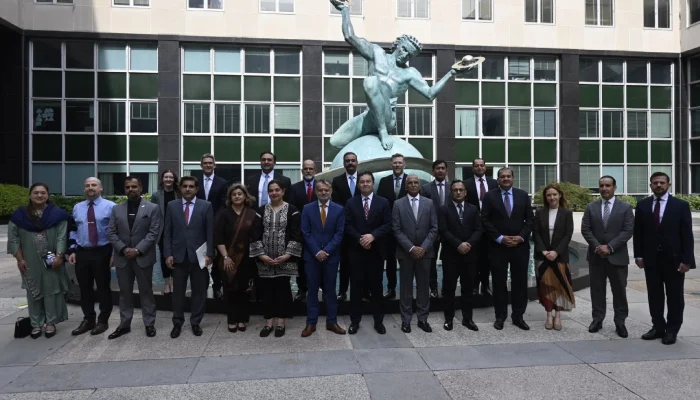
The commitment was made during the fourth US-Pakistan Counterterrorism Dialogue, held in Washington, D.C., on Tuesday, according to a statement issued by Pakistan’s Foreign Office.
High-Level Dialogue Held in Washington
The Pakistani delegation was led by Special Secretary at the Ministry of Foreign Affairs Ambassador Nabeel Munir, while the US delegation was headed by Ambassador Gregory LoGerfo, the US Coordinator for Counterterrorism.
According to the Foreign Office, both sides reviewed the evolving regional security environment and reaffirmed their shared determination to strengthen bilateral cooperation in combating terrorism.
The dialogue also focused on expanding collaboration in intelligence sharing, border security, and efforts to disrupt terrorist facilitation and support networks operating in the region.
Joint Resolve Against Terrorist Organizations
During the meeting, Pakistan and the United States reiterated their commitment to confronting terrorist organizations that pose threats to regional and international security.
According to the Foreign Office, the two countries agreed to continue working together against Daesh (ISIS-K), Al-Qaeda, the Tehreek-e-Taliban Pakistan (TTP), and the Balochistan Liberation Army (BLA) along with its affiliates.
In its statement, the Foreign Office said both governments remained committed to ensuring that their counterterrorism partnership contributes to the safety and security of their citizens while supporting long-term regional peace, prosperity, and stability.
Focus on Regional Security Challenges
Officials from both countries exchanged views on the current terrorism threat landscape and discussed practical measures to enhance cooperation in addressing emerging security challenges.
The dialogue also explored ways to strengthen border management, improve coordination between relevant institutions, and prevent terrorist groups from using facilitation networks to plan or carry out attacks.
The discussions reflected the longstanding counterterrorism cooperation between Islamabad and Washington, which has remained an important aspect of bilateral relations despite broader policy differences over the years.
Pakistan’s Security Concerns
Pakistan has experienced a significant increase in terrorist attacks, particularly in Khyber Pakhtunkhwa and Balochistan, since the return of the Afghan Taliban to power in Afghanistan in 2021.
Pakistani authorities have repeatedly called on the Afghan interim government to take effective action against militant organizations that Islamabad says operate from Afghan territory and launch cross-border attacks inside Pakistan.
Pakistan has also alleged that India supports militant groups operating from Afghan soil to target Pakistan. India has consistently rejected such allegations.
Earlier this year, Pakistan launched Operation Ghazab lil-Haq, stating that it was undertaken in response to cross-border militant attacks after, according to Islamabad, efforts to address the issue through diplomatic channels did not produce the desired results.
Continued Counterterrorism Cooperation
The latest counterterrorism dialogue underscores the continued engagement between Pakistan and the United States on shared security challenges.
Both countries reaffirmed that sustained cooperation against terrorism remains essential for protecting their citizens and promoting lasting peace and stability in the region, while emphasizing the importance of coordinated efforts to address evolving terrorist threats.