According to the Pakistan Bureau of Statistics (PBS), the gap between imports and exports increased by approximately $2 billion during July-October compared with the same period last year.
The widening deficit highlights the continuing imbalance between Pakistan’s import requirements and export earnings, raising concerns about the country’s ability to reduce its dependence on external financing.
Imports Outpace Exports
Official figures show that Pakistan’s imports reached $26 billion during the first four months of the fiscal year, representing an increase of $2.9 billion, or 12.5%, compared with the corresponding period last year.
In contrast, exports increased to $11.4 billion, up by approximately $890 million, or 8.5%.
On a monthly average, imports stood at around $6.5 billion, while exports remained close to $2.8 billion.
The State Bank of Pakistan has projected that total imports could reach $71 billion during the current fiscal year, partly because of higher energy import costs.
Growing Dependence on Foreign Loans
The widening trade gap comes as Pakistan continues to rely on foreign financing to maintain its external reserves and meet debt repayment obligations.
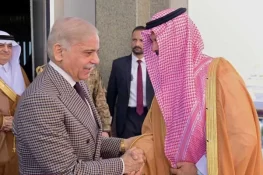
Finance Minister Muhammad Aurangzeb recently disclosed that Pakistan had secured another $3 billion debt rollover from Saudi Arabia in October.
Finance Secretary Imdadullah Bosal also informed a parliamentary committee that the country’s external debt repayments were estimated at $21.5 billion. The government plans to seek rollovers of approximately $10.5 billion in bilateral and commercial debt.
In addition to extending existing loans, Pakistan continues to seek fresh foreign financing to strengthen its reserves.
Prime Minister Shehbaz Sharif has pledged that the country’s ongoing 25th International Monetary Fund (IMF) programme, scheduled to conclude next September, will be the last such programme in Pakistan’s history.
However, the country’s growing external financing requirements could make that commitment difficult to achieve.
Export Growth Remains Weak
Despite several government initiatives, Pakistan has struggled to achieve a significant and sustained increase in exports.
For the current fiscal year, the government has allocated Rs88 billion in subsidies to provide cheaper financing, particularly to large exporters.
However, monthly exports have traditionally remained between $2.5 billion and $3 billion, with limited improvement despite previous currency depreciation.
The government has set a goods export target of $34 billion for the current fiscal year, compared with $30.8 billion recorded last year.
At the current pace, Pakistan could struggle to achieve its longer-term target of $60 billion in exports by 2029.
Planning Minister Ahsan Iqbal has previously described reaching $60 billion in exports as essential for reducing Pakistan’s dependence on future IMF programmes.
China, US agree tariff cuts on $60bn of goods in trade truce
Trade Policy Faces Questions
Pakistan’s trade liberalisation policy has so far failed to deliver the export growth anticipated by the government and its international partners.
The Ministry of Commerce and the World Bank had projected a 14% increase in exports alongside a 7% rise in imports under the policy.
However, exports declined by 6% to less than $31 billion during the previous fiscal year.
The latest figures suggest that improving export competitiveness remains a major challenge for the country’s economic policymakers.
October Deficit Also Increases
The PBS data also showed that exports remained almost unchanged at $2.9 billion in October compared with September.
Meanwhile, imports increased by 5.7% to more than $6.8 billion, pushing the monthly trade deficit up by 10.3%, or approximately $364 million.
On a year-on-year basis, imports increased by 11.8%, equivalent to $719 million, while exports grew by only 2.8%, or $81 million.
Consequently, the trade deficit widened by 19.7% to $3.9 billion, an increase of $638 million compared with October last year.
SMEs Struggle to Access Financing
Another concern highlighted in the report is the government’s continued focus on large industrial exporters, while small and medium-sized enterprises (SMEs) have yet to receive comparable financing support.
SMEs play an important role in expanding exports in many economies, but Pakistani businesses in this sector continue to face challenges in accessing affordable financing and other facilities.
Prime Minister Shehbaz Sharif has recently started focusing on SME financing initiatives. However, these efforts have yet to translate into significant benefits for smaller businesses.
Border Closures Raise Concerns
The impact of security-related border closures on Pakistan’s exports also came under discussion during a recent meeting of the National Assembly Standing Committee on Finance.
The committee expressed concern over the economic consequences of closing three international border crossings.
Minister of State for Finance Bilal Kayani acknowledged that the closures would affect trade but maintained that the government had to shut the border with Afghanistan due to security concerns.
During a session organised by the Sustainable Policy Development Institute on Wednesday, MNA Mirza Ikhtiar Baig said the only remaining open land trade route was through China.
The situation has added another challenge for exporters already facing weak demand, financing constraints and rising import costs.
With imports continuing to grow faster than exports, Pakistan faces the challenge of narrowing its trade deficit, strengthening foreign exchange earnings and reducing its dependence on external borrowing.