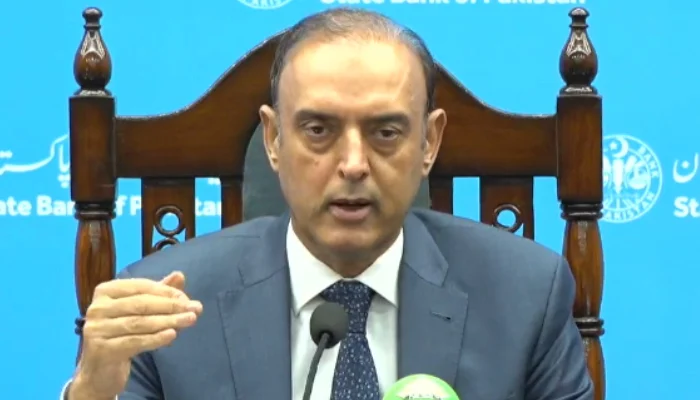
KARACHI: The State Bank of Pakistan (SBP) on Monday decided to keep its benchmark policy rate unchanged at 11.5%, citing elevated inflation, uncertainty in global oil prices, and the economic risks stemming from renewed conflict in the Middle East.
The decision was announced following a meeting of the Monetary Policy Committee (MPC), which said the current monetary policy stance remains appropriate to steer inflation toward the medium-term target while safeguarding macroeconomic stability.
Economic outlook improves but risks remain
According to the SBP, Pakistan’s macroeconomic outlook has improved since the previous policy meeting. However, the central bank warned that renewed geopolitical tensions in the Middle East continue to pose significant risks to the economy.
The committee noted that the earlier easing of regional tensions had helped reduce global oil prices and improve supply chains, resulting in better economic indicators. Nevertheless, the recent escalation in the region has increased uncertainty.
Inflation eases but remains elevated
Headline inflation slowed to 11.1% year-on-year in June 2026, down from 11.7% in May, largely due to lower global energy prices and favorable electricity tariff adjustments.
Core inflation also eased to 8.4%, although it remains above the desired level. Meanwhile, food inflation increased in June because of higher prices for wheat, wheat products, and several perishable food items.
The MPC warned that rising global commodity prices, increasing production costs, and domestic food price pressures are likely to keep inflation above the target range over the coming months. However, inflation is expected to gradually decline and stabilize near the upper end of the 5% to 7% target range by June 2027.
Interest rate unchanged for second consecutive meeting
The SBP raised the policy rate by 100 basis points to 11.5% in April 2026, marking its first rate hike in nearly three years.
Before that, the central bank had cut interest rates by a cumulative 1,150 basis points from the record high of 22% reached in June 2024 as inflation eased.
Monday’s announcement marks the second consecutive monetary policy meeting in which the benchmark interest rate has been maintained at 11.5%.
Pakistan Receives $1.32bn IMF Tranche, Says State Bank
Current account remains manageable
The central bank reported that Pakistan recorded a current account deficit of $139 million during fiscal year 2026, close to the lower end of its projected range.
According to the SBP, record workers’ remittances helped offset the widening trade deficit despite disruptions caused by the Middle East conflict. The financial account also remained in surplus, allowing the central bank to strengthen its foreign exchange reserves and reduce forward liabilities.
However, following significant external debt repayments, SBP’s foreign exchange reserves stood at approximately $17.3 billion as of July 17, 2026.
Outlook for FY2027
The SBP expects the current account deficit to widen moderately during fiscal year 2027 as economic activity gains momentum. However, it projects the deficit to remain within 0% to 1% of GDP.
The central bank also expects workers’ remittances to continue growing and finance a substantial portion of the higher projected trade deficit.
With the realization of planned official inflows and improved private capital inflows, SBP aims to increase its foreign exchange reserves to $20.2 billion by the end of December 2026.
SBP reiterates commitment to price stability
The Monetary Policy Committee emphasized that prudent monetary policy and continued fiscal discipline have helped Pakistan maintain macroeconomic stability despite global uncertainties.
The central bank reaffirmed its commitment to achieving price stability and said it will continue to closely monitor inflation, economic activity, external sector developments, and global risks while supporting sustainable economic growth.