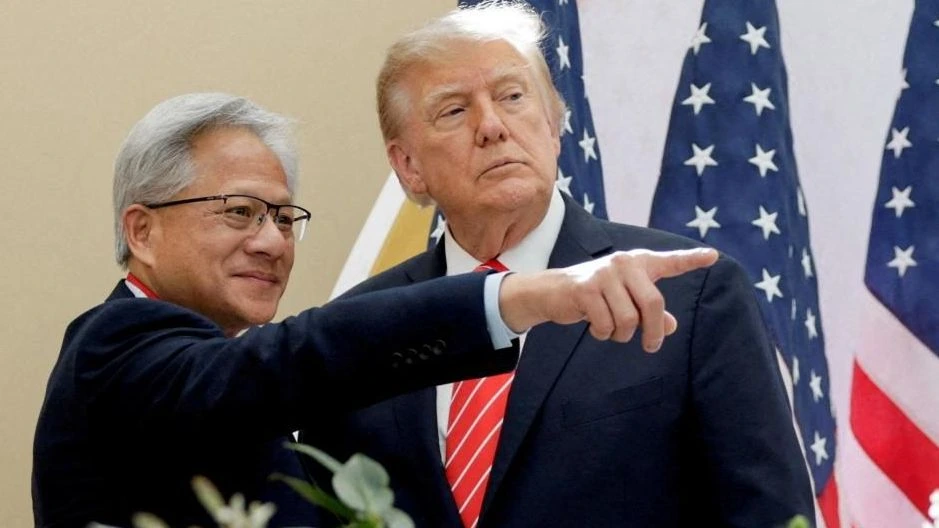
The Trump administration concluded that Nvidia CEO Jensen Huang did not pose a known threat to US national security, allowing the company’s board to reinstate him after his resignation earlier this month. However, the decision was made without a formal Justice Department investigation into Huang himself, raising questions among lawmakers about how the administration reached its conclusion.
According to a Reuters report published by The Express Tribune, US Attorney General Todd Blanche based his assessment on ongoing investigations involving two Nvidia customers suspected of smuggling advanced semiconductor chips to China.
No Formal Investigation Into Jensen Huang
The US Justice Department did not formally investigate Huang before President Donald Trump supported his return as Nvidia’s chief executive.
Instead, Blanche reportedly reviewed findings from investigations involving Super Micro Computer and Megaspeed International. Both companies were suspected of involvement in the illegal transfer of advanced computer chips to China.
People familiar with the matter told Reuters that investigators found no evidence that Huang had acted as an agent of China, knowingly transferred sensitive semiconductor technology to the country or committed any related wrongdoing.
Nvidia itself was not a target of those investigations but cooperated by providing documents, interviews and other information to investigators.
The assessment was not necessarily final, as the investigations into the companies were still ongoing.
Alleged Links to Chinese Intelligence
The controversy surrounding Huang also involved allegations about his relationship with Alice Huang, a former Megaspeed executive suspected of having links to Chinese intelligence.
US intelligence agencies had gathered information about Alice Huang, but officials familiar with the matter said they had found no details that justified opening a counterintelligence investigation into Jensen Huang.
Huang resigned as Nvidia CEO on November 12 following allegations that he had relationships with Alice Huang and at least two company employees. He acknowledged infidelities but has not specifically confirmed his involvement with Alice Huang.
Reuters said it had been unable to independently confirm Alice Huang’s alleged connections to Chinese intelligence.
Trump and Vance Informed Nvidia’s Board
Attorney General Blanche reportedly informed Trump and Vice President JD Vance that the Justice Department had no evidence showing Huang posed a national security risk.
Trump and Vance subsequently conveyed the administration’s assessment to Nvidia’s board, which decided to reinstate Huang.
Trump also publicly supported the decision, saying the government had no reason to believe Huang’s return would threaten national security.
Speaking to reporters in Ohio on November 25, Vance said Justice Department and national security officials had informed him that Huang was not under investigation before his reinstatement.
Jensen Huang’s Return to Nvidia Intensifies US Battle Over China’s Access to AI Chips
FBI Provided Security Briefings to Nvidia
Although Huang was not personally the subject of a counterintelligence investigation, the FBI had reportedly provided at least two defensive security briefings to Nvidia’s leadership about Chinese espionage tactics.
It remains unclear whether those briefings focused specifically on the alleged threat involving Alice Huang or were part of broader security guidance routinely provided to major American technology companies.
It is also unclear whether Jensen Huang personally attended either briefing.
Former national security officials said defensive briefings are generally intended to warn companies about espionage risks and help them protect sensitive information. Such warnings can lead to further investigations if concerns are not addressed.
Bipartisan Concerns and Possible Congressional Scrutiny
Huang’s reinstatement has drawn criticism from members of both the Republican and Democratic parties. Some lawmakers argue that questions about Nvidia’s potential exposure to Chinese technology smuggling and national security risks require further examination.
The absence of a formal investigation into Huang before his return is also expected to intensify scrutiny of the administration’s decision.
Huang is expected to testify before US lawmakers in the coming days as congressional committees examine the wider concerns surrounding Nvidia, its technology and alleged links to China.
The Justice Department’s assessment could therefore remain subject to further scrutiny as investigations into Nvidia’s customers and concerns about semiconductor exports continue.
Source: The Express Tribune, based on reporting by Reuters.