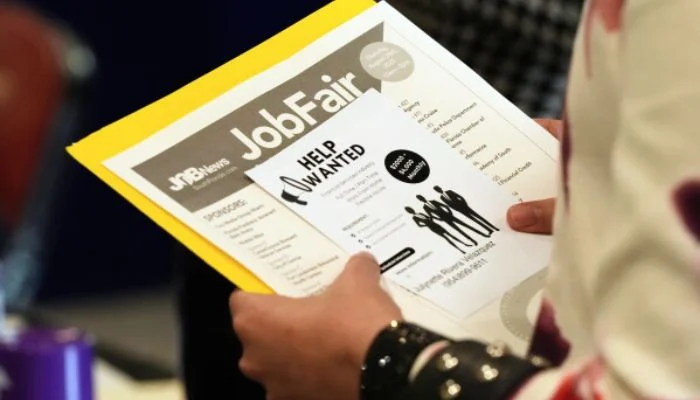
The US labour market suffered an unexpected setback in July, with employment falling by 23,000 jobs against economists’ expectations for an increase of 85,000, raising fresh concerns about the strength of the world’s largest economy.
US Employment Falls Unexpectedly
The US economy recorded an unexpected decline in employment in July, according to the latest jobs report from the US Department of Labor.
Employers shed 23,000 jobs during the month, marking the first monthly decline in total employment since February. The figure was significantly weaker than economists’ expectations, which had called for an increase of around 85,000 jobs.
The disappointing data has raised questions about whether the US labour market is beginning to lose momentum and how effectively the economic policies of President Donald Trump are supporting employment and economic activity.
Earlier Job Figures Revised Lower
The July report also contained revisions to employment figures for previous months.
The downward revisions suggest that the labour market may have been weaker than initially reported. Such revisions are closely watched by economists because they can change the overall picture of employment growth and indicate that hiring momentum has slowed more significantly than earlier data suggested.
However, economists have cautioned against drawing conclusions about the broader economy from a single month’s employment figures.
Unemployment Rate Falls to 4.1%
Despite the decline in employment, the US unemployment rate unexpectedly fell from 4.2% to 4.1%.
At first glance, the decline could appear to be a positive development. However, the figures also showed a reduction in the share of Americans participating in the labour force.
Labour-force participation fell to 61.4%, its lowest level in nearly five and a half years. A lower participation rate can reduce the number of people counted as unemployed because some individuals may stop actively looking for work and therefore no longer be included in the unemployment count.
This means the fall in unemployment does not necessarily indicate that labour-market conditions have improved.
Leisure and Hospitality Among Biggest Losers
Several sectors recorded employment declines during July, with leisure and hospitality among the hardest hit.
The sector lost approximately 40,000 jobs, representing a significant setback for an industry that employs millions of Americans across restaurants, hotels, entertainment and tourism-related businesses.
US Government Plans to Cut 300,000 Federal Jobs in 2025
Local government education employment also recorded notable declines.
At the same time, some sectors continued to add workers. Healthcare and construction were among the industries that recorded employment gains, helping to offset some of the losses elsewhere in the economy.
Wage Growth Continues but Slows
Average hourly earnings continued to increase, but the pace of wage growth slowed compared with the previous month.
Wages were approximately 3.2% higher than a year earlier, indicating that workers are still experiencing nominal pay growth. However, the slower rate of increase provided another indication that labour-market momentum could be weakening.
Wage growth is closely monitored by the Federal Reserve because stronger wage increases can contribute to inflation, while slowing wage growth may provide policymakers with greater room to consider less restrictive monetary policy.
Markets React to Weak Jobs Report
Financial markets reacted quickly after the employment figures were released.
The weaker-than-expected jobs data increased expectations among investors that the Federal Reserve could have greater flexibility to ease monetary policy in the coming months.
Treasury yields moved lower as investors increased bets on possible interest-rate cuts, while expectations of less restrictive monetary policy also supported stock prices.
The market reaction reflected growing hopes that weaker employment could encourage the Federal Reserve to adopt a more accommodative stance rather than maintain tight monetary conditions for an extended period.
Is the US Economy Heading Towards Recession?
Despite the disappointing report, economists have warned against interpreting one month’s employment figures as evidence that the US economy is entering a recession.
Economic activity is influenced by a wide range of factors, including consumer spending, business investment, inflation, productivity and interest rates. Employment figures are also subject to revisions as additional data becomes available.
Nevertheless, the combination of July’s job losses, downward revisions to earlier employment figures, weaker labour-force participation and slower wage growth provides a reason for policymakers and investors to pay closer attention to the health of the US labour market.
For now, the latest figures represent a warning sign rather than definitive evidence of a recession. The next few months of employment and economic data will be crucial in determining whether July’s weakness was temporary or the beginning of a broader slowdown.