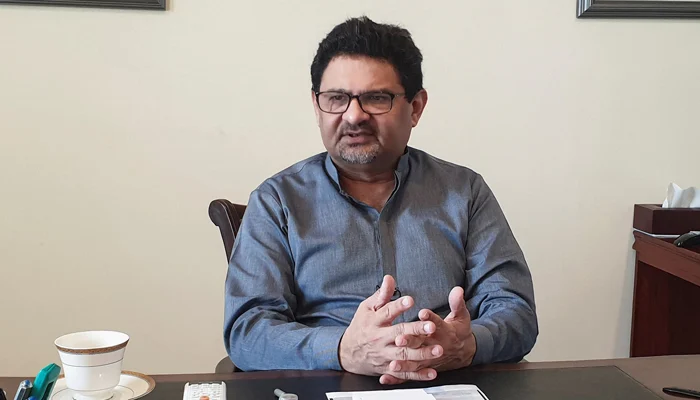
Former finance minister Miftah Ismail has strongly criticised the government’s decision to sharply increase petrol and diesel prices, arguing that the move has primarily benefited oil companies rather than the general public.
Record Increase in Fuel Prices
The government recently raised the prices of petrol and diesel by Rs55 per litre, citing a surge in global oil prices triggered by escalating tensions in the Middle East, particularly the US-Israel conflict with Iran.
Following the increase, which took effect on March 6, the price of petrol rose from Rs266.17 per litre to Rs321.17, while diesel increased from Rs280.86 to Rs335.86 per litre. Analysts say this is one of the largest single fuel price hikes in the country’s history and is likely to add further pressure on inflation.
Miftah Ismail’s Criticism
In a post on X, Miftah Ismail said the government’s decision effectively allowed oil companies to earn windfall profits. According to him, the new pricing structure provides an additional profit margin of about Rs35 per litre on petrol and Rs70 per litre on diesel for oil companies.
He explained that in Pakistan, fuel prices are revised every 15 days based on international benchmarks, particularly the Singapore Platts index. The government calculates the average international price for petrol and diesel over a specific period and then adds petroleum levy and other charges to determine the final retail price.
Concerns Over Hoarding and Shortages
Ismail noted that the sharp rise in international oil prices created expectations in the market that fuel prices would increase further after March 15. As a result, consumers began filling their tanks while petrol pumps and oil companies also started stockpiling fuel in anticipation of higher profits.
According to him, the government feared that this behavior could lead to fuel shortages and therefore decided to increase prices immediately.
Alternative Measures Suggested
However, Ismail argued that the government had other options. One possibility, he said, was to temporarily increase the petroleum levy for a week and then reduce it after March 15, which could have prevented panic buying and hoarding.
Another option would have been stricter monitoring of oil companies and petrol pumps to ensure they were not engaging in hoarding practices.
Govt Raises Petrol, Diesel Prices by Rs55 per Litre Amid Middle East Tensions
“Large Companies Over People”
The former finance minister said the government’s approach once again reflects a pattern of favoring large companies over ordinary citizens. He pointed out that the petrol and diesel currently being sold were purchased by oil companies before February 28 at lower international prices, meaning their costs and profits were already covered under the previous pricing formula.
He compared the situation to last year’s decision that allowed sugar millers to export sugar, which led to higher profits for sugar mills while consumers faced rising prices.
Call for Shared Sacrifice
Miftah Ismail acknowledged that rising global oil prices due to geopolitical tensions make some increase in fuel costs unavoidable. However, he stressed that the burden should not fall entirely on the public.
He suggested that the government should demonstrate “shared sacrifice” by cutting fuel allowances for senior bureaucrats by at least 10 percent and requiring ministers—who currently enjoy unlimited fuel allowances—to pay a portion of their own fuel expenses.
According to him, such measures would show that the government is also willing to tighten its belt rather than asking only the public to bear the economic burden.