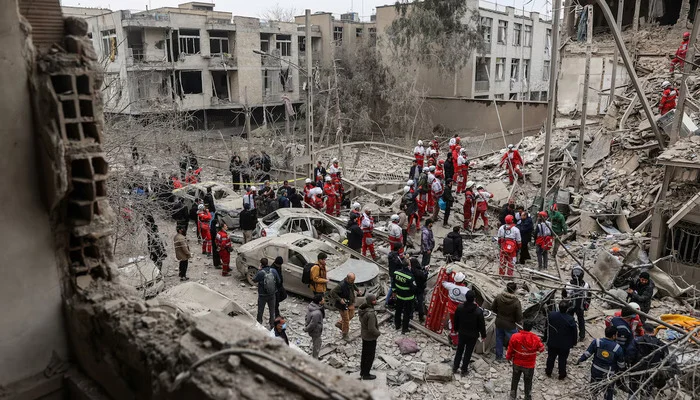
TEHRAN / WASHINGTON — What was promised as a “short excursion” has, three weeks later, evolved into a volatile regional conflict that appears to be testing the limits of President Donald Trump’s “America First” doctrine. As of March 22, 2026, the United States finds itself navigating surging global energy prices, diplomatic isolation, and a defiant Tehran that refuses to fold despite significant military losses.
While the White House maintains that Operation Epic Fury is an “undisputed military success,” the reality on the ground suggests a more complicated narrative.
The “Victory” vs. The Reality
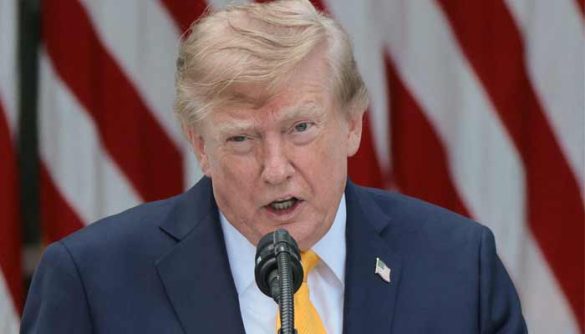
On Friday, President Trump declared the battle “militarily WON.” Statistically, the administration has a case:
- Leadership: Several high-ranking Iranian officials have been eliminated.
- Naval Assets: A significant portion of Iran’s navy has been neutralized.
- Ballistic Capabilities: Much of Iran’s missile arsenal has been destroyed in targeted strikes.
However, these tactical wins haven’t translated into regional stability. Iran has pivoted to asymmetric warfare, utilizing remaining drones and missiles to choke off the Strait of Hormuz—the world’s most vital oil artery. The result? A spike in global gas prices that is beginning to rattle the American public and Trump’s own political base.
A Coalition of One?
One of the most striking developments of the past week is the visible friction between the U.S. and its traditional allies. Trump recently labeled NATO members “cowards” for their refusal to patrol the Gulf, a sentiment that analysts suggest is a direct byproduct of his strained relationship with the alliance since returning to office 14 months ago.
Furthermore, a rift has emerged with Israel. While Israeli officials claim recent strikes on the South Pars gas field were coordinated, Trump has publicly denied prior knowledge, signaling a potential breakdown in high-level communication.
“Trump has built himself a box called the Iran war, and he can’t figure out how to get out of it,” says Aaron David Miller, a veteran Middle East negotiator. “That is his biggest source of frustration.”
Middle East Conflict Escalates as Iran Threatens Gulf Energy Targets
The Domestic Fallout: Gas Prices and Midterms
For a president who campaigned on ending “stupid” foreign interventions, the optics of deploying thousands of additional Marines and sailors are fraught with political danger. With the November midterm elections approaching, Republicans are wary of how the conflict will play at the ballot box.
Key domestic pressures include:
- Economic Impact: Rising costs at the pump are causing voters to question the necessity of the intervention.
- MAGA Dissension: For the first time, prominent influencers within Trump’s movement are openly criticizing the escalation.
- The “Exit” Problem: Adopting an “all-in” strategy risks a long-term quagmire, while a premature withdrawal could leave a wounded Iran ready to pursue nuclear capabilities.
Miscalculations and Messaging
Critics argue the administration failed to anticipate Iran’s “existential” response. By striking neighboring Gulf states and disrupting shipping, Tehran has effectively neutralized the U.S. military’s conventional superiority.
As the narrative slips further from his control, Trump has intensified his rhetoric against the media, accusing outlets of “treason” for reporting on the war’s mounting complications. According to Brett Bruen, a former foreign policy adviser, the President “seems to have lost his mojo on messaging” as he struggles to define what “winning” actually looks like in a post-strike landscape.