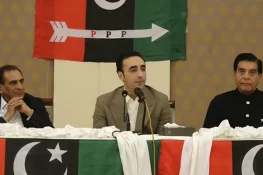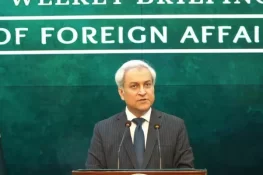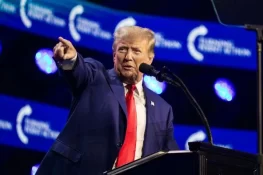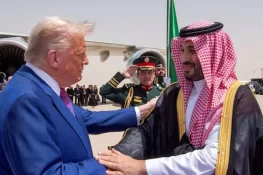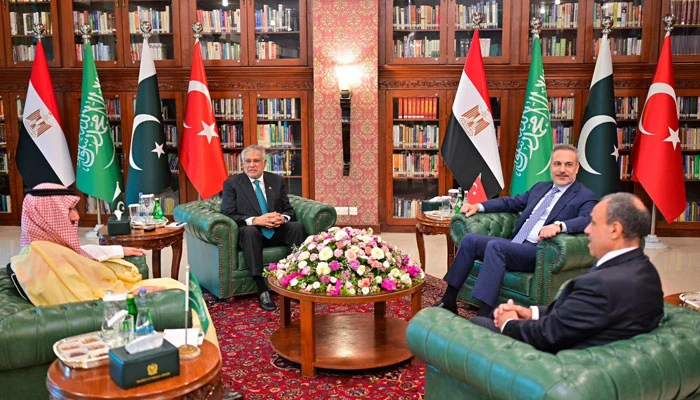
Pakistan hosted a quadrilateral meeting of foreign ministers from Saudi Arabia, Turkey, Egypt, and Pakistan in Islamabad, aimed at addressing the ongoing tensions in the Middle East amid the US-Israeli conflict with Iran. The meeting focused on promoting peace, security, and regional stability.
Islamabad as a Diplomatic Mediator
Pakistan has emerged as a key facilitator between the United States and Iran, serving as an intermediary for messages while efforts continue to end the conflict that began on February 28. In this context, Turkish Foreign Minister Hakan Fidan and Egyptian Foreign Minister Badr Abdelatty arrived in Islamabad a day earlier, followed by Saudi Foreign Minister Prince Faisal bin Farhan Al Saud.
Two days prior, Deputy Prime Minister DPM Dar confirmed that indirect talks between the US and Iran were underway, with Pakistan, Turkey, and Egypt helping relay communications. These efforts included direct contact between Pakistan’s Chief of Defence Forces Field Marshal Asim Munir and US President Donald Trump, as confirmed by the White House. Pakistan subsequently delivered a US proposal to Iran, though Iran rejected it, insisting on ending the conflict on its own terms.
Iran has outlined five conditions for ending the conflict: a halt to aggression and assassinations, mechanisms to prevent the war from being reimposed, guaranteed reparations, resolution across all fronts including resistance groups, and international recognition of Iranian control over the Strait of Hormuz.
PM Shehbaz Sharif’s Engagement
Prime Minister Shehbaz Sharif held a detailed phone conversation with Iranian President Masoud Pezeshkian, focusing on de-escalation and dialogue. The PM reiterated Pakistan’s condemnation of Israeli attacks on Iran, expressed solidarity with the Iranian people, and conveyed condolences for the loss of lives, while emphasizing Pakistan’s ongoing diplomatic outreach with the US and regional partners to facilitate dialogue.
Held a detailed telephone conversation with my brother President Masoud Pezeshkian of Iran earlier today, lasting over one hour.
I reiterated Pakistan’s strong condemnation of the continued Israeli attacks on Iran, including recent strikes on civilian infrastructure, and…
— Shehbaz Sharif (@CMShehbaz) March 28, 2026
Pezeshkian stressed the importance of building trust to enable mediation and constructive negotiations.
Bilateral and Multilateral Cooperation
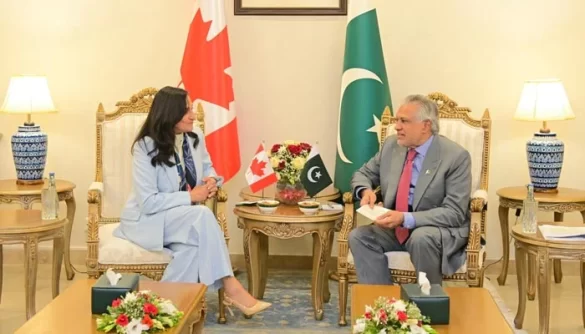
In Islamabad, DPM Dar held separate meetings with the Saudi, Egyptian, and Turkish foreign ministers:
Deputy Prime Minister/Foreign Minister Senator Mohammad Ishaq Dar @MIshaqDar50 received H.H. Prince Faisal bin Farhan Al Saud @FaisalbinFarhan , Foreign Minister of the Kingdom of Saudi Arabia, at the Ministry of Foreign Affairs today. The two sides will engage in comprehensive… pic.twitter.com/W4weMUmkT9
— Ministry of Foreign Affairs – Pakistan (@ForeignOfficePk) March 29, 2026
- Saudi Arabia: Both sides emphasized dialogue and diplomacy as key tools for promoting regional peace and agreed to strengthen bilateral and multilateral cooperation.
- Egypt: Discussions focused on regional tensions, humanitarian assistance to Gaza, and Pakistan’s continued support for the Palestinian people. Both sides reaffirmed close, brotherly ties.
- Turkey: DPM Dar and FM Fidan exchanged views on Iran and broader regional developments, emphasizing sustained diplomatic engagement and strategic partnership expansion.
Additionally, DPM Dar spoke with Iranian Foreign Minister Abbas Araghchi, highlighting dialogue and diplomacy as the only viable path to lasting peace and underscoring Pakistan’s commitment to restoring stability in the region.
Pakistan Plays Key Role in Regional De-Escalation, Says China
Pakistan is playing a pivotal role as a diplomatic bridge in the ongoing Middle East crisis. By hosting high-level consultations and coordinating with key regional partners, Islamabad seeks to promote dialogue, de-escalation, and long-term regional stability.