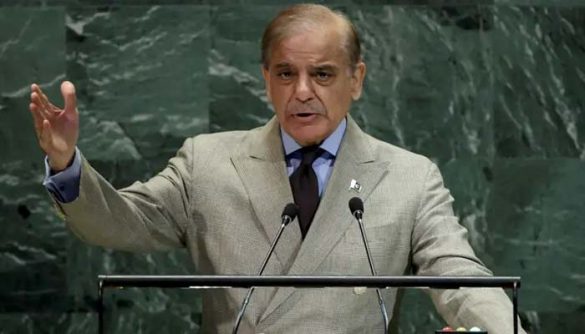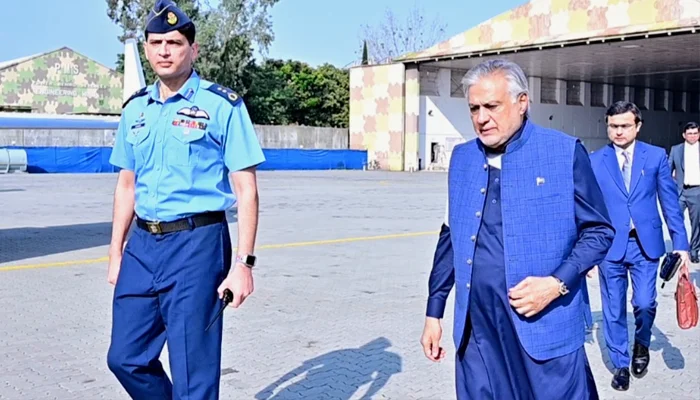
ISLAMABAD: Pakistan’s Deputy Prime Minister and Foreign Minister Ishaq Dar has departed for Beijing to meet his Chinese counterpart, with discussions expected to cover bilateral relations as well as regional and global developments. China’s Foreign Ministry said on Tuesday that both countries will enhance cooperation on the Iran issue, emphasizing strategic communication and coordination between their foreign ministries.
The one-day visit marks Dar’s second trip to Beijing this year. According to Pakistan’s Foreign Office, both ministers will review bilateral ties and discuss matters of mutual interest during the visit.
China’s Role as a Potential Guarantor
Speaking separately at a press conference, Chinese Foreign Ministry spokeswoman Mao Ning stated that both sides aim to make “new efforts to advocate for peace” regarding the situation in Iran. Ahead of Dar’s visit, China was viewed as a potential guarantor in any future US-Iran negotiations.
Washington-based scholar Vali Nasr noted that Iran is seeking guarantees for any potential agreement with the US, with indications that Dar’s visit was partly to explore Beijing’s role as a guarantor. Meanwhile, Mushahid Hussain Syed, Chairman of the Pakistan-China Institute, said China’s involvement at this stage is “very important,” as Iran requires a strong guarantor for any ceasefire.
EU Council Chief Praises Pakistan’s Role in Middle East Peace Efforts
Pakistan as a Key Mediator
Pakistan has intensified diplomatic efforts to ease tensions between the US and Iran, hosting senior ministers from Saudi Arabia, Türkiye, and Egypt, and acting as an intermediary for messages between Washington and Tehran. On Sunday, Dar said a quadrilateral meeting of the foreign ministers of Pakistan, Saudi Arabia, Türkiye, and Egypt had called for an immediate and permanent end to the ongoing Middle East war.
Dar emphasized that Pakistan hosted the talks to discuss multiple issues, including steps to reduce rising regional tensions caused by the US-Israel-Iran conflict.
Regional Impact and Global Concerns
The ongoing conflict, which began on February 28, has affected the broader Middle East and caused significant economic consequences. Iran’s effective blockade of oil and gas shipments through the Strait of Hormuz has contributed to global economic disruptions. Reports indicate that US President Donald Trump has indicated a willingness to end military operations against Iran even if the Strait remains partially closed, leaving the complex task of reopening it for later.