ISLAMABAD: Pakistan has intensified its diplomatic engagement with the United States and other global stakeholders in an effort to reduce tensions and promote dialogue amid the ongoing conflict involving the US, Israel, and Iran.
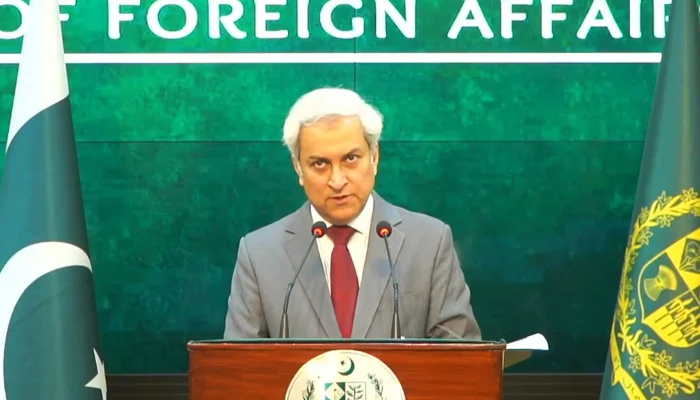
Foreign Office spokesperson Tahir Hussain Andrabi stated during a weekly briefing that Pakistan is working to create a conducive environment for de-escalation, adding that the next phase would focus on facilitating meaningful negotiations among relevant parties.
The conflict, which began on February 28, has continued for over a month and has had far-reaching consequences across the Middle East and beyond, particularly due to disruptions in global energy supplies through the Strait of Hormuz.
Confidence in Pakistan’s Role
According to the Foreign Office, both Iran and the United States have expressed confidence in Pakistan’s diplomatic efforts and acknowledged its role as a facilitator. Islamabad has not only relayed messages between Washington and Tehran but has also offered to host potential negotiations.
In recent weeks, Pakistan hosted key regional ministers from Saudi Arabia, Türkiye, and Egypt, highlighting its growing role in multilateral diplomacy. Officials emphasized that these consultations are aimed at enhancing coordination rather than forming any formal alliance.
Ongoing Global Consultations
Andrabi noted that Pakistan remains in contact with a wide range of international partners, including European countries, the Organisation of Islamic Cooperation (OIC), and Gulf Cooperation Council (GCC) states. He clarified that Pakistan is not exerting pressure on any side but is instead focused on encouraging dialogue and peaceful resolution.
He also stressed that Iran, as a sovereign state, determines its own policies, and Pakistan’s role should not be interpreted as coercive.
China Visit and Peace Plan
Referring to Deputy Prime Minister and Foreign Minister Ishaq Dar’s recent visit to China, Andrabi highlighted a joint five-point peace plan developed by Pakistan and China. The plan has reportedly received recognition at both regional and international levels and has been shared with Iran, the United States, and other stakeholders.
The spokesperson added that the initiative aligns with the outcomes of a recent four-country meeting held in Islamabad and is being seen as a constructive step toward achieving a ceasefire and long-term stability.
Pakistan Hosts Saudi, Turkish, and Egyptian FMs for Middle East De-escalation Talks
Economic and Strategic Developments
Amid the crisis, Pakistan has also secured permission for 20 Pakistan-flagged vessels to transit through the Strait of Hormuz, a move described as positive for maintaining essential trade flows, particularly energy supplies. Officials noted that these developments are being appreciated globally as part of Pakistan’s broader diplomatic outreach.
Regional Security and Afghanistan Talks
Separately, the Foreign Office confirmed that a Pakistani delegation has traveled to Urumqi, China, for talks with Afghanistan. These discussions come amid ongoing security concerns, with Pakistan continuing operations against militant groups involved in cross-border attacks.
Andrabi reiterated that Operation Ghazab-lil-Haq remains active and is not affected by diplomatic engagements.
Remarks on India’s Position
Addressing another issue, the spokesperson criticized India’s stance on sectarian identity, calling attempts to portray Shia and Sunni communities as separate identities a misrepresentation of Islam and a potentially dangerous development.
Pakistan’s diplomatic efforts are increasingly positioning it as a key intermediary in a complex regional crisis. While challenges remain, Islamabad continues to advocate for dialogue, de-escalation, and a sustainable political solution through coordinated international engagement.