Islamabad has heightened security measures ahead of high-level peace talks between the United States and Iran, scheduled to begin in the federal capital on Friday. The talks come after Pakistan brokered a temporary ceasefire aimed at ending escalating hostilities in the Middle East.
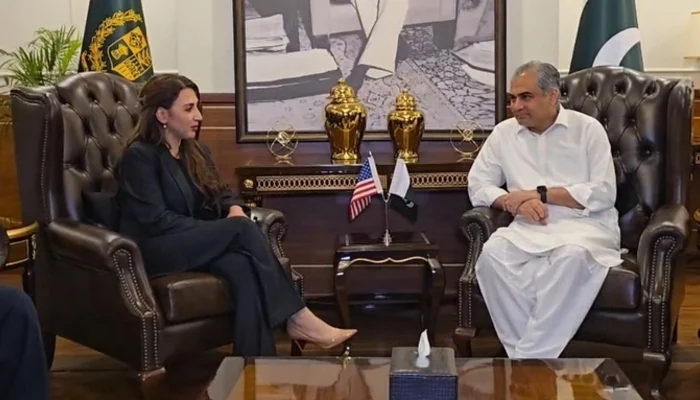
Interior Minister Mohsin Naqvi met with US Ambassador Natalie Baker on Thursday to discuss the evolving situation in the region and coordinate arrangements for the negotiations. The meeting highlighted Pakistan’s role as a key intermediary between Washington and Tehran over the past weeks.
Background of the Ceasefire
The conflict escalated after Israel and the United States conducted strikes in Iran that killed its supreme leader on February 28. This prompted retaliatory attacks by Tehran on Gulf nations and Israel. Following these developments, Pakistan acted as a communication channel between the two powers, helping negotiate a two-week truce just hours before a US-imposed deadline for military escalation.
White House Press Secretary Karoline Leavitt confirmed that President Trump is sending his Iran negotiating team, led by Vice President JD Vance, to Islamabad, with the first round of discussions scheduled this week.
Security Measures in Islamabad
During the meeting with Ambassador Baker, Minister Naqvi confirmed that a comprehensive security plan had been prepared to ensure the safety of all foreign guests, including Vice President Vance, Steve Witkoff, and Jared Kushner.
Authorities have implemented extraordinary security and traffic arrangements across Islamabad. Key roads are closed or diverted, heavy traffic is banned, and a special traffic plan has been enforced by Islamabad Traffic Police. Specific closures include the Expressway from Zero Point to Korral Chowk, and diversions on the Islamabad Express Highway to facilitate the movement of foreign delegations.
How Pakistan Brokered a Temporary Truce Between Iran and the US
Commuters have been advised to use alternative routes depending on their origin and destination. For instance, travelers from Peshawar to Rawalpindi are directed to the Taxila Motorway, Chakri, Chak Beli Road, and Rawat. Those coming from Lahore to Peshawar are guided via Rawat, Chak Beli Road, and the Taxila Motorway. Other specific alternative routes have been announced for traffic from Bhara Kahu, Margalla Road, and Rawalpindi.
Impact on Public Services
Examinations at government schools near the Red Zone have been postponed, including at centers in IMCB G-6/4 and the Prime Minister’s Staff Colony, G-5.
Traffic police personnel are actively managing roads and guiding the public, urging commuters to allow extra travel time, exercise patience, and cooperate with authorities during the movement of the delegations.
With high-level US and Iranian officials arriving in Islamabad, Pakistan is showcasing its capacity to manage complex diplomatic events while ensuring robust security measures. The city’s residents are being urged to comply with traffic restrictions and cooperate with authorities as the negotiations proceed.