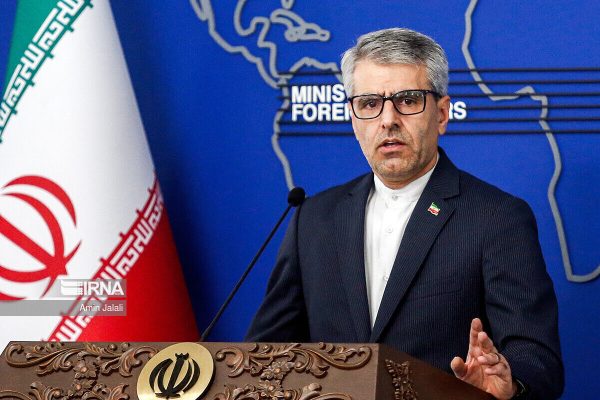
Iran has said it is not planning to restart talks with the United States in the immediate future. The announcement came from Foreign Ministry spokesperson Esmail Baghaei, who stated that there is currently no arrangement in place for a second round of negotiations.
No Set Plan for New Talks
Baghaei made it clear that there is no timeline or agenda for renewed engagement with Washington. This indicates that recent diplomatic efforts have not moved forward, and the process remains on hold for now.
While indirect communication between the two sides has taken place from time to time, those exchanges have not developed into a structured or sustained dialogue.
Criticism of Washington’s Approach
The Iranian spokesperson also criticized the United States, saying it has not drawn the right conclusions from past experiences. He suggested that continuing along the same path would not produce any meaningful results.
Iran has repeatedly argued that US pressure, particularly through sanctions, has damaged trust and made progress more difficult. From Tehran’s point of view, any future talks would require a noticeable shift in approach from Washington.
US “Advance Team” Arrives in Islamabad as Security Tightened Ahead of Possible Iran Talks
A Long and Complicated History
Relations between the two countries have been tense for decades, with disagreements over Iran’s nuclear program sitting at the center of the dispute in recent years. A major turning point came when the United States withdrew from the 2015 nuclear deal, known as the JCPOA.
Since then, attempts to revive the agreement have struggled to gain real traction. Even when discussions have taken place indirectly, they have failed to produce a lasting breakthrough.
Uncertain Outlook Ahead
For now, Iran’s position suggests that diplomatic engagement remains on pause. With both sides still far apart on key issues, a return to formal negotiations does not appear likely in the near term.
That said, the situation remains fluid. Given the importance of the issue for regional stability and global energy security, dialogue could eventually return if conditions change, even if there is no sign of that happening right now.