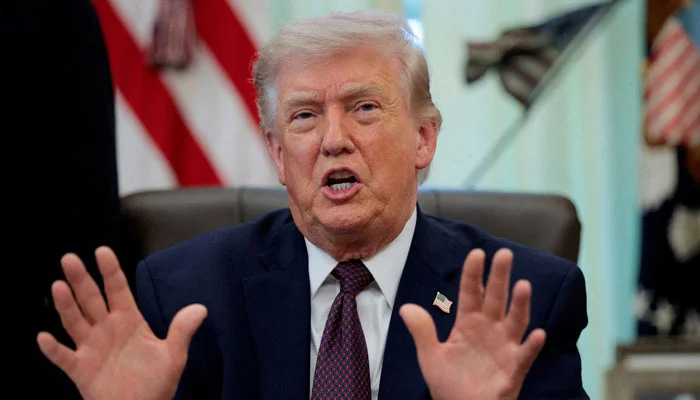
US President Donald Trump has strongly criticized a recent House of Representatives vote aimed at ending American military involvement in the Iran conflict, calling the move “unpatriotic” and accusing lawmakers of interfering with ongoing negotiations.
House Vote Sparks Political Clash
The US House of Representatives recently passed a measure seeking to limit or end American military operations related to the Iran conflict. The resolution passed by a narrow margin of 215–208, with four Republican lawmakers joining Democrats in support of the proposal.
Although the measure is largely symbolic and still requires Senate approval before any potential enforcement, it has intensified political tensions in Washington. The final outcome is expected to face a presidential veto if it reaches the White House.
Trump’s Strong Reaction
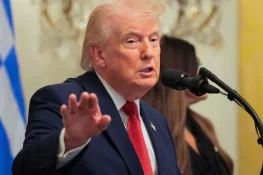
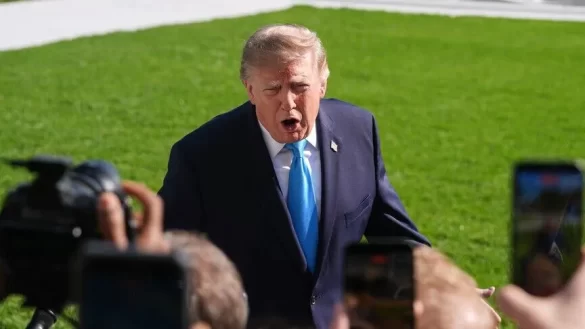
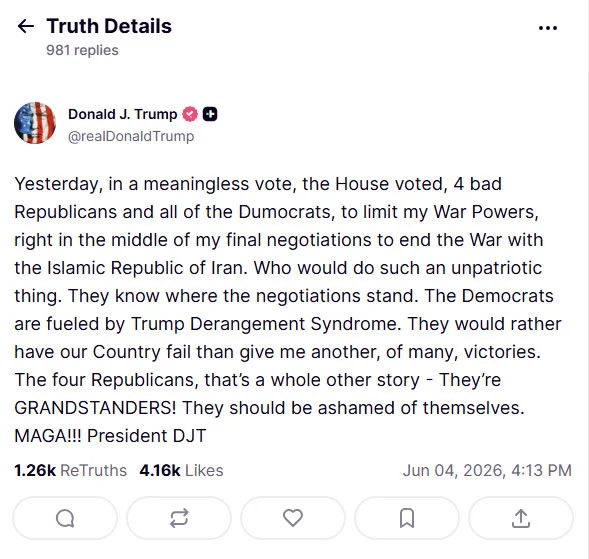
President Donald Trump reacted sharply to the vote, describing it as disruptive to ongoing diplomatic efforts. In a post on his social media platform Truth Social, he said the timing of the vote was particularly problematic, claiming it came during what he described as “final negotiations” aimed at ending the war with Iran.
He questioned the motives behind the decision, calling it “unpatriotic” and suggesting that some lawmakers were undermining national interests for political attention. Trump also criticized the Republican members who supported the measure, labeling them “grandstanders” and saying they should be ashamed.
Democrats Raise Constitutional Concerns
Democratic lawmakers, however, have raised serious objections to the administration’s military actions. They argue that Trump authorized strikes on Iran without prior approval from Congress, potentially violating constitutional requirements.
Under the US War Powers Act, presidents must seek congressional authorization within 60 days of deploying armed forces into active hostilities. According to critics, that deadline has already passed, raising questions about the legality of continued military involvement.
Trump Says Iran War Will ‘End Very Soon’ Amid Rising Tensions
Growing Divide Over War Powers
The debate highlights a deeper political and constitutional dispute over the balance of power between the US presidency and Congress in matters of war. While the administration defends its actions as necessary for national security and diplomatic leverage, critics insist that Congress must retain its constitutional authority over military engagement.
As the measure moves forward to the Senate, it is expected to further fuel debate over US involvement in the Iran conflict and the limits of presidential war powers.