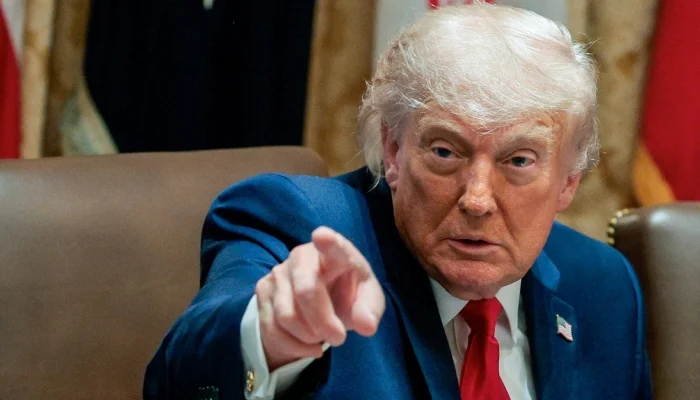
Washington and Tehran continue exchanging messages, but significant differences remain over nuclear issues, sanctions relief, and the future of the Strait of Hormuz.
Trump Maintains Strict Conditions for Any Agreement
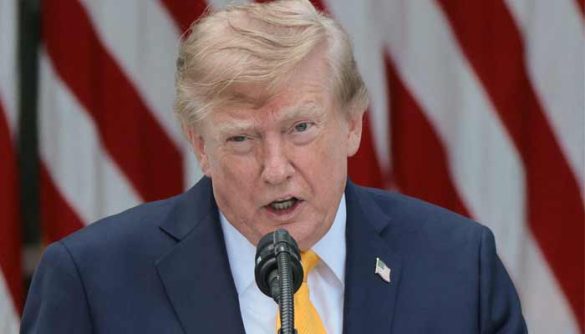
US President Donald Trump will only approve a peace agreement with Iran if it fully satisfies Washington’s key demands, according to a White House official.
The development comes amid ongoing efforts to end months of conflict that have destabilised the Middle East and disrupted global energy markets. Despite recent reports suggesting that an agreement may be close, both sides continue to present differing accounts of the negotiations.
A White House official told AFP that Trump remains committed to his core conditions, particularly ensuring that Iran never acquires nuclear weapons.
White House Situation Room Meeting Ends Without Final Decision
On Friday, President Trump chaired a two-hour meeting in the White House Situation Room to review options related to the negotiations. However, no final decision emerged from the discussions.
According to US officials, weeks of diplomatic exchanges have produced progress on several issues, but the agreement still requires presidential approval before it can move forward.
The White House reiterated that any deal must serve American interests and meet Trump’s “red lines”, particularly regarding Iran’s nuclear capabilities.
Iran Rejects Pressure and Demands Respect
Iranian officials responded by rejecting what they described as Washington’s attempt to impose conditions.
Iranian Foreign Ministry spokesperson Esmaeil Baghaei said the Islamic Republic had long rejected the language of ultimatums and insisted that no final agreement had yet been reached.
Meanwhile, Iranian President Masoud Pezeshkian told the Emir of Qatar that Tehran remains prepared to pursue a “dignified framework” to end the conflict, provided Iran’s rights and interests are respected.
Iranian officials confirmed that indirect exchanges of messages are continuing but stressed that several major issues remain unresolved.
Disagreements Over Strait of Hormuz and Nuclear Programme
One of the central disputes concerns the future of the Strait of Hormuz, a critical shipping route through which a significant portion of the world’s oil and liquefied natural gas passes.
Trump claimed that Iran would remove mines, end restrictions on shipping traffic and allow vessels to pass without tolls. In return, the United States would lift restrictions affecting Iranian ports.
However, Iranian media disputed several aspects of Trump’s description. Sources quoted by Iranian outlets said no provision regarding toll-free passage exists in the draft framework and rejected claims that Iran had agreed to destroy its enriched uranium stockpiles.
Iran is also reportedly seeking the release of approximately $12 billion in frozen assets before advancing to the next stage of negotiations.
Energy Markets Watching Closely
Financial markets have reacted sharply to every development in the talks.
Investors are closely monitoring negotiations because any breakthrough could help restore normal commercial shipping through the Strait of Hormuz, easing pressure on global energy supplies.
At the same time, recent incidents involving US military strikes near the Iranian port city of Bandar Abbas and Iranian responses in the region have highlighted the fragility of the current ceasefire arrangements.
Fighting Continues on the Lebanon Front
While diplomatic efforts continue between Washington and Tehran, violence remains ongoing in Lebanon.
Israeli Prime Minister Benjamin Netanyahu said Israeli forces had advanced further into Lebanese territory, while Hezbollah claimed responsibility for several drone attacks targeting Israeli military positions.
Both Israel and Hezbollah continue to accuse each other of violating a ceasefire that was intended to take effect in April, raising concerns that regional instability could complicate broader peace efforts.
Uncertainty Persists
Despite optimistic statements from various officials over recent days, the negotiations remain far from complete. Key disputes over Iran’s nuclear programme, sanctions relief, frozen assets, and navigation rights in the Strait of Hormuz continue to prevent a final agreement.
For now, both Washington and Tehran appear committed to keeping diplomatic channels open, but whether those talks ultimately lead to a comprehensive settlement remains uncertain.