Tokyo pushes for diplomatic restraint and maritime stability amid ongoing US–Iran tensions.
Japanese PM Holds Call With Iranian President
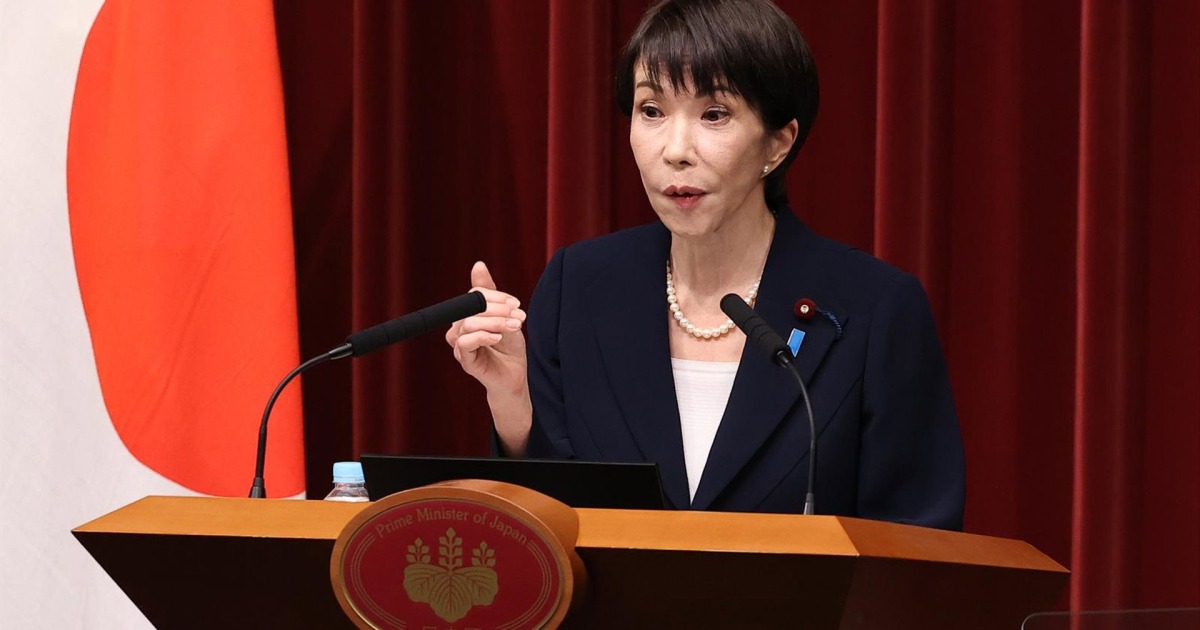
Japan’s Prime Minister Sanae Takaichi held a telephone conversation with Iranian President Masoud Pezeshkian, during which she urged Tehran to demonstrate “maximum flexibility” in order to reach a potential ceasefire or agreement with the United States.
Speaking to reporters after the call, Takaichi said Japan views diplomatic engagement as essential to reducing regional tensions and avoiding further escalation in the Middle East.
Push for Progress in US–Iran Relations
According to her remarks, the Japanese leader encouraged Iran to seize what she described as an important opportunity for progress in negotiations with the United States.
She emphasized that constructive dialogue could help prevent further deterioration in regional stability, particularly at a time when tensions remain high across several Middle Eastern hotspots.
While she did not disclose details of Iran’s response, Takaichi noted that both sides agreed to maintain close communication going forward.
Concern Over Strait of Hormuz Security
A key focus of the discussion was maritime security in the region, particularly the Strait of Hormuz, one of the world’s most important oil shipping routes.
Takaichi reportedly urged Iran to ensure the prompt reopening and safe operation of the strait, stressing the importance of free and secure navigation for vessels from Asia and other parts of the world.
The Strait of Hormuz is a critical chokepoint through which a significant share of global energy supplies pass daily, making its stability a priority for many import-dependent countries, including Japan.
Regional Stability and Global Energy Concerns
Japan, which relies heavily on imported energy, has consistently supported efforts to maintain open sea lanes in the Middle East. Any disruption in the Strait of Hormuz could have immediate effects on global oil prices and supply chains.
Against this backdrop, Tokyo’s message reflects broader international concern over escalating geopolitical tensions involving Iran, the United States, and regional actors.
Continued Diplomatic Engagement Expected
Both leaders reportedly agreed to continue close communication, suggesting that Japan intends to maintain an active diplomatic role in encouraging dialogue between Tehran and Washington.
While no specific commitments were announced, the call underscores Japan’s ongoing approach of balancing diplomatic engagement with concerns over regional security and global energy stability.