The United States and Iran traded new military strikes on Saturday, marking the latest escalation in tensions across the Gulf region.
The flare-up comes despite a ceasefire that has been in place since April 8 following a conflict that began nearly 100 days earlier. While the truce significantly reduced large-scale hostilities, recent incidents suggest that tensions between Washington and Tehran remain high.
According to US military officials, American forces carried out strikes against Iranian radar installations after intercepting drones that were allegedly heading toward the strategically important Strait of Hormuz.
Iran Claims Retaliatory Missile Attack
In response, Iran’s powerful Islamic Revolutionary Guard Corps (IRGC) said it launched missiles at what it described as “enemy bases in the region.”
Iranian state media reported that the strikes were retaliation for what Tehran called a US “invasion” of Sirik and Qeshm islands in southern Iran.
The IRGC also claimed it had targeted vessels attempting to pass through the Strait of Hormuz without authorization, further highlighting the growing importance of maritime security in the ongoing confrontation.
US Says Missiles Targeted Kuwait and Bahrain
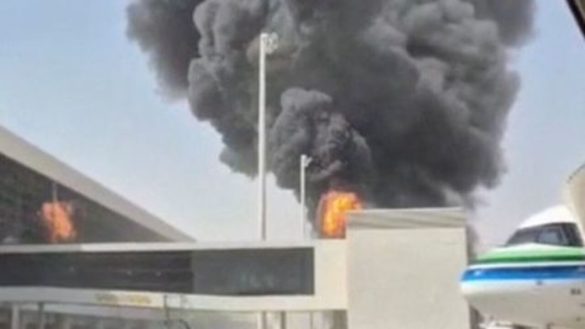
According to United States Central Command (CENTCOM), Iran launched seven ballistic missiles toward Kuwait and Bahrain, both key US allies in the Gulf.
US officials stated that six of the missiles were intercepted, while the seventh failed to reach its intended destination.
CENTCOM added that there were no reports of casualties among American personnel and rejected Iranian claims that US naval facilities in Bahrain had been damaged.
Meanwhile, Kuwaiti authorities reported that their air defence systems were responding to missile and drone threats during the incident.
Strategic Importance of the Strait of Hormuz
Much of the recent tension has centred on the Strait of Hormuz, one of the world’s most important maritime trade routes.
A significant portion of global oil exports passes through the narrow waterway each day, making any disruption a major concern for international energy markets.
US officials said American forces had intercepted four Iranian drones near the strait before conducting strikes on radar facilities located in Goruk and on Qeshm Island.
Washington argued that the drones posed an immediate threat to maritime traffic and regional security.
IRGC Navy Reports 28 Vessels Passed Through Strait of Hormuz in 24 Hours
Diplomatic Efforts Remain Stalled
Despite ongoing mediation efforts, negotiations aimed at transforming the ceasefire into a permanent settlement remain deadlocked.
Iranian officials continue to insist that any broader agreement must address economic issues, including access to frozen Iranian assets and sanctions relief.
Military adviser Mohsen Rezaei said negotiations had reached an impasse and called for progress on financial issues before any breakthrough could occur.
At the same time, the White House has maintained that any future agreement must meet American security conditions.
Regional Tensions Extend Beyond the Gulf
The broader crisis continues to affect neighbouring countries.
In Lebanon, Prime Minister Nawaf Salam publicly urged Iran to stop treating southern Lebanon as a battleground for regional conflicts.
His comments came amid renewed tensions involving the Iran-backed Hezbollah movement and Israel.
Iranian Foreign Minister Abbas Araghchi responded by defending Tehran’s regional policies and criticising Israeli actions in the region.
World Cup Participation Moves Forward
Interestingly, the latest military confrontation unfolded while the United States was simultaneously facilitating travel arrangements for Iran’s national football team ahead of the 2026 FIFA World Cup.
US Ambassador Tom Barrack confirmed that visa processing for Iranian players was moving forward, emphasizing that sports should remain separate from political disputes.
However, reports from Iranian media suggested that some members of the team’s support staff were still awaiting visa approvals.
Uncertainty Continues
The latest exchange of strikes demonstrates how fragile the current ceasefire remains. While both sides continue to engage in indirect diplomacy, military incidents in the Gulf, disputes over maritime security, and wider regional tensions continue to complicate efforts to achieve a lasting agreement.
With the Strait of Hormuz remaining a focal point of the confrontation and negotiations showing little progress, regional and international observers remain concerned that further escalation could threaten both security and global energy markets.