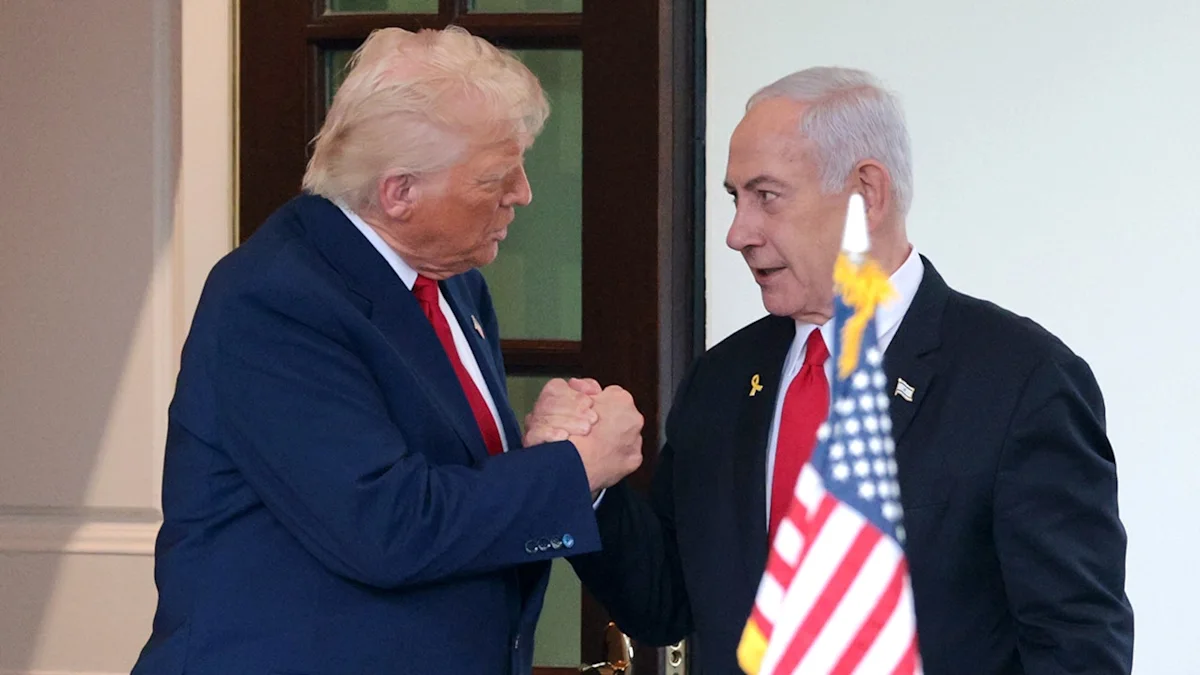
US President Donald Trump said he “didn’t like” Israel’s reported strike on Beirut, calling it poorly timed as it came just hours before the signing of a proposed agreement with Iran.
Speaking to reporters at the G7 summit in France, he stated that he had directly communicated his disapproval to Israeli leadership.
“I didn’t like that, not at all,” Trump said, referring to the attack.
Call for Greater Responsibility from Netanyahu
Trump also urged Israeli Prime Minister Benjamin Netanyahu to act more responsibly regarding military actions in Lebanon, warning that such moves could complicate broader diplomatic efforts in the region.
He emphasized that ongoing tensions in Lebanon should be treated carefully in light of the emerging US–Iran understanding.
Comments on Lebanon Conflict
Referring to the situation in Lebanon, Trump described the conflict as relatively minor compared to the broader confrontation with Iran.
He characterized Hezbollah as a persistent security challenge but suggested that it represented a smaller-scale issue compared to the wider regional war dynamics.
US–Iran Deal and Regional Stability
Trump said that the emerging US–Iran agreement could still remain intact even if tensions or limited strikes continue in Lebanon.
“Can it survive? It can,” he said, suggesting that the framework deal is designed to withstand localized escalations.
The comments come amid ongoing diplomatic efforts to formalize a broader ceasefire and security arrangement involving the United States and Iran.
Strong Remarks on US–Israel Relationship
The US president also reiterated his strong support for Israel, stating that “without the United States there would be no Israel.”
He added that his administration had played a decisive role in strengthening bilateral relations and ensuring Israel’s security commitments.
Despite this, he stressed that even close allies must act responsibly to avoid undermining wider peace initiatives.
The remarks highlight continuing tensions between military developments on the ground and diplomatic efforts to stabilize the region.
As negotiations involving the US and Iran progress, attention remains focused on whether parallel conflicts—particularly in Lebanon—could affect the durability of any emerging agreement.