Gilgit: The Istehkam-e-Pakistan Party (IPP) has formally announced its support for the Pakistan Peoples Party (PPP) in the formation of a coalition government in Gilgit-Baltistan, marking a significant political development in the region.
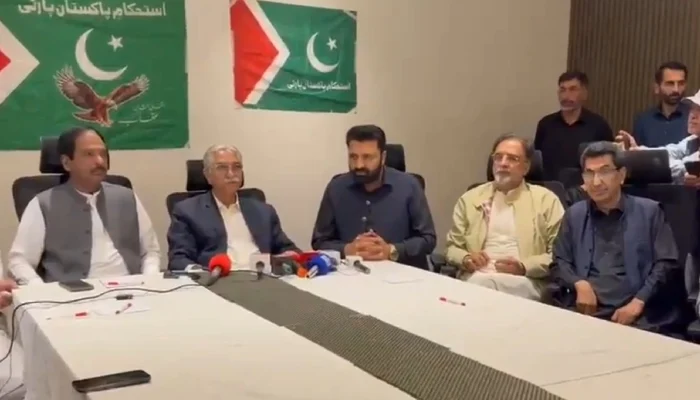
The announcement was made during a joint press conference in Gilgit on Sunday, where leaders of both parties confirmed that IPP would join the PPP-led alliance.
Alliance expands to include PML-N and IPP
According to political leaders, the new arrangement builds on an earlier understanding between the PPP and the Pakistan Muslim League-Nawaz (PML-N), under which both parties agreed to share power in the upcoming regional government.
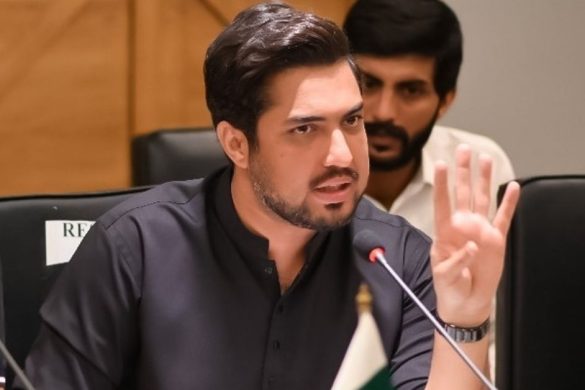
PPP Gilgit-Baltistan President Amjad Hussain described the broader alliance—including PPP, PML-N, and now IPP—as a “positive development,” saying it would help place the region on a path of development and stability.
IPP GB President Haji Gul Bar Khan also confirmed the party’s decision to join the alliance, stating that further details of the arrangement would be finalised through consultation between central leaderships.
Government formation process to begin soon
Officials said the formal process of government formation in Gilgit-Baltistan will begin on Monday. The emerging coalition is expected to finalise key positions, including the chief minister and other administrative posts, in the coming days.
Under the previously agreed formula between PPP and PML-N, the chief minister’s office will go to the PPP, while the governor’s position will be held by the PML-N. The opposition leadership in the assembly is expected to come from the PML-N as well.
Election background and seat distribution
The Gilgit-Baltistan Assembly elections were held on June 7 for 24 seats. The PPP emerged as the single largest party with nine seats, followed by the PML-N with six seats, according to official election results.
Although the IPP did not initially win any seats, it later gained representation after several independent candidates joined the party following post-election political meetings.
Bilawal Says Provinces Will Not Be Asked for More Sacrifices Beyond Defence Contribution
Other results included one seat each for Majlis Wahdat-e-Muslimeen and an independent candidate, while results for three constituencies are still pending.
Political significance
Analysts view the expanded coalition as an effort to ensure a stable governing majority in Gilgit-Baltistan amid a fragmented assembly. The inclusion of multiple parties is expected to strengthen legislative support for the incoming government.
The announcement also signals continued political negotiations and alliance-building in the region, as parties work to secure governance arrangements following closely contested elections.