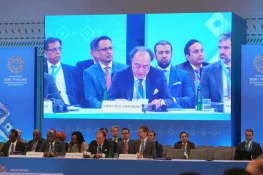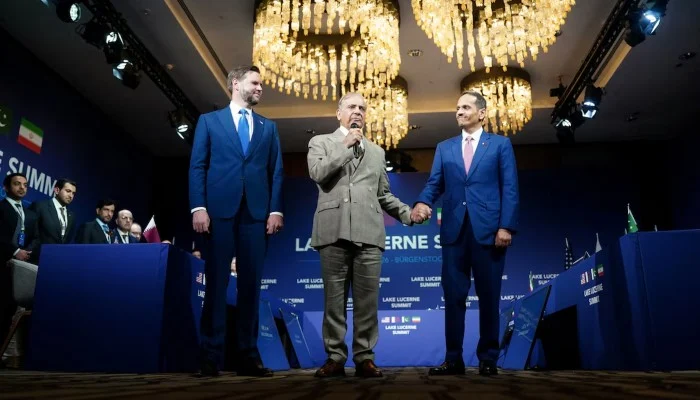
The first round of high-level negotiations between the United States and Iran has concluded in Switzerland, with both sides agreeing to a 60-day roadmap toward a final peace deal, according to mediating countries Pakistan and Qatar.
The talks were held at the Buergenstock resort near Lake Lucerne and marked one of the most significant diplomatic engagements between Washington and Tehran in recent years. Technical-level discussions are expected to continue throughout the week.
Key Outcomes of the Negotiations
In a joint statement issued by the mediators, both sides agreed on several preliminary steps aimed at stabilising the fragile situation in the Middle East. These include:
- A 60-day framework to reach a final comprehensive agreement
- Continued technical talks during the current week
- Establishment of a mechanism to reduce hostilities in Lebanon
- Creation of communication channels to ensure safe maritime passage in the Strait of Hormuz
The statement was issued by Qatar’s foreign ministry, reflecting the role of regional and international actors in facilitating dialogue.
Strait of Hormuz and Lebanon Crisis Central to Talks
The negotiations took place amid renewed tensions after Iran reportedly closed the Strait of Hormuz again, citing continued Israeli military operations in Lebanon. The strait is a critical global oil shipping route, and its closure has repeatedly raised concerns over global energy stability.
Iran has argued that its actions are linked to what it describes as violations of ceasefire commitments in Lebanon, where fighting between Israel and Hezbollah has continued despite diplomatic efforts.
The agreement includes steps to open communication channels aimed at ensuring uninterrupted commercial shipping through the waterway.
Trump Warns Iran of Renewed Military Action Amid Switzerland Peace Talks
Diplomatic Tensions During Negotiations
The talks were marked by strong rhetoric from both sides. US President Donald Trump reportedly warned Iran of severe consequences if it continued to close the Strait of Hormuz, while also threatening renewed military action if Iranian-backed groups in Lebanon continue attacks.
Despite this, US officials said discussions covered a wide range of issues including Lebanon, maritime security, and nuclear-related concerns.
Iranian officials, on the other hand, emphasised implementation of earlier commitments under the framework agreement, including sanctions relief and release of frozen assets.
Oil Markets React to Developments
Following the announcement of the joint statement, global oil prices fell slightly, reflecting cautious optimism in energy markets. Brent crude dropped by over one dollar during trading after earlier volatility linked to tensions in the Strait of Hormuz.
Analysts say markets remain sensitive to any disruption in the region, particularly given the strategic importance of the Gulf shipping routes.
Technical Talks to Continue
While the high-level phase of talks has ended, both sides are expected to remain engaged in detailed technical negotiations throughout the week in Switzerland.
Mediators from Pakistan and Qatar will continue to facilitate communication as efforts continue to translate the 60-day roadmap into a more comprehensive and lasting agreement.
Observers say the coming weeks will be crucial in determining whether the current diplomatic momentum can be sustained or whether regional conflicts, particularly in Lebanon, could derail the process.