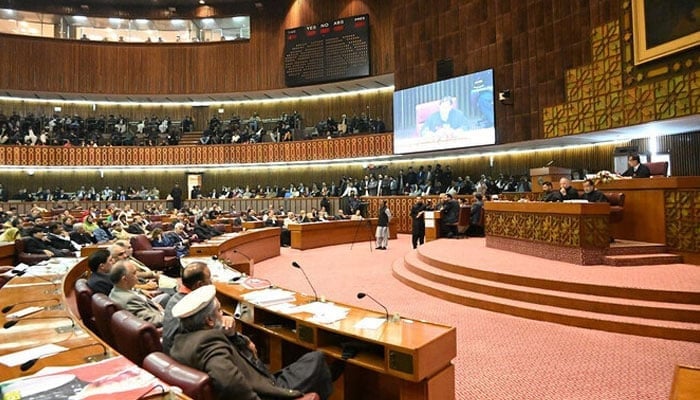
The National Assembly has officially approved the federal Budget 2026–27, with the Finance Bill introducing wide-ranging fiscal reforms. The new measures focus on revising import duties on vehicles, strengthening tax compliance mechanisms under the Federal Board of Revenue (FBR), and making electronic tax filing mandatory.
The government says the reforms aim to broaden the tax base, improve documentation, and increase revenue collection efficiency.
Major Changes in Vehicle Import Duties
One of the key features of the budget is a revised structure for duties on imported vehicles. The changes will take effect from July 1.
According to the Finance Bill:
- Imported vehicles with engine capacity between 2,000cc and 3,000cc will now face 86% duty
- Vehicles above 3,001cc will be subject to 92% duty
- Duties on 1,800cc vehicles have been reduced from 156% to 74%
- Vehicles above 1,500cc will now face a reduced duty of 57% from 91%
- For vehicles between 1,000cc and 1,500cc, duties have been lowered from 76% to 52%
- For 850cc vehicles, the duty has been reduced from 66% to 42%
Officials say the revised structure is aimed at balancing import regulation while adjusting tax burdens across different vehicle segments.
Tax Policy on Electric and Small Vehicles
The Finance Bill also introduces new tax rates for electric vehicles (EVs). Imported EVs valued up to $75,000 will be subject to a 30% customs duty, while those valued above $110,000 will face a 40% duty.
In addition, a concessional sales tax of 10% has been introduced for basic stationery items such as pencils, pens, and sharpeners, indicating targeted relief in selected consumer categories.
A one-time fixed tax of Rs10,000 will be applied to vehicles up to 1,000cc in federal jurisdictions, while token tax for older models (pre-2010) of similar capacity has been set at Rs20,000.
National Assembly Suspends PTI’s Iqbal Afridi for Entire Budget Session Amid Heated Proceedings
FBR Compliance and Digital Filing Becomes Mandatory
The budget also places strong emphasis on tax enforcement and digital transformation of the tax system.
From July 1, electronic filing of tax returns through the FBR’s IRIS system will be compulsory. Taxpayers will no longer be able to submit manual returns under the new framework.
The Finance Bill further states that violations of FBR notices or non-compliance with tax requirements will result in significantly higher penalties, signaling a stricter enforcement regime.
Officials believe these measures will help reduce tax evasion and improve transparency in the taxation process.
Government’s Broader Fiscal Direction
The budget reflects a continued shift toward digitisation of tax systems and restructuring of import duties, particularly in the automobile sector. While some categories see relief in duties, higher-end vehicles remain heavily taxed.
Economists suggest that the success of these measures will depend on enforcement capacity and the government’s ability to expand compliance among previously untaxed sectors.