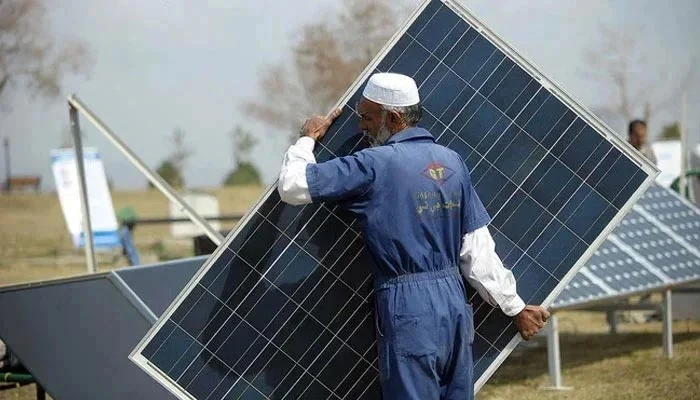
ISLAMABAD: Pakistan has become the world’s third-largest importer of solar panels, according to a new report titled Pakistan’s Climate Prosperity Plan (CPP), jointly prepared by the Ministry of Finance and the Ministry of Climate Change.
The report, cited by The News, states that Pakistan imported 17 gigawatts (GW) of solar power systems during 2024, which is double the volume imported in the previous year.
According to the report, the rapid increase in solar installations has largely been driven by rising electricity tariffs, declining global prices of solar panels, and growing consumer demand for more affordable energy solutions.
High Electricity Costs Driving the Shift
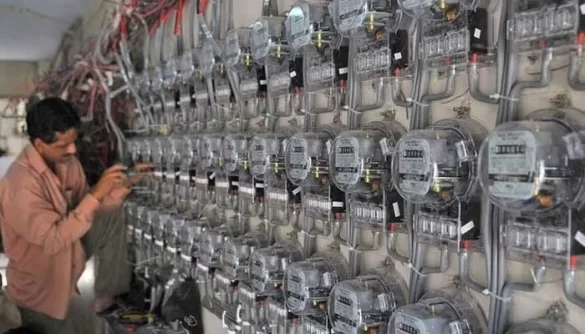
The report says Pakistan’s energy sector has been under increasing financial pressure due to expensive electricity generation, volatile international fuel prices, and fluctuations in the exchange rate.
These factors have significantly increased the cost of producing electricity, resulting in higher consumer tariffs and worsening the country’s long-standing circular debt problem.
According to the report, Pakistan has continued paying substantial capacity charges for power plants that are not always fully utilised, placing additional strain on public finances and electricity consumers.
Officials believe expanding renewable energy can help reduce dependence on imported fossil fuels while lowering electricity generation costs over the long term.
Roadmap for a Cleaner Energy Future
The Pakistan Climate Prosperity Plan outlines several ambitious targets aimed at transforming the country’s energy sector over the next two decades.
Among its key objectives are:
- Increasing the share of clean energy to 60% by 2030.
- Generating 50% of Pakistan’s electricity from renewable sources by 2035.
- Raising renewable energy’s share of total electricity generation to 95% by 2040.
- Phasing out or converting 14,000 megawatts (MW) of fossil fuel-based power plants by 2035.
- Reducing transmission and distribution losses from 19% to 8%.
- Achieving 100% electricity access across the country.
- Installing rooftop solar systems in all government secondary schools by 2035.
- Generating carbon credits equivalent to 200 million tonnes of carbon emissions annually by 2030 to create additional revenue opportunities.
The report notes that achieving these goals would require coordinated policy reforms and sustained investment in the power sector.
Renewable Energy Could Ease Economic Pressure
According to the report, greater reliance on domestic renewable resources—including solar, wind, hydropower, and biomass—would reduce Pakistan’s dependence on imported fuels, helping conserve valuable foreign exchange reserves.
The transition is also expected to improve energy security, reduce greenhouse gas emissions, lower air pollution, and make electricity more affordable for consumers.
Government Reduces Sales Tax on Solar Panels in Pakistan
Officials argue that replacing expensive imported fuels with locally generated renewable energy would strengthen Pakistan’s long-term economic resilience while supporting its climate commitments.
Modernising the National Grid
While solar energy adoption has accelerated, the report stresses that expanding renewable power alone will not be sufficient.
It recommends significant investment in electricity transmission infrastructure, grid modernisation, and large-scale energy storage systems to ensure the national power network can efficiently integrate increasing amounts of renewable electricity.
Modernising the grid, the report says, would improve reliability, minimise power disruptions, and support future growth in areas such as electric transportation and distributed energy systems.
Reforms Proposed for the Power Sector
To tackle the country’s energy-sector challenges comprehensively, the report recommends several structural reforms.
These include restructuring or renegotiating high-cost power purchase agreements (PPAs), introducing more cost-reflective electricity tariffs, and gradually retiring older, inefficient fossil fuel power plants.
The report also advocates for transparent competitive auctions when awarding new renewable energy projects and expanding credit guarantee mechanisms to encourage greater private-sector investment.
According to the report, these measures would help reduce circular debt, create fiscal space for infrastructure upgrades, and accelerate Pakistan’s transition towards a cleaner, more sustainable, and affordable energy system.
A Growing Solar Market
Pakistan’s emergence as one of the world’s largest solar panel importers reflects a significant shift in the country’s energy landscape.
As electricity demand continues to rise and consumers increasingly seek alternatives to high grid tariffs, experts believe solar energy is likely to play an even greater role in Pakistan’s future energy mix.
However, the report concludes that achieving long-term energy security will depend not only on increasing renewable generation but also on implementing the necessary policy reforms and infrastructure investments to support a modern and resilient electricity system.