The Taliban regime is marking five years in power in Afghanistan on Saturday, with authorities portraying their rule as a period of security and national independence. However, critics say restrictions have steadily expanded across almost every area of daily life.
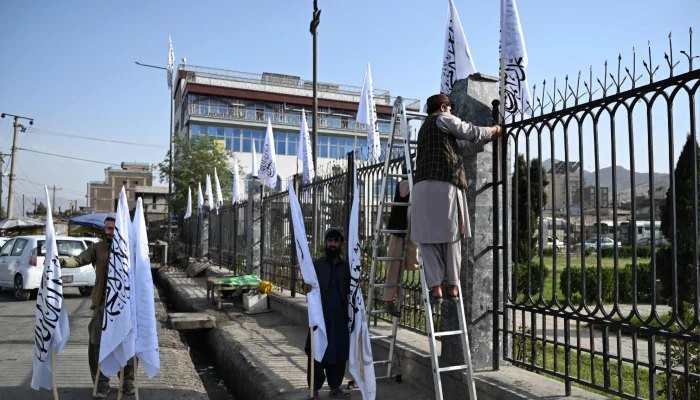
In Kabul, Taliban flags have been displayed throughout the city ahead of the anniversary. Men riding rickshaws and motorcycles decorated with flags were seen moving through the streets, while new murals described independence as a symbol of dignity, pride and identity.
Authorities are also organizing cricket and other sporting events to mark the occasion. However, women and girls are barred from attending such public sporting events under the Taliban’s restrictions.
How the Taliban Returned to Power
The Taliban seized control of Kabul on August 15, 2021, following a rapid offensive across Afghanistan as US-led foreign forces were withdrawing from the country.
The Afghan government and security forces collapsed with surprising speed, allowing Taliban fighters to enter the capital largely without resistance. The takeover brought an end to nearly two decades of US-led military involvement in Afghanistan.
Ahead of this year’s anniversary, some vehicles left behind by foreign forces, including Humvees, were seen moving through Kabul in a convoy. Security checkpoints were also increased across the capital.
Taliban officials have repeatedly presented improved security as one of their major achievements since returning to power. They have also pointed to infrastructure projects and efforts to strengthen the country’s economy.
Economic Challenges Remain
Despite the Taliban government’s claims of economic progress, Afghanistan continues to face significant economic challenges.
Government spokesman Zabihullah Mujahid said this month that authorities were laying the “foundations of the economy” and that patience was necessary as the country worked toward greater stability.
The return of millions of Afghans from neighboring countries has added further pressure. More than six million Afghans have arrived from Iran and Pakistan over the past three years, putting additional strain on employment, housing and public services.
The World Bank has estimated real economic growth at 4.8%, but GDP per capita has continued to decline. For many young Afghans, finding employment remains a major concern.
Pirooz Mirzaie, a 20-year-old university student, told AFP that the government had brought greater security and infrastructure development and created opportunities for entrepreneurs. However, he said the lack of jobs remained the biggest challenge for young people.
Afghan fathers struggle as daughters remain barred from secondary education
Restrictions on Women and Girls
Restrictions on women and girls remain among the most controversial aspects of Taliban rule.
Women have been barred from a wide range of public spaces, including parks, while restrictions have also severely limited their access to employment. Girls are prohibited from continuing their education beyond the sixth grade under the current rules.
The United Nations has repeatedly expressed concern about the impact of these policies on Afghan society.
Fiona Frazer, the human rights director for the UN mission in Afghanistan, said Afghans have endured what she described as a consolidation of restrictions affecting almost every aspect of their daily lives and human rights.
A 23-year-old Afghan woman, speaking to AFP anonymously because of security concerns, described the past five years as an extremely difficult period.
She said she experienced a “profound sense of suffocation,” adding that the years had been so difficult that she felt as though she had aged centuries.
Press Freedom Under Pressure
The situation facing journalists and independent media has also attracted international criticism.
The Committee to Protect Journalists has accused the Taliban authorities of what it described as severe repression of the press. According to the organization, media workers have faced surveillance, detention, physical abuse and censorship, while some have been forced into exile.
The Taliban, meanwhile, continue to emphasize security and stability as central achievements of their rule and have sought to strengthen diplomatic and economic relations with other countries.
Limited International Recognition
Five years after returning to power, the Taliban government continues to have limited international diplomatic recognition.
Russia is currently the only country that has formally recognized the Taliban government. Several other countries maintain varying levels of contact with the authorities, but many continue to link deeper relations with changes to Taliban policies, particularly those affecting women’s rights and education.
As Afghanistan enters the sixth year of Taliban rule, the country therefore faces a complicated reality. The authorities point to improved security, infrastructure development and economic efforts, while the United Nations and rights organizations continue to highlight restrictions on women, pressure on the media, unemployment and broader concerns over civil and human rights.