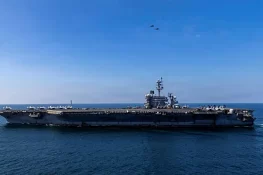
Iran said Monday that it had attacked US military targets in Jordan and the United Arab Emirates in retaliation for American strikes on Iranian territory, marking a fresh escalation in a conflict that had recently shown signs of easing.
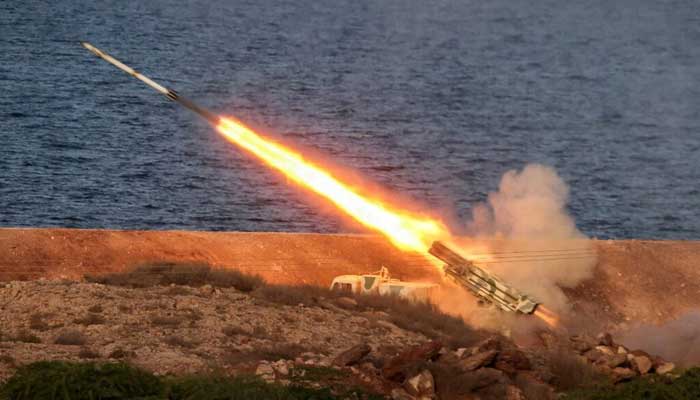
Iran’s Islamic Revolutionary Guard Corps (IRGC) said it had targeted two US military bases in Jordan with ballistic missiles, claiming the attacks caused “heavy damage”. Jordan’s military, however, said it intercepted eight missiles but did not identify their origin.
Iran’s army also claimed that it launched a drone attack against the Al Minhad Air Base in the UAE, saying the facility was being used by US forces and helicopters. The UAE had not immediately commented on the claim, while its defence ministry had not issued a statement confirming the attack.
US strikes Iranian positions on Larak Island
The Iranian attacks came a day after the United States said its forces had carried out strikes against Iranian rocket launchers on Larak Island, a small island in the Strait of Hormuz.
Washington said the operation was intended to prevent Iranian forces from deploying additional sea mines in the strategically important waterway. US Central Command described the action as limited and targeted, saying the rocket launchers were associated with Iranian Revolutionary Guard forces involved in mine-laying operations.
The Iranian military said the US strikes killed members of the Revolutionary Guards and Iranian civilians, describing its subsequent attacks as retaliation for what it called US and Israeli aerial aggression.
The latest exchange of fire comes roughly six months after the conflict began and follows a period in which direct hostilities had declined.
Trump warns of further pressure on Iran
US President Donald Trump separately warned that Iran’s energy hub of Kharg Island was being heavily targeted.
Trump said on social media that “Kharg Island [was] being blown to smithereens”, although he did not provide additional details about the reported operations.
Kharg Island is particularly important to Iran’s economy because it has historically served as a major export terminal for the country’s crude oil. Any sustained disruption there could place further pressure on Iran’s energy exports and wider economy.
Iran Faces 35% Trade Slump as War Drags On and US Pressure Intensifies
Strait of Hormuz remains at the centre of tensions
The Strait of Hormuz has remained one of the most sensitive flashpoints in the conflict. The narrow waterway is a critical route for global energy supplies, with a significant share of internationally traded oil and other commodities traditionally passing through it.
US Central Command said it had recently completed clearing sea mines from international shipping routes in the strait. The command added that American forces were continuing to monitor the area and remained prepared to protect commercial shipping.
The confrontation has already affected global energy markets. Following news of the latest US strikes, Brent crude rose above $90 a barrel, while West Texas Intermediate climbed above $85.
Diplomatic efforts face fresh challenges
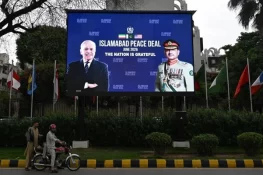
Diplomatic initiatives involving countries including Pakistan and Qatar have attempted to bring the conflict to an end. A ceasefire reached in April reduced the intensity of the fighting, while a memorandum of understanding aimed at a broader peace agreement was signed in June.
However, a final agreement has yet to materialise. Sporadic attacks, particularly around the Strait of Hormuz, have continued to complicate diplomatic efforts.
The United States has increasingly emphasised economic pressure on Tehran, including measures aimed at restricting Iran’s access to energy revenues and supplies.
Iran, meanwhile, has previously retaliated against US facilities and American allies across the Gulf region, with reported attacks involving countries including Kuwait, Oman, Saudi Arabia and the UAE.
War remains politically contentious in the US
The conflict has also become a contentious issue inside the United States, with congressional midterm elections approaching in November.
Democratic Senator Jack Reed, the ranking Democrat on the Senate Armed Services Committee, criticised the administration’s handling of the war, arguing that Washington had yet to achieve its stated objectives.
With the latest attacks threatening to reignite broader hostilities, concerns are growing that the renewed confrontation could further undermine diplomatic efforts and increase pressure on global energy markets.