ISLAMABAD: The Pakistan Tehreek-e-Insaf (PTI) may challenge the imposition of an emergency and governor’s rule in Khyber-Pakhtunkhwa (K-P) before the Peshawar High Court (PHC), as legal experts remain divided over the constitutional validity of the measures and the extent of judicial review.
Former law officers and several lawyers believe the decisions can be challenged on grounds of mala fide intent and failure to fulfil the constitutional requirements for such extraordinary action.
However, other legal experts argue that constitutional provisions, particularly Article 236(2), create a substantial barrier to court proceedings seeking to invalidate presidential proclamations issued under Articles 232 and 234.
The composition of the bench hearing any potential petition could also become significant. A ruling by the PHC could be challenged before the Federal Constitutional Court (FCC), which also has the power under Article 175E(5) to summon records from any court when a case involves a substantial question of law relating to constitutional interpretation.
Questions raised over constitutional requirements
A former attorney general said the PTI could challenge the measures by arguing that the constitutional conditions required for imposing an emergency and governor’s rule had not been fulfilled.
He questioned whether the federal government had formally communicated with the K-P government over any alleged lack of cooperation in counterterrorism efforts before taking the decision.
“The issue was first raised at the last meeting between the PML-N, the PPP and the PTI. This was not a meeting between the federal and provincial governments,” he said.
The former law officer argued that the court should direct the federal government to produce the records and material used to justify the decision.
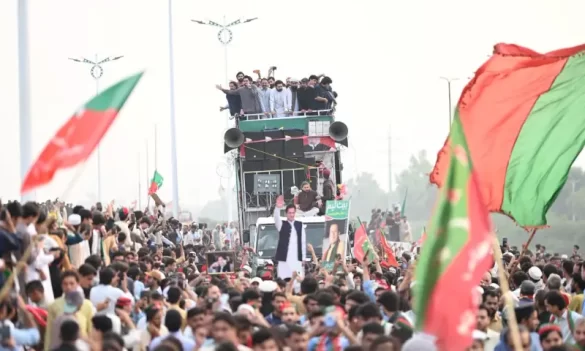
He also referred to reported meetings between Interior Minister Mohsin Naqvi and K-P Chief Minister Sohail Afridi, as well as statements attributed to the prime minister and federal ministers suggesting that the measures would not be taken if the PTI called off its long march.
According to the former attorney general, these circumstances raised questions about whether the action was motivated by the planned political march rather than a failure by the provincial government to cooperate in counterterrorism efforts.
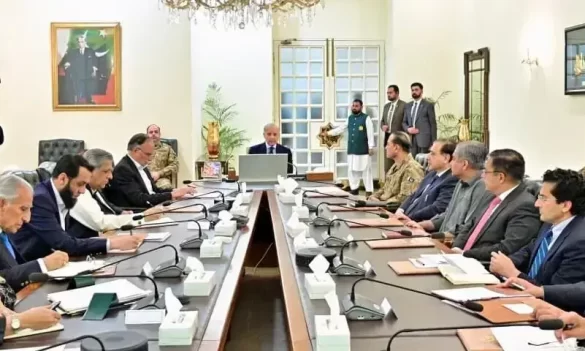
He also questioned the speed with which the federal cabinet considered the matter, saying the proposal was reportedly discussed at a Sunday meeting that lasted barely an hour.
“How did the cabinet consider the material in such a short span before approving this extreme action? Why were Articles 232 and 234 invoked simultaneously when the requirements of the two provisions are distinct?” he asked.
Lawyers argue emergency measures can be challenged
Advocate Waqas Ahmed said both proclamations could be challenged if the constitutional conditions specified under Articles 232 and 234 had not been met.
“Article 232 requires a constitutionally recognised emergency, while Article 234 requires a failure of constitutional machinery in the province. Mere law-and-order problems or political instability are not sufficient, by themselves, to justify these extraordinary measures,” he said.
He added that the validity of the proclamations would have to be assessed against the constitutional requirements, the material relied upon by the federal government and compliance with the prescribed procedures.
Advocate Abuzar Salman Niazi also argued that presidential proclamations were not necessarily beyond judicial scrutiny merely because the Constitution contained provisions restricting court challenges.
Citing the Supreme Court judgment in Sardar Farooq Ahmed Khan Leghari v Federation of Pakistan, he said courts could examine the validity of such actions where the exercise of power was without jurisdiction, coram non judice or mala fide.
He added that the judgment recognised that constitutional powers must be exercised in accordance with the conditions prescribed by the Constitution.
Governor’s Rule Imposed in K-P for Fourth Time
Article 236 may create a major legal hurdle
Offering a contrasting interpretation, advocate Hafiz Ahsaan Ahmed Khokhar said the proclamations issued under Articles 232 and 234 should be examined alongside Articles 48(2), 148, 149 and 236(1) and (2).
He argued that Articles 48(2) and 236(2), read together, provided a strong constitutional defence against proceedings seeking to invalidate the proclamations.
Article 48(2) concerns presidential action taken in the exercise of discretion specifically conferred by the Constitution. Article 236(2), meanwhile, states that the validity of a proclamation issued or order made under Part X of the Constitution cannot be called into question in any court.
“Since Articles 232 and 234 fall within Part X, this express constitutional prohibition provides a formidable preliminary objection to proceedings seeking to invalidate the proclamations themselves, including proceedings before the Federal Constitutional Court,” Khokhar said.
He explained that Article 236(1) provides for the revocation or variation of a proclamation through a subsequent proclamation. Parliamentary approval and oversight must also be exercised in accordance with the applicable constitutional requirements and time limits.
According to Khokhar, compliance with these procedures could strengthen the constitutional basis for the measures and support judicial restraint in matters involving national security and constitutional governance.
He maintained that a challenge directed solely at the validity of the proclamations would face a substantial constitutional obstacle under Article 236(2), reinforced where applicable by Article 48(2).
Pakistan Bar Council members condemn decision
The legal fraternity remains divided over the imposition of an emergency and governor’s rule in K-P.
The Khyber-Pakhtunkhwa Bar Council has yet to issue a public statement on the development. A lawyer said the council’s anti-PTI group held a majority, making a province-wide strike in the courts unlikely.
In contrast, eight members of the Pakistan Bar Council belonging to the Professional Group have condemned the measures and the removal of the elected provincial government led by Chief Minister Sohail Afridi.
In a joint statement, the members described the action as illegal and alleged that it had been taken by a government and parliament already facing allegations of widespread rigging in the general elections.
They also criticised the imposition of governor’s rule and an emergency, along with the formation of an advisory council, describing the developments as marked by mala fide intent and illegality.
The lawyers alleged that the political system had weakened the rule of law and constitutional supremacy, concentrated power in an authoritarian state and undermined elected civilian governance.
Lawyers question justification for emergency
The Pakistan Bar Council members questioned whether the prevailing security situation justified the imposition of an emergency.
They pointed out that Pakistan had faced terrorism for four decades despite the sacrifices of civilians and members of the armed forces.
The lawyers argued that Article 234 permits governor’s rule only when a provincial government cannot be carried on in accordance with the Constitution.
“The provincial government and the Provincial Assembly were both discharging their functions in accordance with the Constitution,” the statement said.
They also challenged the argument that the K-P government had failed to cooperate in counterterrorism efforts, referring to the security situation in Balochistan. According to the statement, a Pakistan Peoples Party-led government in the province was reportedly working closely with the military despite continuing terrorist attacks.
The PBC members linked the rise in terrorism and declining public confidence in the federation to what they described as democratic deficits, economic mismanagement, violations of fundamental and human rights, restrictions on access to justice following the 26th and 27th constitutional amendments, and corruption.
While expressing support for the armed forces in their fight against internal and external aggression, the lawyers called on the president to withdraw the proclamations, restore the elected K-P government and respect provincial autonomy.
With legal experts offering sharply different interpretations of the Constitution, any potential court challenge could place the scope of judicial review, the limits of executive authority and the constitutional protections surrounding presidential proclamations at the centre of a major legal dispute.