Tesla has unveiled its long-delayed next-generation Roadster, featuring rocket-style thrusters developed in collaboration with Elon Musk’s aerospace company SpaceX. However, the electric sports car will not enter production until 2028, more than a decade after Tesla first revealed the concept.
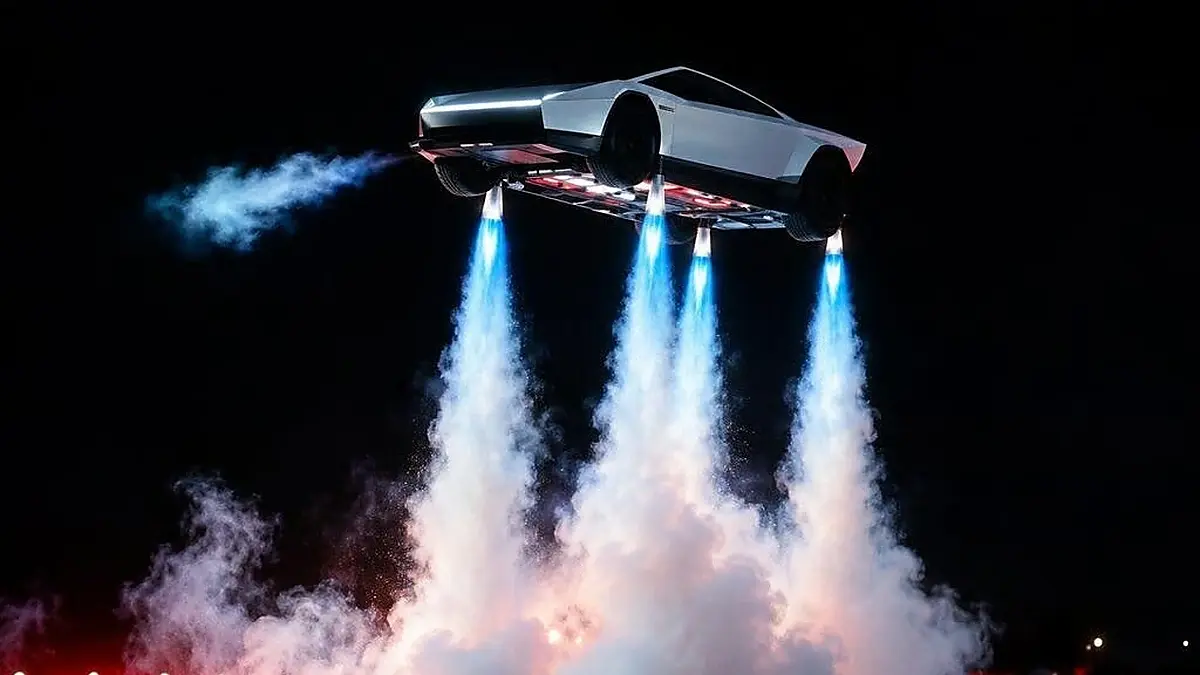
The white two-seater was presented on Thursday at a SpaceX test site in McGregor, Texas, where the demonstration featured dramatic aerial manoeuvres and futuristic technology.
During the event, the vehicle drove upside down on a ramp using a suction system, performed a mid-air turn and landed with the help of built-in thrusters. It later appeared to jump over a truck and other vehicles while twisting in the air.
The spectacular presentation generated excitement among Tesla enthusiasts and investors, although questions remain about the vehicle’s commercial prospects and the feasibility of bringing its most ambitious features into production.
Tesla Roadster promises extreme performance
Tesla vehicle engineering chief Lars Moravy said the Roadster could accelerate from zero to 60 miles per hour (97 kilometres per hour) in less than one second.
The company also claimed the car could reach a top speed exceeding 230 mph (370 kph) and travel more than 300 miles (480 kilometres) on a single charge.
Musk suggested that the vehicle could eventually achieve even greater speeds, describing its performance in terms of approaching half the speed of sound.
However, the latest range figure is substantially below the distance Musk promised when Tesla first presented the second-generation Roadster prototype in 2017.
At that time, the company said deliveries would begin in 2020. The latest production target of 2028 represents another significant delay for a vehicle that has been anticipated for years.
SpaceX technology takes centre stage
The collaboration between Tesla and SpaceX is a defining feature of the redesigned Roadster.
The demonstration showcased rocket-style acceleration thrusters capable of helping the vehicle perform dramatic aerial manoeuvres. Tesla has also advertised versions of the car with acceleration thrusters, although the precise capabilities and production specifications remain to be established.
The event took place at a SpaceX test facility and featured the theatrical presentation style associated with Musk’s product launches, including dramatic music, smoke, mechanical sounds and a countdown.
Some observers interpreted the joint presentation as another indication of the technological overlap between Tesla and SpaceX. Musk has previously discussed potential links between the companies, prompting speculation about a possible merger involving the two businesses.
Tesla has not announced a merger as part of the Roadster unveiling.
Three versions appear on Tesla’s reservation page
Tesla’s reservation page displayed multiple versions of the Roadster following the presentation.
The Performance version required a $50,000 deposit, while the Thrust version, advertised with acceleration thrusters, required a $250,000 deposit.
The company also listed a Rocket variant described as an invitation-only, single-seat model featuring a full flight system.
Tesla had previously quoted a base price of $200,000 for the Roadster when it first unveiled the second-generation vehicle. Executives did not announce updated target prices during Thursday’s event.
The deposits indicate the level of financial commitment Tesla is seeking from prospective buyers, but the final pricing, specifications and availability remain important questions ahead of production.
Elon Musk sleeps with bed raised on books to ease acid reflux
Roadster returns as Tesla shifts towards AI and robotics
The Roadster holds symbolic importance for Tesla because the original model helped establish the company as a manufacturer of high-performance electric vehicles.
Released in 2008 and sold until 2012, the first Roadster used a Lotus Elise chassis and helped challenge perceptions about the performance capabilities of electric cars.
Tesla subsequently expanded its lineup with the Model S and Model 3 sedans and the Model X and Model Y SUVs.
However, the company’s strategic focus has increasingly shifted towards artificial intelligence, autonomous driving and robotics.
Tesla has introduced the Cybercab robotaxi, a two-seater vehicle designed without conventional manual driving controls, and has been developing its Optimus humanoid robot programme.
The Roadster could therefore serve as a high-performance showcase for Tesla’s engineering capabilities at a time when the company is pursuing business opportunities beyond conventional passenger cars.
Investors remain focused on financial performance
Despite the excitement surrounding the unveiling, analysts have questioned how much the Roadster will contribute to Tesla’s financial performance.
Gene Munster, managing partner at Tesla investor Deepwater Asset Management, described the demonstration as an engineering showcase with limited commercial value beyond its technological impact.
Morningstar analyst Seth Goldstein, meanwhile, said the Roadster could become Tesla’s new flagship performance vehicle, filling a gap in the company’s current lineup.
Tesla shares rose 5% in premarket trading on Friday following the event, according to the report.
Nevertheless, investors are also assessing the company’s sales performance, profitability and cash flow. Tesla’s third-quarter results were scheduled for October 21, and analysts expected those figures to carry greater financial significance than the Roadster demonstration.
The company’s ageing electric vehicle lineup has faced declining sales over the past two years, although high fuel prices helped boost deliveries during the third quarter.
Production delay leaves questions unanswered
The Roadster unveiling has given Tesla a new flagship project and renewed attention to the company’s early ambitions in electric performance vehicles.
However, the gap between the original delivery promises and the latest production target highlights the challenges facing the long-delayed programme.
The car’s claimed acceleration, high top speed and rocket-style thrusters have attracted considerable attention, but its eventual commercial success will depend on production readiness, final specifications, pricing and customer deliveries.
For now, Tesla has offered a dramatic preview of what it hopes to achieve. Whether the production vehicle can match the spectacle of the demonstration remains to be seen.